


Anger in the family is one of the most common struggles parents face, and it rarely comes alone: it arrives with bedtime resistance, homework battles and sibling squabbles. A small workbook built around emotional education offers a structured way to approach it, for children and for the adults raising them.
This guide walks through the chapters of a French activity book written by a child psychologist, from the neuroscience of immature brains to the anger of parents themselves. It is aimed at families with children between 2 and 12 years old, and it treats outbursts as information about unmet needs rather than as misbehaviour.

Quick takeaways
- Outbursts signal unmet needs, not manipulation
- Anticipate crises through sleep, food, screens and routines
- Use concrete tools: emotions box, solutions wheel, calm-down kit
- Teach children to spot early signs with a traffic-light metaphor
- Parents may feel anger but must never be violent
- End each chapter by noting what worked and what to change
Understanding Your Child's Emotions
The first chapter lays out the mechanics of emotion and the link between feelings and needs. It draws on neuroscience to explain why children cannot yet regulate what they feel, and it leans on the well-known hand model of the brain to show what happens when a child flips their lid. The emphasis is on unconditional love as the foundation of the whole approach.
Reading this section is a good moment to reflect on child personality traits and on how differently two siblings can react to the same frustration. It also pairs naturally with thinking about parenting from love rather than from fear, because fear-based reactions tend to escalate rather than soothe. For hands-on ideas, explore 150 games that help children process big feelings.
Why the Brain Matters
Knowing that a young child's prefrontal cortex is still under construction changes how you read a meltdown. It is not manipulation; it is a nervous system doing its best with the tools available. This perspective also shapes how you talk to caregivers, as these things not remind us.
Welcoming Anger Instead of Fighting It
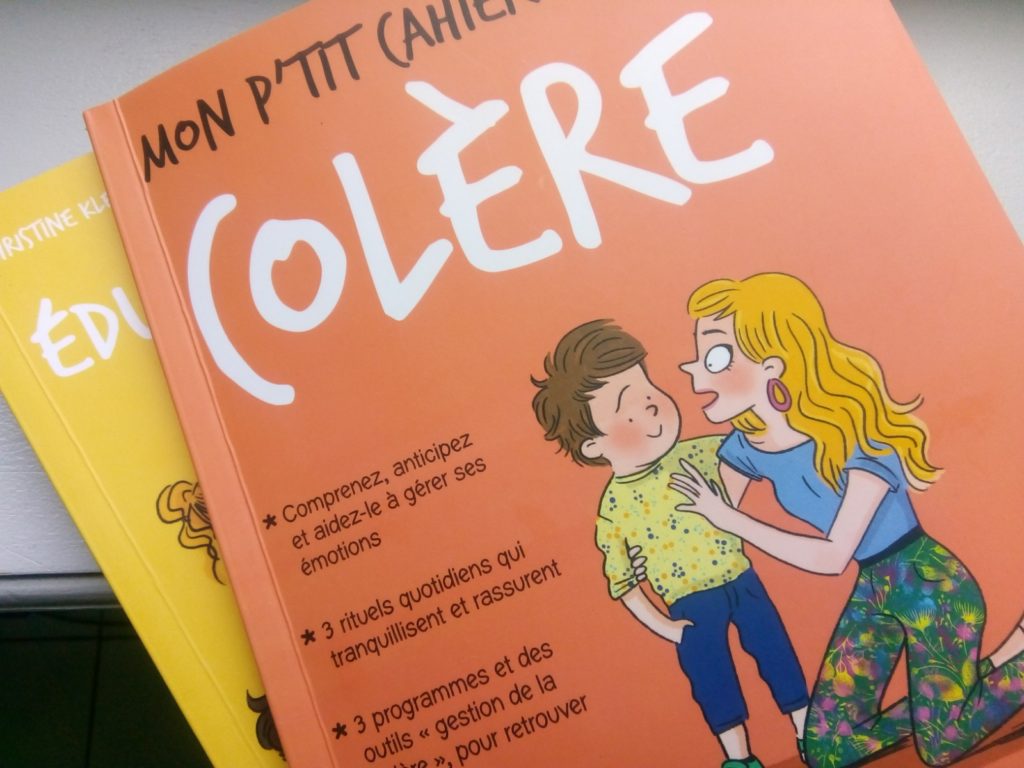
The second chapter decodes anger in terms of needs and introduces the principles of respectful parenting. It restates the harm of smacking and punishment, and it invites parents to reinterpret the idea of the "tantrum" as behaviour that points toward an unsatisfied need. Concrete situations come with sample sentences and alternatives, so theory turns into practice.
This is where the book earns its keep: instead of a lecture, you get scripts you can actually say out loud. Parents who enjoy reflecting on different approaches may also like these controversial parenting issues as a way to test their own convictions, and those curious about darker online phenomena can read about the Blue Whale.
From Caprice to Communication
Reframing a crisis as a message takes practice. The sample phrases help you respond with emotional intelligence rather than react on autopilot. Understanding what a baby feels in the womb can also deepen this empathic listening.

| Situation | Chapter focus | Practical tool |
|---|---|---|
| Child melts down at homework time | Anticipation and routines | Predictable after-school ritual |
| Child hits or bites | Welcoming anger | Empathetic phrases and calm-down kit |
| Child cannot name feelings | Understanding emotions | Hand model of the brain |
| Crisis already underway | Toolbox and return to calm | Breathing, cuddles, emotions box |
| Parent loses their temper | Parents' anger | Trigger list and burnout awareness |
Anticipating Outbursts Through Environment
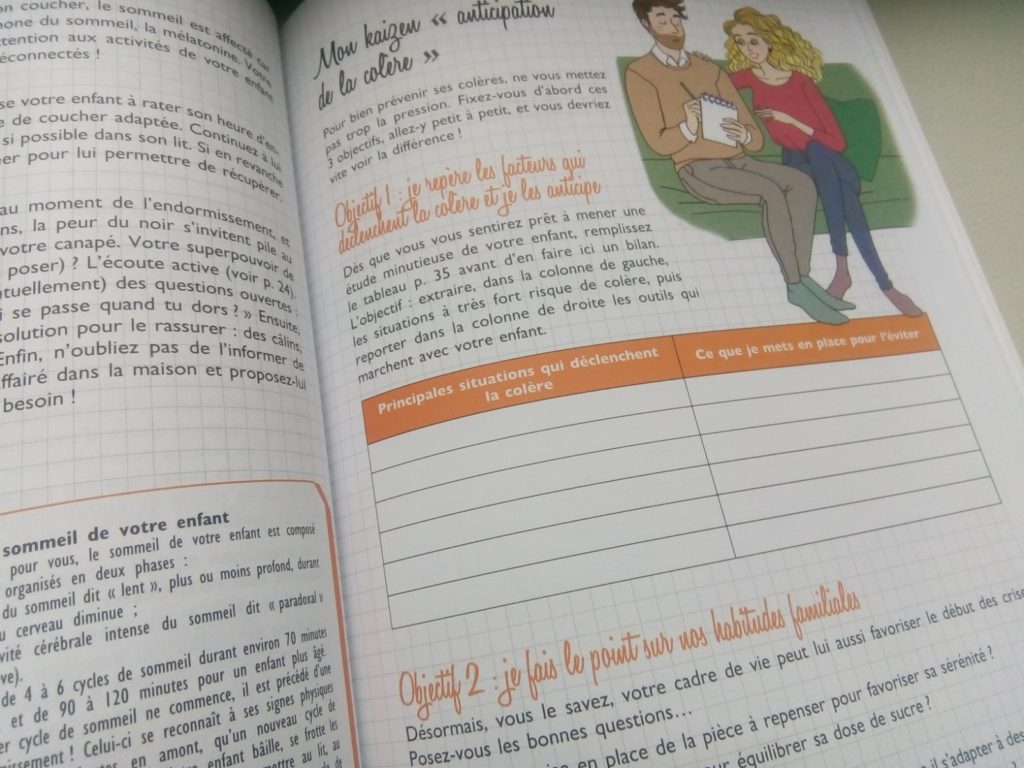
The third chapter moves from reaction to prevention, reasoning in terms of needs and environment: how time is organised and how the home is arranged. It dedicates passages to sleep, food (including the effects of sugar), screens and daily family routines. The logic is simple: many crises are predictable once you look at the conditions that produce them.
Daily rituals for morning, after-school and evening help smooth the transitions where tensions usually appear, such as a gentle wake-up or the dreaded homework moment. If reading together is part of your evening routine, these tips on choosing children's books can make that time calmer and more engaging.
Small Adjustments, Fewer Explosions
Anticipation is not about controlling a child; it is about removing unnecessary friction from the day. A predictable rhythm gives children a sense of safety.
A Toolbox for the Heat of the Moment
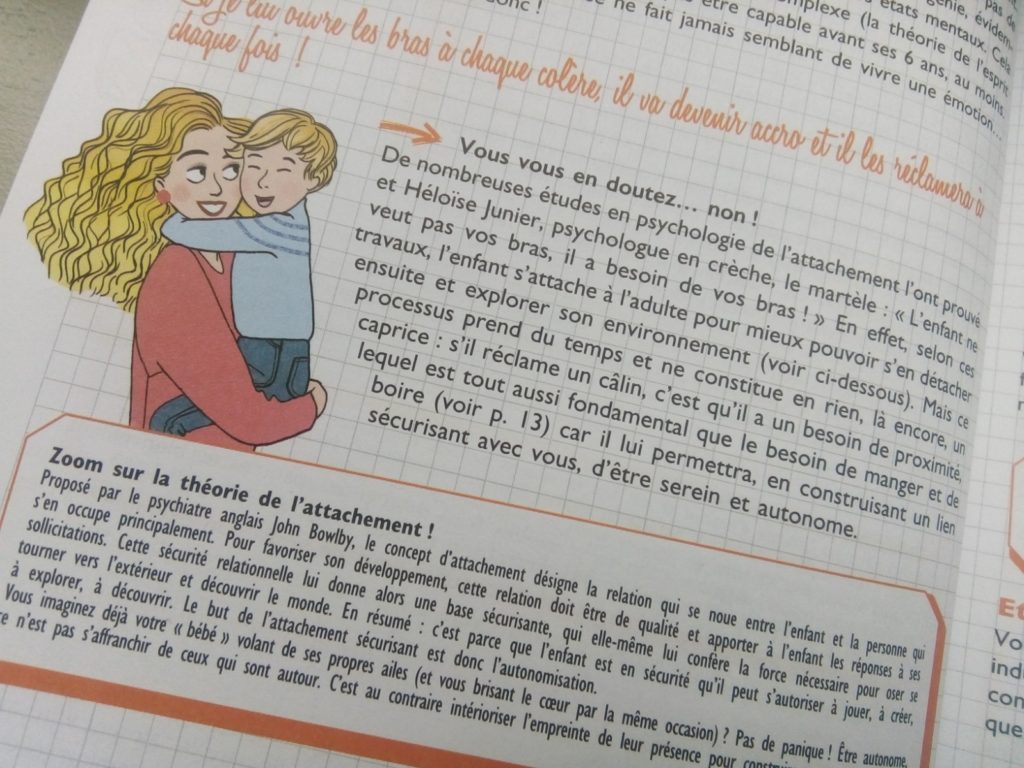
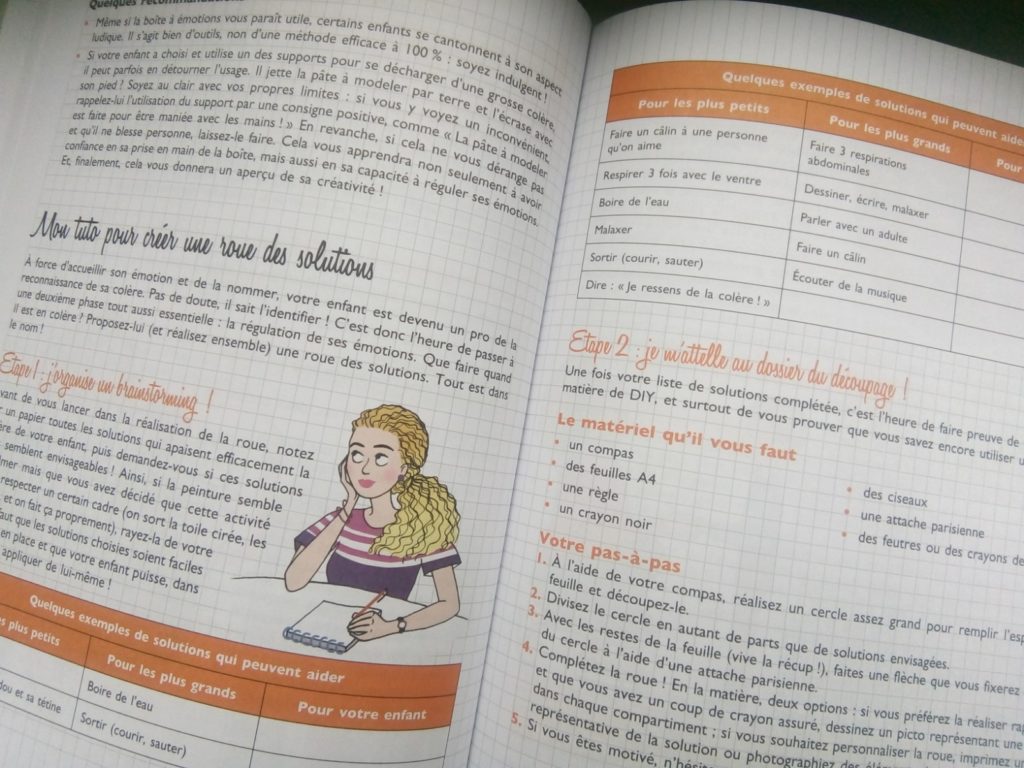
The fourth chapter is a genuine toolkit for accompanying anger without letting it turn into violence. It covers posture (nurturing care, kindness, empathetic communication) as well as concrete resources: an emotions box, a solutions wheel, a calm-down kit. Three tutorials explain how to make these tools yourself, and how to improvise with any object at hand.
Specific difficulties are addressed too: a child who hits or bites, a child who gets restless at a restaurant, and conflict between siblings. For families juggling too much stuff, the same decluttering spirit appears in these tips on organizing toys at home, which can make the calm-down corner easier to set up.
Tools Children Can Reach For
What matters is that the child can grab a tool independently when the storm hits. A box, a wheel and a breathing routine are simple enough to become reflexes.
Building Autonomy and Calm
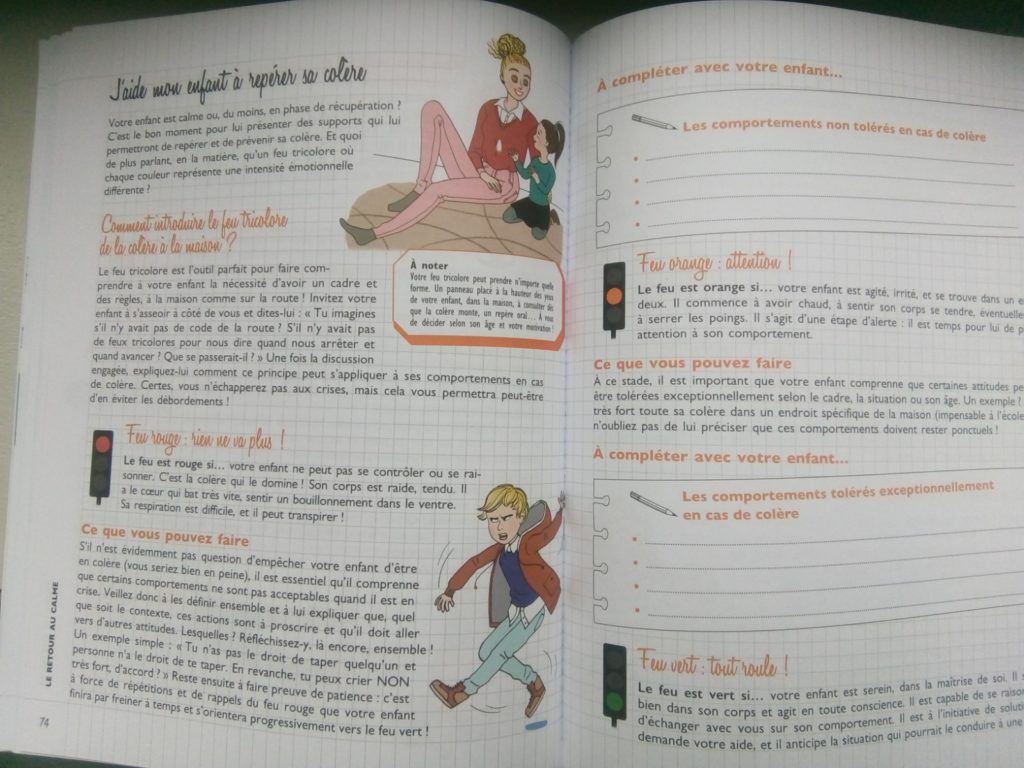
The fifth chapter turns to autonomy. Children learn to recognise the early signs of their anger through a traffic-light metaphor, then move to problem-solving once the emotion has passed: describing the problem, discussing it, and searching for solutions together. The goal is a child who can eventually handle the situation that caused the anger.
Returning to calm gets its own set of strategies: breathing, cuddles, relaxation and practical tools. This is also the stage where a child's own preferences matter, and the traits described in these nine personality traits can guide which calming method fits best.
After the Storm
Problem-solving works only once the nervous system has settled. Doing it mid-crisis usually adds fuel; doing it afterwards builds competence.
And What About the Parents' Anger?
The final chapter takes care of the adults. It states clearly that parents have every right to feel angry, but not to be violent, physically or verbally. It offers resources for taming our own anger and identifying our triggers, with a focus on parental burnout, which can explain why some parents feel irritable far more often than they would like.
Naming your own triggers is the same skill you are teaching your child, and it deserves the same patience. Parents who are expecting another baby may find that fatigue and hormones add a layer, as these warnings about cystitis and general pregnancy discomforts remind us that self-care is not optional.
Modelling Repair
Apologising after shouting teaches more than any lecture. Children learn that anger can be felt, expressed and repaired.
Putting the Workbook Into Practice
Each chapter ends with an invitation to act and to write down what happened: what I tried, what worked, what did not, and what I will do next time. That reflective loop is what turns a book into a habit, and it keeps the focus on progress rather than perfection.
An opening test helps parents assess their own reactions to children's anger before starting. The book is illustrated, uses tables to make information easy to scan, and references authors such as Catherine Gueguen, Marshall Rosenberg and Olivier Maurel. It is designed for children aged 2 to 12.

My hands-on take
I tried the traffic-light idea with my own child during a supermarket meltdown, mostly out of desperation. Asking "where are you on the lights right now?" did not magically fix anything, but it shifted the conversation from a power struggle to a shared observation, and that alone lowered the temperature.
What I appreciated most is the chapter about parents. Writing down my own triggers on a scrap of paper felt slightly ridiculous at first, yet it made me notice a pattern: hunger and rushed mornings, almost every time. The reflection pages at the end of each chapter are the part I return to, because they turn reading into something I actually did that week.
Frequently asked questions
What age range is this workbook for?
It is designed for parents of children aged 2 to 12, so the same framework can be adapted as the child grows and gains autonomy.
Does it ask parents to never feel angry?
No. It states that parents have the right to be angry but not to be violent, physically or verbally, and it offers tools for identifying triggers.
Is it based on a particular parenting approach?
It sits within emotional education and non-violent parenting, referencing authors such as Catherine Gueguen, Marshall Rosenberg and Olivier Maurel.
How is the book structured?
Six chapters, an opening self-test, illustrations, tables for quick reading, and a reflection page at the end of each chapter.
Product Reviews
 Best Toys for Dogs With High Prey Drive |
Best Outdoor Toys for 3-4 Year Olds |
Best Outdoor Toys for 6 Year Olds |
Best Harness for Poodle |
Best LEGO Sets for Adults |
Best Travel Toys for 4 Year Olds on Airplane |
Best Toy Stores in Washington DC |
Best Potty Training Toys |
Best Toys for Tripod Dogs |
Maillot equipe de france







