


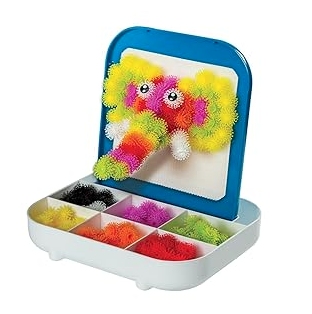
Bunchems are small, fuzzy, colourful balls that press together and hold without glue, water or heat, which makes them a wonderfully forgiving building toy for young children. We came across them at a toy library this week, and they turned out to be a perfect match for a child who loves construction in every form.
My daughter spends hours building with all sorts of materials, from classic bricks and magnetic tiles to wooden sticks, cardboard boxes and blankets for dens. Bunchems fit right into that habit: almost anything can be made from them, and the whole thing can be taken apart and started again as often as you like.

Quick takeaways
- Bunchems are fuzzy balls that stick together by pressing, with no glue, water or heat.
- Accessories clip on and off easily, so creations can be rebuilt endlessly.
- Recommended from around four years old, with adult supervision for younger children.
- Tie back long hair before play, as the hooks catch strands very easily.
- A wall-mounted hook-and-loop sheet opens up vertical building.
- A lidded tub keeps colours sorted and pieces contained.
What Are Bunchems and How Do They Work?
Bunchems are little balls covered in tiny hooks that grip each other when you press them together. No glue, no water and no heat are needed, and the connection is easy to undo, so children can rebuild endlessly without the frustration of a permanent mistake. That forgiving quality is what makes them so appealing for younger builders.
Once a shape is assembled, small accessories clip on and pull off just as easily, which adds eyes, wings or limbs to whatever has been made. Because the pieces are soft rather than rigid, the finished creations feel more like characters than models, and children naturally start inventing stories around them. If you want to broaden the collection, browsing open ended toys helps you see which materials reward this kind of free play.
They also sit comfortably alongside other construction favourites, from bricks to magnetic sets, so they rarely end up abandoned at the back of the cupboard.

Creative Play Ideas for Children
The most charming thing about Bunchems is how quickly a pile of coloured balls becomes a character with a personality. My daughter built little figures and immediately gave them names, voices and adventures, which turned a construction session into an hour of storytelling. That shift from building to imagining is exactly what you hope for from a toy.
The toy librarians suggested a lovely variation: a large sheet of hook-and-loop fabric fixed to the wall, so children can build vertically instead of on a table. The children loved it, and it changes the whole physical experience of playing. Similar ideas work well with making towers and other stacking games, where height and balance become part of the challenge. Quiet play like this also fits neatly around returning to work and busy family routines.
Setting Up a Play Space
A flat tray with a raised edge keeps the balls from rolling onto the floor, and a clear surface makes small pieces easier to find. Keep the accessories in a shallow box so they can be sorted by type. Big families will recognise the appeal, as celebrities with large families know well.

| Feature | What It Means | Practical Tip |
|---|---|---|
| How they stick | Pressed together, no glue or heat | Show your child the pressing motion first |
| Rebuilding | Creations pull apart easily | Store pieces loose, not pre-built |
| Accessories | Clip on and off | Keep them in a shallow sorted box |
| Age range | From about four years | Supervise younger siblings closely |
| Hair risk | Hooks catch long strands | Tie hair back before starting |
| Storage | Small pieces roll away | Use a lidded tub or edged tray |
Age Guidance and Safety Points
Bunchems are generally recommended from around four years old, which matches the level of fine motor control they require. Younger children may find the pressing motion fiddly and are also more likely to put small parts in their mouths, so supervision matters. If you are choosing gifts for a slightly older child, our guide to birthday gift toys covers what tends to work well at that stage.
The one practical warning worth repeating: long hair and Bunchems do not mix well. The little hooks catch in strands very easily, and untangling can be painful, so it is far simpler to tie hair back before play begins. A quick ponytail or plait at the start of a session prevents almost every problem.
It also helps to keep the balls away from woolly jumpers, blankets and pet fur, since they grip those surfaces just as eagerly as they grip each other. A quick check of the play area before tipping them out saves a lot of picking later.

Where to Buy Bunchems
Bunchems turn up in cultural centres, toy shops and online retailers, and toy libraries are often a good place to try before buying. If you prefer to shop in person, our round-ups of toy stores Jacksonville and toy stores Denver show what specialist shops can offer that large chains sometimes cannot.
Before committing to a set, think about how your child already plays. A child who loves free building will get more from a larger tub of plain balls, while one who enjoys characters will appreciate the accessory packs. Reading about toddler toys and how play develops at different ages can help you judge whether the recommended age range fits your own child.
Storage is worth planning too: a lidded tub keeps colours sorted and stops the balls migrating under furniture.

Why This Kind of Toy Earns Its Place
Toys that can be rebuilt in endless variations tend to stay in use far longer than single-outcome kits. Bunchems sit in that category: there is no correct result, no instructions to follow and no penalty for getting it wrong, which encourages experimentation. That is the same reason simple blocks and stacking games endure, as we explored in our piece on making towers.
They also travel well. A small bag of balls is enough to occupy a child in a waiting room or on a journey, and there are no loose pieces to lose in the same way as a puzzle. For families balancing work and childcare, having a compact, absorbing activity on hand is genuinely useful, much like the strategies in our teleworking with children guide. Parents dealing with children losing hair may also appreciate a calm, mess-free distraction.
None of this makes Bunchems essential, but as one option among many in a well-stocked play cupboard, they earn their space.

My hands-on take
I first handed my daughter a tub of Bunchems on a rainy afternoon, half expecting her to lose interest once the novelty wore off. Instead she built a small family of creatures, gave each one a voice and spent the rest of the morning narrating their adventures. What struck me was how little guidance she needed: the toy does the explaining.
The lesson I took away was about hair. Our first session ended with a strand wrapped around three balls and a very unhappy child, so now tying hair back is simply part of getting the tub out, along with a quick sweep of the sofa for stray pieces. Since then it has become one of those reliable activities I reach for when I need twenty quiet minutes, and the lidded tub means tidying up takes seconds rather than an age.
Frequently asked questions
Do Bunchems need glue or water to stick?
No. The balls grip each other when pressed together, and the connection can be pulled apart again without damaging anything. That is what allows children to rebuild the same set over and over.
What age are Bunchems suitable for?
They are generally recommended from around four years old, when children have enough fine motor control to press the pieces together. Younger children should always be supervised because of the small parts.
How do you stop Bunchems getting tangled in hair?
Tie long hair back in a ponytail or plait before play begins. The tiny hooks catch strands very easily, and preventing the tangle is much easier than removing it afterwards.
Can Bunchems be used on a wall?
Yes. A large sheet of hook-and-loop fabric fixed to a wall lets children build vertically, which adds a fun physical challenge. The pieces grip the fabric in the same way they grip each other.
Product Reviews
 Best Toys for Dogs With High Prey Drive |
Best Outdoor Toys for 3-4 Year Olds |
Best Outdoor Toys for 6 Year Olds |
Best Harness for Poodle |
Best LEGO Sets for Adults |
Best Travel Toys for 4 Year Olds on Airplane |
Best Toy Stores in Washington DC |
Best Potty Training Toys |
Best Toys for Tripod Dogs |
Maillot equipe de france







