


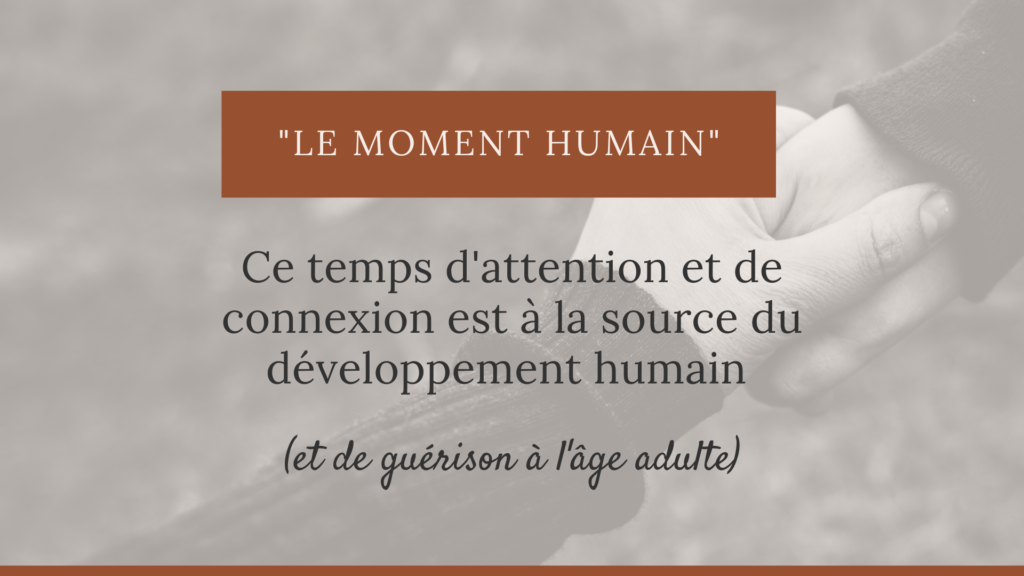
The human moment is a brief stretch of genuine presence and attention given to another person, and it sits at the very source of human development. It is the ordinary, unglamorous time when a parent truly sees a child and the child feels seen in return.
Attachment theory, first developed by Bowlby, explains why these moments matter so much. A baby needs to feel secure from birth, through adults who respond to physiological, emotional and affective needs alike. When those responses are adequate and consistent, the child builds trust instead of strategies for coping with being unheard.

This article unpacks the human moment, the internal working models that grow out of early care, and the practical ways parents can offer connection day after day.
Quick takeaways
- The human moment is a short stretch of real presence and attention given to another person.
- Secure attachment grows from adequate, consistent responses to a child's signals.
- Internal working models are mental pictures of self and others formed in early interaction.
- Insecure attachment takes three forms: anxious, avoidant and disorganised.
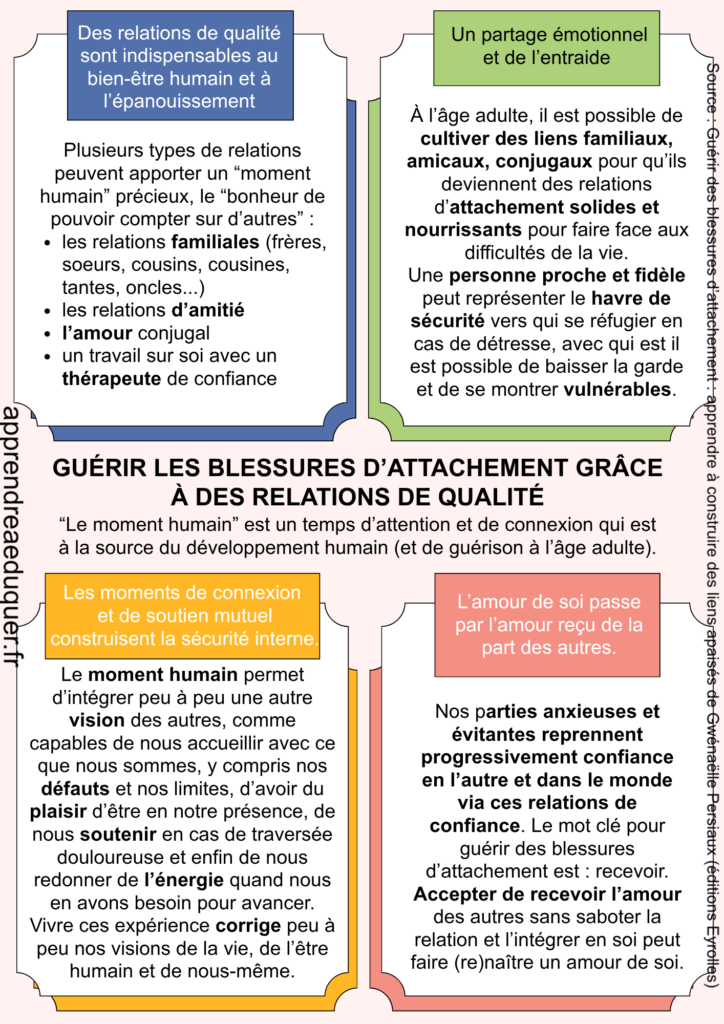
- Missing human moments in childhood can still be completed in adulthood through relationships.
- Repair matters more than perfection: a missed moment can be followed by a better one.
Attachment theory and the human moment
Bowlby's attachment theory holds that the attachment system exists to keep a baby close to a caregiver who can meet vital needs. The key difference between secure and insecure attachment lies in the quality of the response: in the secure case, the parent answers signals adequately, and the child does not have to work hard to be heard, noticed and loved.
In the insecure case, the response is either poorly adapted or inconsistent, so the child develops particular coping strategies. These show up as internal working models, the mental representations of self and others formed through early interaction. According to the theory, these representations and the behaviours that follow are the result of early experiences, especially in the first year of life, which leave traces that are close to irreversible. Everyday moments of care, such as children's knives, can also become part of this early relational experience.
Gwénaëlle Persiaux, in her book on healing attachment wounds, builds on this framework to argue that quality relationships are indispensable to human wellbeing and fulfilment. Edward Hallowell, a professor at Harvard, coined the term "human moment" for this time of presence and attention given to another person, which leaves that person with a deep sense of satisfaction. This same attention matters when you search for a future preschool.
Internal working models in attachment theory
Internal working models are the mental pictures a person forms of themselves and of others through interactions with the primary attachment figure. They amount to a worldview and a set of expectations: humans tend to expect, as adults, to be treated by other adults the way their main caregivers treated them in childhood.
These models shape how we read other people, how safe we feel exploring the world, and how much we trust that our needs will be met. They are not a life sentence, but they are durable, which is why early care carries such weight, and even small shared rituals, like fun ideas, can reinforce that sense of security.
Secure attachment and the human moment
Models that emerge from adequate care are marked by confidence, because the child has lived an attachment relationship grounded in emotional intimacy and safety. The person feels secure about their need for protection, holding a mental image of the caregiver as a secure base: somewhere to move away from in order to explore, and somewhere to return to when needed. They can direct attention to the signals around them without harm and manage interpersonal relationships well, and understanding topics such as bilirubin in newborns can support attentive early care.
| Attachment pattern | Core experience | Typical adult behaviour |
|---|---|---|
| Secure | Needs met adequately and consistently | Explores freely and returns to a secure base |
| Anxious or ambivalent | Attention received in scraps | Over-activates closeness and wants more |
| Avoidant or detached | Rejection or indifference | Deactivates needs and keeps distance |
| Disorganised | Caregiver is both comfort and fear | Lacks a coherent strategy for closeness |
Insecure attachment: three patterns
Models that emerge from inadequate care are marked by emotional insecurity and a lack of confidence in oneself and in the relationship. This is what is called insecure attachment, and it takes three main forms.
Anxious or ambivalent attachment
Fear and ambivalence dominate here, blocking genuine reparative connection. The person has learned to over-activate the attachment system to obtain scraps of attention: talking a lot, clinging, demanding presence more often. They may seem fusion-like, and their relational clumsiness is really an attempt to finally be seen, heard, understood and fully welcomed. As Persiaux puts it, ambivalence lies in a double movement: needing the other, being unable to do without them, yet finding it is never enough and always wanting more. Until such people experience satisfying relationships where they feel met in their emotions and needs, they stay dependent on others to calm down.
Avoidant or detached attachment
The adult has learned to protect against rejection and indifference by staying away from intimate relationships and intense emotions. They have learned to deactivate the attachment system, minimising emotions and relational needs, and to manage alone in order to control inner distress. Intimacy and closeness frighten them. Most nonetheless thirst for something else, for close relationships and deeper sharing, but do not know how to get there. Their sensitivity is often great and beautiful, yet hidden behind a facade of independence and "nothing touches me."
Disorganised attachment and repair
Disorganised attachment is the third insecure pattern, and it is the most complex. It typically arises when the attachment figure is simultaneously a source of fear and a source of comfort, leaving the child without a coherent strategy. The child cannot approach and cannot retreat with confidence, so the attachment system short-circuits.
What matters for parents reading this is the direction of repair. Even when we did not receive enough human moments in childhood and adolescence, leaving an insecure attachment style, it is always possible to complete that missing dose in adulthood. It is far from easy for people with insecure attachment, but it is possible, and it usually happens through relationships rather than alone.
Offering human moments day to day
The human moment is not a technique or a scheduled activity. It is a quality of attention: putting the phone down, turning toward the child, and letting them feel that for these few minutes they are the whole world. A few minutes of this kind of presence often does more than an hour of distracted company.
In practice, this means answering signals rather than ignoring them, naming what you see, and staying warm even when the answer is no. It also means accepting that repair matters more than perfection: a missed moment can be followed by a better one. Parents who grew up with insecure attachment can start small, offering the attention they themselves needed, and letting those moments accumulate over time.

My hands-on take
When I first read about the human moment, I recognised something I had been doing without a name. On busy days I would be in the same room as my child for hours, answering questions and handing out snacks, yet barely looking up. The shift came when I started setting aside a few minutes with nothing else going on: no phone, no chores, no agenda. It felt almost too simple to matter, and at first my child tested it, as if waiting for me to drift away again.
What helped most was lowering the bar. I stopped aiming for long, perfect stretches of attention and aimed for short, real ones instead. A few minutes of genuine presence, repeated, did more than a planned "quality afternoon" that never quite happened. I also learned to repair quickly when I got it wrong, rather than treating a distracted moment as a failure.
Frequently asked questions
What exactly is a human moment?
It is a short period of genuine presence and attention given to another person, which leaves them with a deep sense of satisfaction. It is not about duration but about the quality of connection.
Can insecure attachment change in adulthood?
Yes. Missing human moments from childhood can still be completed later in life, though it is far from easy for people with insecure attachment. It usually happens through satisfying relationships where a person feels seen and met.
Do internal working models ever change?
They are durable and shaped by early experience, but they are not fixed forever. New relational experiences can gradually reshape the expectations a person carries into relationships.
Why does consistency matter so much?
Because a child does not have to work hard to be heard when responses are adequate and predictable. Inconsistent responses push the child toward coping strategies instead of trust.
Product Reviews
 Best Toys for Dogs With High Prey Drive |
Best Outdoor Toys for 3-4 Year Olds |
Best Outdoor Toys for 6 Year Olds |
Best Harness for Poodle |
Best LEGO Sets for Adults |
Best Travel Toys for 4 Year Olds on Airplane |
Best Toy Stores in Washington DC |
Best Potty Training Toys |
Best Toys for Tripod Dogs |
Maillot equipe de france







