


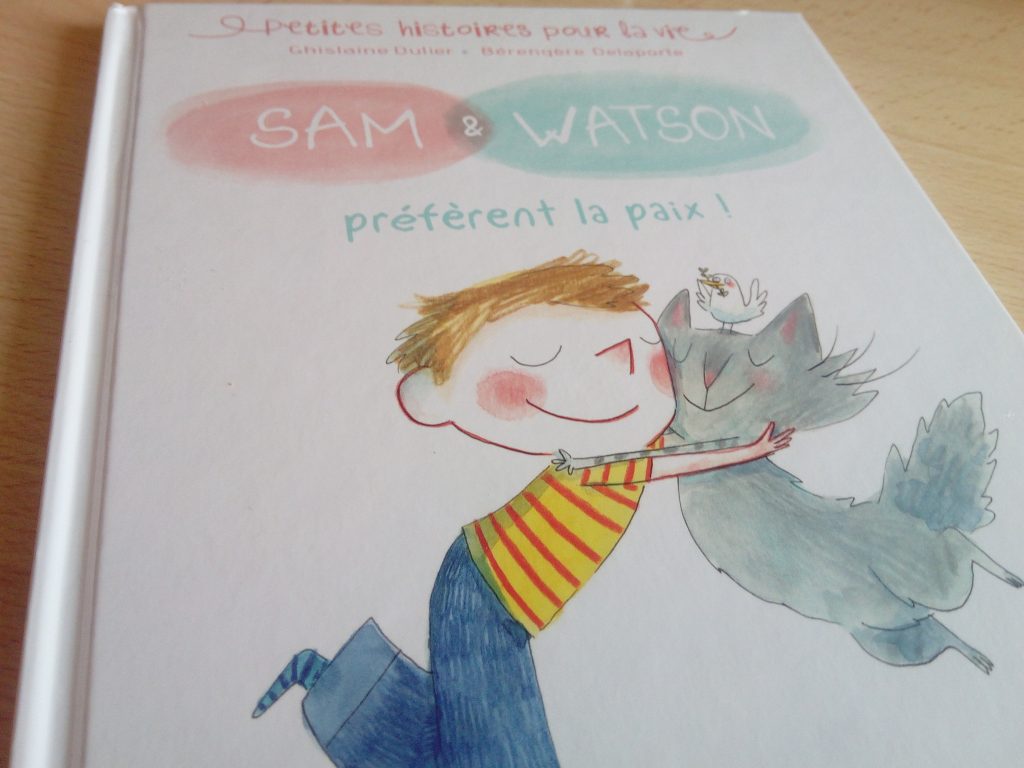
Teaching children inner peace is the quiet heart of a picture book in which a curious boy and his wise cat explore what it really means to feel calm and safe inside.
Young children ask big questions: why do some people want war, how do we make peace, and can we make up after a quarrel? This story meets those questions with humour and lightness rather than heavy explanations.

Through Sam and his cat Watson, the book shows that the secret to peace with others begins with peace with ourselves, and it invites children to try a simple calming exercise alongside the characters.
Quick takeaways
- A picture book that explains inner peace to children from age four.
- Sam asks big questions; Watson the cat offers calm, thoughtful answers.
- A guided meditation children can follow along with the story.
- A tale of a wise sage shows how to refuse violence without fighting.
- Sam shares the lesson with his parents, easing a near-argument.
- Useful for parents, educators, child psychiatrists and speech therapists.
What the book is about
In this story, Sam worries about the people who start wars, and Watson gently explains how peace can take hold. Even with friends, it is hard never to argue, and the cat points out that the real secret is making peace with yourself first.
The two companions carry the whole tale: Sam is the small boy full of questions about life, and Watson is the wise cat who offers thoughtful answers. While Sam wonders where violence comes from and why wars begin, Watson suggests that war lives in our heads, and that calm can be cultivated inside us.
That idea of a peaceful inner place is close to the emotional grounding we build through everyday importance of play, where children rehearse calm and cooperation without being lectured. Learning to accept ourselves, as we remind families in loving your stretch marks, is part of that same gentle self-acceptance.
A guided meditation children can follow
Watson offers Sam an exercise to help him find inner peace so that a shared, collective peace can grow from it. He leads a short guided meditation that children can do at the same time as Sam, simply by listening along.
The cat reminds the boy that he can call on this peaceful, pleasant, warm and soft place at any moment. Inside that quiet bubble he feels good, and he can let his thoughts drift past: being at peace means being here, just here.
Why the exercise works for young children
Children respond well to a concrete image they can return to, and a warm inner place is easy to picture. Pairing the meditation with a calm bedtime routine, such as the ideas in baby sleep methods, helps the practice settle into daily life. As César Bona reminds us, calm begins with the adults, and caring for the mother's sleep makes that steadiness easier to offer.

| Moment | What to do | Why it helps |
|---|---|---|
| First read | Read slowly and pause at the meditation | Lets the child picture the calm place |
| After a quarrel | Recall the sage and the unwanted object | Gives a concrete choice about anger |
| Bedtime | Repeat the warm inner place image | Builds a familiar calming routine |
| Family tension | Share the story together | Models calm and repair |
| Repeated reading | Return to it whenever needed | Reinforces the idea over time |
The story of the wise old sage
The clever cat then tells a small story about a great sage from long ago. One day a man attacked the sage, accusing him of not acting enough and of merely resting in a state of kind, open presence.
Some time later the man felt ashamed and apologised. The sage answered calmly that when someone hands you an object you do not want, you simply do not take it, and that violence works the same way: he did not want it, so he did not take it.
Reading this tale, children can almost feel peace entering their hearts, and it opens a natural conversation about handling anger, much like the reassurance found in high-flying plan for anxious moments.

When Sam shares the story with his parents
Sam later tells the story to his parents, and they thank him because it was exactly what they needed to hear. They had in fact been on the verge of arguing with each other.
This scene shows how quickly children absorb and pass on what they learn, and how a simple image can defuse tension at home. It is a gentle reminder that modelling calm matters as much as explaining it.
Books like this sit naturally beside other stories that open big topics, such as books about democracy or tales that make mathematics fun, because children learn through narrative.

Who this book is for and how to use it
The album is designed to pass on the notion of inner peace, that state in which children feel well, safe, and able to create it within themselves. It is recommended from the age of four.
Parents, educators, child psychiatrists and speech therapists will find it a useful starting point for conversations about conflict and reconciliation. Read it slowly, pause at the meditation, and let your child try the exercise with you.
For families building a calm reading corner, it pairs well with toddler toys for younger siblings and with foam block toys for quiet, hands-on play afterwards.

Everyday ways to nurture inner peace
Beyond the book, small routines help children return to that warm inner place. A few slow breaths before a difficult moment, a quiet corner with cushions, or a short story at bedtime all reinforce the message.
When a quarrel happens, you can borrow the sage's image: ask whether your child wants to pick up the anger or leave it in the other person's hands. It gives them a concrete choice rather than a scolding.
Keep the tone light, as the book does, and let the practice grow through repetition rather than pressure.

My hands-on take
I have read this kind of story with my own child during a stretch of squabbles at home, and what struck me was how quickly the sage's image landed. Instead of telling him to stop being angry, I could ask whether he wanted to pick up what was being handed to him. He paused, thought, and usually let it go.
The guided meditation took a few tries before he would sit with it, so I stopped pushing and simply read it slowly at bedtime. After a couple of weeks he started describing his own quiet place without prompting. My takeaway is that the book works best when you let it breathe rather than turning it into a lesson.
Frequently asked questions
What age is this book suitable for?
It is recommended from the age of four, when children begin asking big questions about conflict and reconciliation. Younger children can still enjoy the pictures and the cat's gentle tone.
Does the book include an actual meditation?
Yes, Watson leads a short guided meditation that children can follow along with Sam. It invites them to picture a peaceful, warm place they can return to at any time.
Can it help after a real argument at home?
The story shows Sam's parents thanking him because they were about to argue, which opens a natural conversation. It works best as a starting point rather than a cure.
Is it only for parents?
No, educators, child psychiatrists and speech therapists are also mentioned as an audience. Anyone who talks with children about emotions can use it.
Product Reviews
 Best Toys for Dogs With High Prey Drive |
Best Outdoor Toys for 3-4 Year Olds |
Best Outdoor Toys for 6 Year Olds |
Best Harness for Poodle |
Best LEGO Sets for Adults |
Best Travel Toys for 4 Year Olds on Airplane |
Best Toy Stores in Washington DC |
Best Potty Training Toys |
Best Toys for Tripod Dogs |
Maillot equipe de france







