


Memorizing facts is still essential in the age of internet, because thinking itself depends on what we already hold in long-term memory. General knowledge is not a dusty relic of the past; it is the raw material that makes reading, reasoning and problem-solving possible.
Cognitive psychology offers a clear answer to a question many parents ask: why learn anything when a search engine is one tap away? The answer is that skills and knowledge cannot be separated, and a child who knows more finds it easier to learn more.

Quick takeaways
- Thinking is combining information, and most of that information comes from memory.
- General knowledge is a precondition for learning skills, not a rival to them.
- Topic knowledge predicts reading comprehension better than reading ability alone.
- Experts often rely on remembered patterns more than on deliberate reasoning.
- The more you know, the easier it is to learn and remember more.
- Parents build knowledge through reading, conversation and shared experiences.
Thinking needs facts to work with
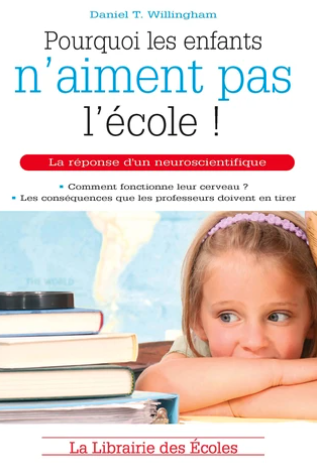
Daniel T. Willingham, a Harvard-trained cognitive psychologist, argues that general knowledge is a precondition for learning skills. Facts and competencies should be taught together, never one without the other. Thinking, he explains, is simply a new way of combining information, and that information comes either from long-term memory or from the environment.
Reasoning and problem-solving are tied to the factual knowledge stored in memory, not only to what a screen can show in the moment. This is why parents who want to raise curious children should also build a base of knowledge at home, alongside hands-on play such as screen free toys that keeps young minds active.
Knowledge and critical thinking go hand in hand
Critical-thinking procedures seem independent of content, but applying them requires real knowledge of the subject. A child cannot analyse a topic they know nothing about, which is why general knowledge must be taught deliberately.
How general knowledge supports reading
General knowledge helps us understand what we hear and read. If we lack certain words or concepts, comprehension becomes impossible, and understanding a text also means grasping the links between ideas, not just each idea alone.
The work of D. Recht and L. Leslie on good and poor readers showed that knowledge about a topic has more impact on comprehension than reading ability itself. A weaker reader who knows the subject often understands more than a stronger reader who does not.
Four concrete benefits
Knowledge enriches vocabulary, helps readers catch implicit links and omissions, lets them group information so working memory has more room for associations, and clarifies ambiguous sentences. Even a simple storybook read aloud, such as those by Julia Donaldson, becomes richer when a child already recognises the themes.

| Mental task | What knowledge contributes | Everyday example |
|---|---|---|
| Reading a text | Vocabulary, implicit links, grouped ideas | Understanding a story with unfamiliar themes |
| Solving a problem | Remembered cases and patterns | A chess player recognising a position |
| Critical thinking | Subject content to analyse | Debating a news item with context |
| Learning something new | Cues that connect new facts to old | A museum visit before a lesson |
| Understanding ambiguity | Concepts that clarify meaning | Catching a joke or a double meaning |
Memory is the first tool we reach for
Willingham warns that when we believe someone is reasoning logically, they are often simply drawing on memory. Memory is the first cognitive process we use: faced with a problem, we search our memories for a solution and usually apply the one we find.
His example is chess. What separates the world's best players is not tactical reasoning or long reflection but memory of positions and situations, and analysis built on that store of remembered patterns. The same applies to children solving puzzles or building with construction sets, an activity that rewards remembered techniques and familiar pieces like those in transformer toys.
Not every problem is a memory problem
Some problems genuinely require reflection, and even then knowledge of the subject is needed. That is the point: general knowledge does not replace thinking, it makes thinking possible.
Knowledge makes new learning easier
Willingham's formula is simple: the more you know, the easier it is to know more. New information is easier to learn when you already understand the topic, because you can connect it to what is already stored.
To remember things, we essentially prompt our memory with cues, and a richer store of knowledge provides more of those cues. This is why a child who has visited museums, cooked, travelled or played widely has more hooks for new facts, and why family experiences such as natural Europe routes or a first pet chosen from dog breeds feed that store.
What parents can do
Read widely, talk about what you read, and let children explore topics deeply rather than skimming. Everyday moments, from a first football game to choosing toys from toys for 4 year olds, can become knowledge-building conversations.
Balancing screens, facts and skills
The argument is not against the internet but against outsourcing all memory to it. A connected child still needs a mental library to evaluate what a search returns, and that library is built through repetition, conversation and reading.
Practical routines help: narrate daily life, ask children to explain what they learned, and keep a few reference books around. Even screen habits can be framed thoughtfully, as discussions around mobile phones show, and quiet play with toys for kids who love cars or a set of toys for newborns can anchor early knowledge in the senses.
A simple rule for families
Treat knowledge and skills as partners. Memorising facts is not the opposite of thinking; it is the ground on which thinking grows.

My hands-on take
In my own home, I stopped treating facts as something a search could replace. When my child asked why the moon changes shape, we looked it up together, but we also talked about it for days afterwards, and I noticed the next explanation stuck far better because it connected to something already familiar.
What worked best was not flashcards but conversation. Books read aloud, walks where we named plants, and building sessions where a remembered technique saved the day all added up. I now see memory as a library my child is slowly stocking, and every new fact makes the next one easier to shelve.
Frequently asked questions
Is memorizing facts pointless now that we have search engines?
No. Search engines supply information, but thinking requires information already in memory to combine and evaluate it. Facts and skills are learned together.
Does general knowledge really help reading?
Yes. Research on good and poor readers found that knowledge about a topic affects comprehension more than reading ability does.
Why do experts seem to think less than beginners?
They often recognise familiar patterns from memory rather than reasoning step by step. Their memory does the heavy lifting.
How can parents build general knowledge at home?
Read widely, discuss what you read, and turn daily experiences into conversations. Depth on a few topics beats skimming many.
Product Reviews
 Best Toys for Dogs With High Prey Drive |
Best Outdoor Toys for 3-4 Year Olds |
Best Outdoor Toys for 6 Year Olds |
Best Harness for Poodle |
Best LEGO Sets for Adults |
Best Travel Toys for 4 Year Olds on Airplane |
Best Toy Stores in Washington DC |
Best Potty Training Toys |
Best Toys for Tripod Dogs |
Maillot equipe de france







