


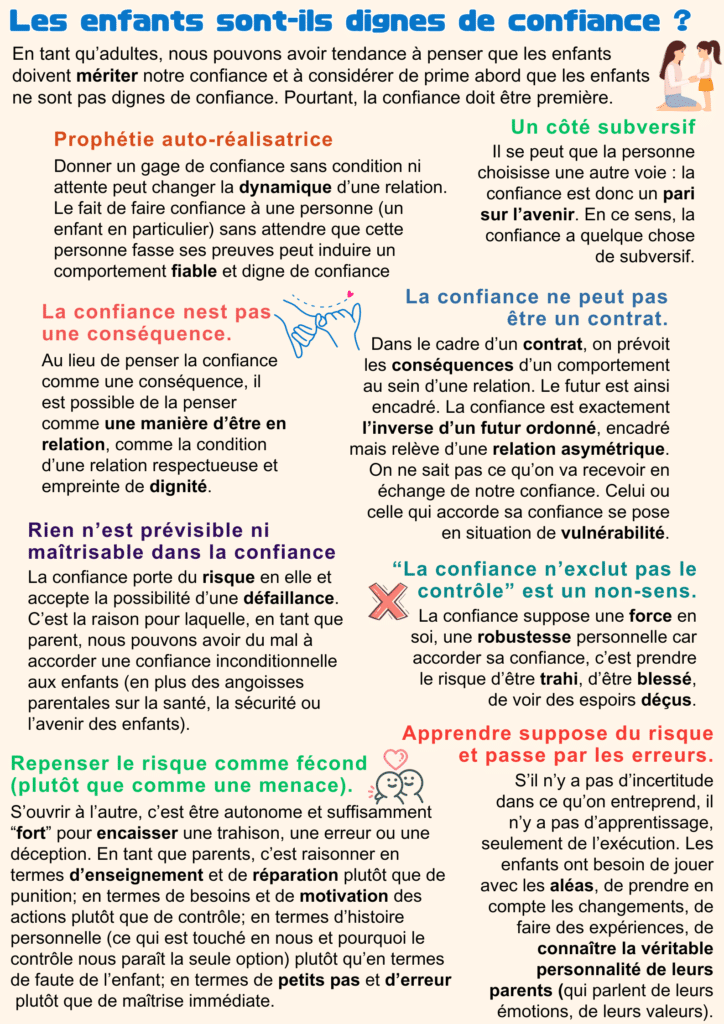
Trusting your child is harder than it sounds, even though the advice is everywhere: trust your children, give them time to make their own experiences, and stop doing things in their place. In practice, most of us are often tempted to take over, to hurry a child through an action, or to skip the slow business of letting them repair their own little mishaps.
When I catch myself rushing to do something for my daughter because she is not moving fast enough, I ask myself a simple question: what could possibly be more urgent than watching her learn? Doing it for her might save us three minutes, but three minutes to do what, exactly, that is better than letting her learn?

Quick takeaways
- Ask yourself what is more urgent than watching your child learn.
- Saving three minutes by taking over costs your child a learning moment.
- Mistakes are how children build autonomy and self-confidence.
- Give time to spill, fall, retry and find their own solution.
- Guide with questions like "how can you fix this?" instead of rescuing.
- Stay close and supportive, but let the child finish the task.
The three-minute trap
Doing a task in your child's place feels efficient, and that is exactly the problem. If you dress your child every morning to save time, how will they ever learn to dress alone? If you always pour the water for fear of a spill, how will they learn to pour it themselves? These small shortcuts quietly create frustration and dependence.
Children are capable of finding solutions to everyday problems from a very young age. Our role is not to perform the task but to act as guides and facilitators of learning. The same patience pays off when you are helping a child sleep routine phrases or simply trying to communicate effectively through a difficult moment.
That does not mean stepping back entirely. A calm, supportive presence and a well-timed question keep the child moving forward without taking the learning away from them.
Let them get it wrong
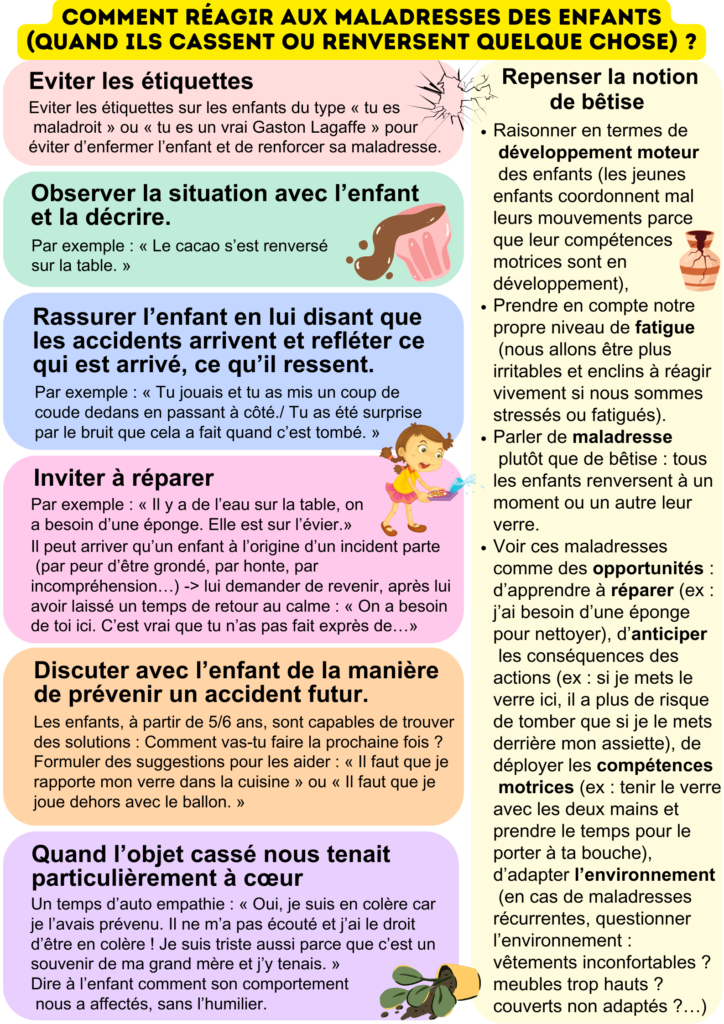
I often have to stop myself from intervening when my daughter screws a cap on upside down or puts her swimsuit on back to front. Making mistakes is how she learns, builds autonomy and gains confidence in herself. A child who is never allowed to fail never discovers that they can recover.
Think about how children learn to put on their coat at school: jacket on the floor, upside down, arms in, flip. It is not an orthodox method, but it works, and they have plenty of time to learn the conventional way. I have never seen an adult lay their coat upside down on the floor before putting it on. If your child is still very small, the six month old toys you choose can already encourage this kind of independent handling.
| Situation | Taking over | Letting them try |
|---|---|---|
| Getting dressed | You dress them to save time | They practise, even backwards |
| Pouring water | You always pour it | They pour and sometimes spill |
| Putting on a coat | You hold it out for them | They use the floor-flip method |
| A mistake happens | You fix it immediately | You ask "how can you repair it?" |
| Result over time | Dependence and frustration | Autonomy and confidence |
Give them time, not a stopwatch
Trust also means time. Time to find their own solution, to spill the glass, to wear the swimsuit backwards, to fall and get back up. Rushing a child through these moments teaches them that someone else will always finish the job, which is the opposite of autonomy.
Alongside that freedom, keep asking questions that steer them toward the right path rather than correcting them outright. A kind "how can you fix this?" invites problem-solving instead of shame. The same guiding tone helps when you need to reconcile work schedules around family life, or when you are choosing something as ordinary as toddler toys that match their current abilities.
Guide, don't take over
Being a facilitator does not mean disappearing. It means staying close, observing, and offering just enough help for the child to succeed on their own. When a child is struggling, a short question or a hint often does more than a rescue.
This attitude also protects the parent-child relationship. Instead of a daily battle over who does what, you build a habit of cooperation and mutual confidence. It is a useful mindset to carry into bigger transitions too, such as preparing a newborn first days routine or planning family holidays where children can take on small responsibilities.
A habit that grows with them
Trust is not a single decision; it is a daily practice that builds up over years. The child who pours their own water today will be the one who packs their own bag tomorrow, and the one who solves bigger problems later. Each small act of confidence lays a brick for the next.
Some days you will be too tired or too late to wait, and that is fine. What matters is the overall direction: fewer rescues, more attempts, and a steady belief that your child is capable. Even choosing travel toys becomes an opportunity to let them decide and manage their own things.

My hands-on take
I recognise myself in every line about rushing. Just this morning I caught my hand reaching to flip my daughter's coat the right way up because we were late, and I made myself step back and watch her do it her way. It took longer, and it looked odd, but she was so pleased with herself that the extra minute felt like a bargain.
What helps me most is the question I now ask myself whenever I feel the urge to intervene: what is so urgent that it beats watching her learn? Most of the time the honest answer is nothing. I still get it wrong on busy days, but the direction has changed, and that seems to be what counts.
Frequently asked questions
Is it bad to help my child when they struggle?
No. Helping is fine; the key is to help just enough rather than doing the whole task for them. A short hint or question often lets them finish on their own.
How do I stop rushing my child in the morning?
Build in a little extra time where you can, and accept that some mornings you will take over. The overall habit matters more than any single day.
What if my child gets frustrated when they fail?
Stay calm and ask how they can fix it. Framing mistakes as normal steps in learning helps them recover instead of giving up.
Does trusting my child mean letting them do anything?
No. Trust means giving age-appropriate freedom while staying nearby as a guide. You still set limits and keep them safe.
Product Reviews
 Best Toys for Dogs With High Prey Drive |
Best Outdoor Toys for 3-4 Year Olds |
Best Outdoor Toys for 6 Year Olds |
Best Harness for Poodle |
Best LEGO Sets for Adults |
Best Travel Toys for 4 Year Olds on Airplane |
Best Toy Stores in Washington DC |
Best Potty Training Toys |
Best Toys for Tripod Dogs |
Maillot equipe de france







