


Safe baby sleep comes down to a set of risk factors and protective factors that parents can actually influence, rather than one single cause. Research carried out in Canada, the United Kingdom and the United States, summarized by Bernadette Lavollay in her book on babies' real needs, describes sudden infant death during sleep as the result of several factors interacting with one another.
That framing is useful, because it moves the conversation away from blame and toward practical habits. Some babies are more vulnerable than others, and some situations add stress. Around those two realities sit simple choices about position, bedding, smoke and temperature that every family can review.

Quick takeaways
- Sudden infant death is usually the result of several interacting factors, not one cause
- Babies aged one to six months are in a particularly critical period
- Prematurity, low birth weight and smoke exposure during pregnancy raise vulnerability
- Back sleeping, a firm mattress and a bare cot are core safety habits
- Breastfeeding and room sharing are the two most significant protective factors
- Bed sharing is discouraged with smoking, alcohol, obesity, illness or unsafe bedding
What Makes Some Babies More Vulnerable
Sudden infant death during sleep is usually described as the result of multiple factors interacting, not a single cause. One of those factors is timing: the period between one and six months is considered particularly critical for babies.
A second factor is the child's own vulnerability. Babies born prematurely, or with a weight too low for their term, are among the most vulnerable. So are babies exposed to tobacco, alcohol or drugs during pregnancy, and certain children with a genetic predisposition, an innate metabolic error, or a malformation affecting the larynx or the lower jaw.
External Stress on Top of Vulnerability
The third category is outside stress, which includes the prone position, room temperature that is too low or too high, a covered face, sleep deprivation, infection and inflammation, sedative medication and toxic substances. If you are preparing a hospital bag or planning the first weeks, our guide to baby luggage is a helpful companion, but the sleep setup matters just as much.
The Risk Factors Most Often Linked to Unsafe Sleep
Among all the factors studied, a few appear most often alongside sudden infant death during sleep. The first is the prone position: placing a baby on the stomach to sleep is repeatedly associated with higher risk, and parents often ask whether a baby should be turned.
The second is poor bedding conditions that encourage suffocation and obstruct breathing. That includes unsuitable bedding, a mattress that does not fit the bed frame or is made of microbeads, and objects that can block the airways, such as a blanket, a bumper, soft toys, pillows or jewellery. The third is tobacco: exposure during pregnancy, a smoking environment around the baby, and carbon monoxide exhaled during nighttime closeness when parents and children sleep in the same room.
The fourth is overheating, whether from an excessively warm room or the use of a duvet. A firm, flat surface and a light layer are far safer than a soft nest of covers, and the same care applies to the small toys that later fill a playroom, such as the toys for crawling. As one pediatrician reminds us, parents are the mirror in which children reflect themselves every morning.
| Element | Safer choice | To avoid |
|---|---|---|
| Sleep position | On the back, day and night | Stomach sleeping |
| Sleep surface | Flat, firm mattress with fitted sheets | Soft, ill-fitting or microbead mattresses |
| Cot contents | Nothing but the baby | Bumpers, pillows, duvets, toys, jewellery |
| Room setup | Cot near the parents' bed | Separate room too early |
| Clothing | Light layer, sleep sack in the baby's size | Overheating, extra sleep suits |
| Room temperature | Between 18 and 20 °C | Overheated room, covered face |
Protective Factors: Breastfeeding and Room Sharing
On the other side are protective factors that lower the risk of sudden infant death, and two stand out as particularly significant: breastfeeding and sharing the parents' bedroom.
Closeness matters when a baby sleeps in the same room as the parents. Room sharing helps parents respond to the baby's needs, makes nighttime feeding easier, and helps them hear the baby waking and answer more quickly. In turn, that tends to mean more sleep for both mother and baby.
One point is worth stating clearly: swaddling, or wrapping a baby in a cloth, is not a protective factor. It is a soothing technique, not a safety measure, and it should never replace the basics of position and bedding. Families who are also choosing equipment for the months ahead may find our selection of toys for 5 year olds useful later, but for now the cot and the parents' room are the priority.
International Recommendations for Safer Sleep
International guidance converges on a short list of habits. Always place the baby on the back, for naps as well as at night. Do not smoke near the baby and avoid a smoky atmosphere. Put the baby to sleep alone in a crib or cot.
Keep toys and ill-fitting bedding out of the cot, and skip the bumper entirely. For the first six months, the cot should stand near the adults' bed. The mattress must be flat and firm, with fitted sheets that hug it properly, and the cot itself should meet safety standards. The baby's face must never be covered, and no necklace, jewel or object should hinder breathing.
Dress the baby lightly and avoid overheating: a sleep sack sized to the baby fits better than a blanket, and the ideal room temperature is between 18 and 20 °C. Readers who enjoy a calm, prepared home often like our ideas on stocking stuffer toys for older siblings, but the nursery should stay bare and simple. Parents of multiples may also appreciate these parenting tricks.

Bed Sharing: Risks, Benefits and the Side-Car Solution
Attitudes toward bed sharing can only be individual and respectful of each family, but they should rest on information about proven risks. Sharing the bed is discouraged in several situations.
These include bottle-feeding with formula, since breastfeeding has a protective effect; smoking by the mother or by the person sleeping beside her, because of carbon monoxide exhaled close to the baby; maternal obesity; and the use of alcohol, drugs or medication that alters alertness and sleep. A maternal illness that changes vigilance, unusual maternal fatigue or fever, and a sick baby are also reasons to avoid it. So are poor sleeping conditions such as an unsuitable bed, a sofa or a beanbag, unsuitable bedding such as a duvet or pillows, an overheated room, an over-covered baby or an extra sleep suit, and a history of prematurity or low birth weight.
A side-car crib is described as a solution that combines safety and closeness: it attaches to the parents' bed, sits at the same level with no gap, and gives each person their own sleep space while keeping contact easy for feeding or soothing. Placing the baby on the mother's side is recommended to facilitate breastfeeding, and not between the parents. Parents navigating the postpartum period may also value our look at the postpartum doula role. For related reading, see our explanation of cravings during pregnancy and our list of motherhood blogs.
My hands-on take
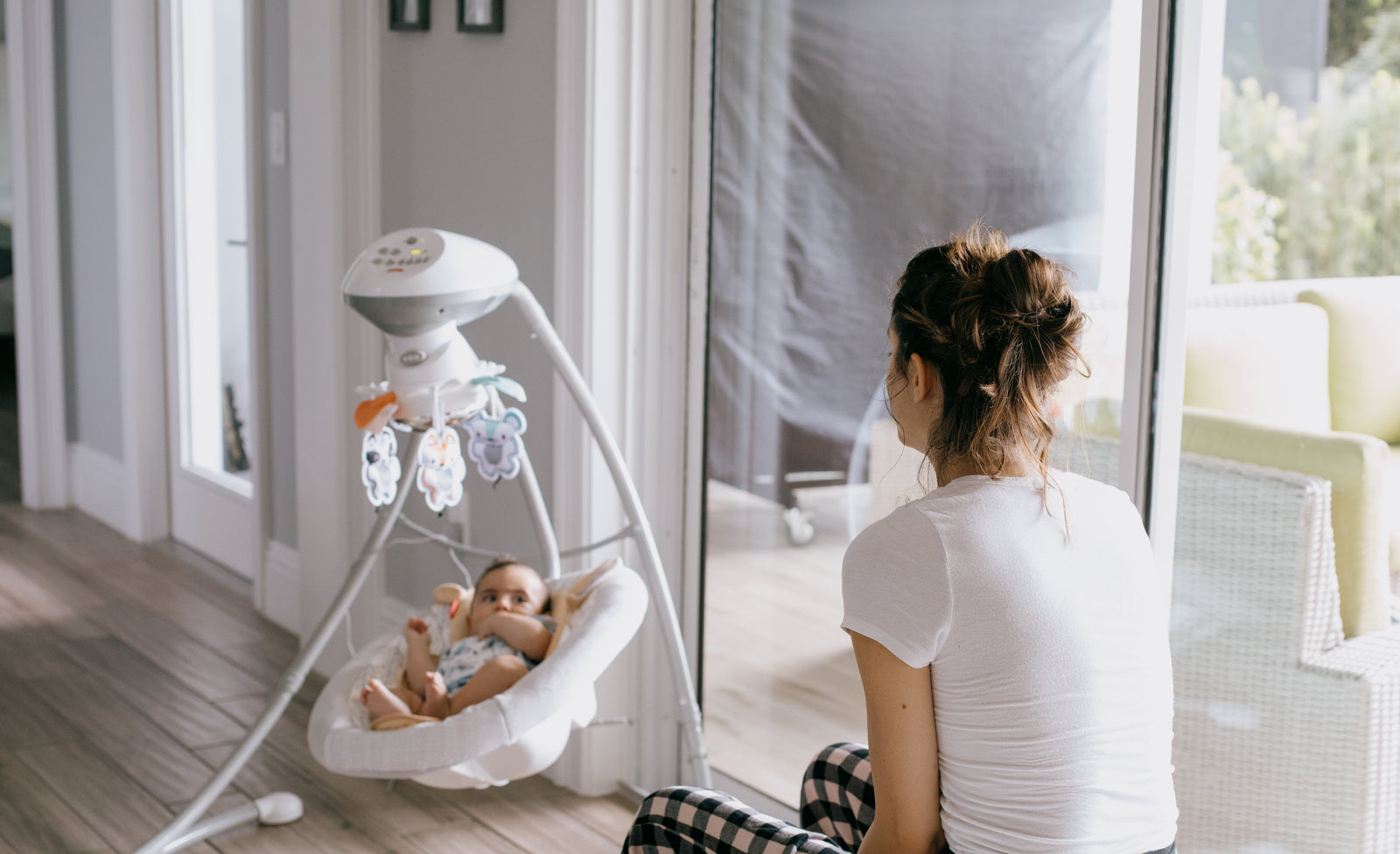
When we set up our first nursery, I assumed the cot needed to look cozy. We had a bumper, a small quilt and a soft toy arranged like a shop display. It took one conversation with a midwife to strip all of it away, and the cot looked strangely empty for a while.
What helped most was turning safety into a routine rather than a checklist I had to remember at 3 a.m. The sleep sack went on at the same point every evening, the room thermometer stayed visible, and the cot stayed next to our bed far longer than I had planned. I also learned to check the mattress fit by pressing the edges, because a gap is easy to miss in the dark.
Frequently asked questions
Is swaddling a protective factor?
No. Wrapping a baby in a cloth is not considered a protective factor against sudden infant death. It is a soothing method, and it does not replace back sleeping, a firm mattress and a clear cot.
When is bed sharing discouraged?
It is discouraged with formula feeding, smoking by the mother or the person beside her, maternal obesity, alcohol, drugs or sedative medication, illness or unusual fatigue, a sick baby, unsafe bedding, an overheated room, or a baby born prematurely or with low birth weight.
Why does room sharing help?
Sleeping in the same room helps parents hear the baby wake and respond faster, and it makes nighttime feeding easier. It is associated with more sleep for both mother and baby.
What temperature should the nursery be?
The recommended room temperature is between 18 and 20 °C. Dress the baby lightly, use a sleep sack in the right size rather than a blanket, and check that the face is never covered.
Product Reviews
 Best Toys for Dogs With High Prey Drive |
Best Outdoor Toys for 3-4 Year Olds |
Best Outdoor Toys for 6 Year Olds |
Best Harness for Poodle |
Best LEGO Sets for Adults |
Best Travel Toys for 4 Year Olds on Airplane |
Best Toy Stores in Washington DC |
Best Potty Training Toys |
Best Toys for Tripod Dogs |
Maillot equipe de france







