


Rebel Girls bedtime stories is the English-language edition of a collection that has become a fixture on many family shelves: one hundred short portraits of extraordinary women from around the world, past and present. Each spread pairs a lively life story with a full-page illustration and a memorable quotation.
The women come from every continent and every era, from Cleopatra to contemporary athletes and activists. Some are famous, many are not, and all share a striking strength of character. The publisher suggests the book for children from about five years old, and it reads just as well to boys as to girls.

Quick takeaways
- One hundred illustrated portraits of real women, one per double page.
- Left page tells the story, right page shows the portrait and a quotation.
- Over sixty women artists illustrate the collection.
- Suitable from around age five, and equally engaging for boys.
- Blank pages at the back invite the child to write their own story.
- Strong, varied female role models across eras and continents.
What Is Inside the Book
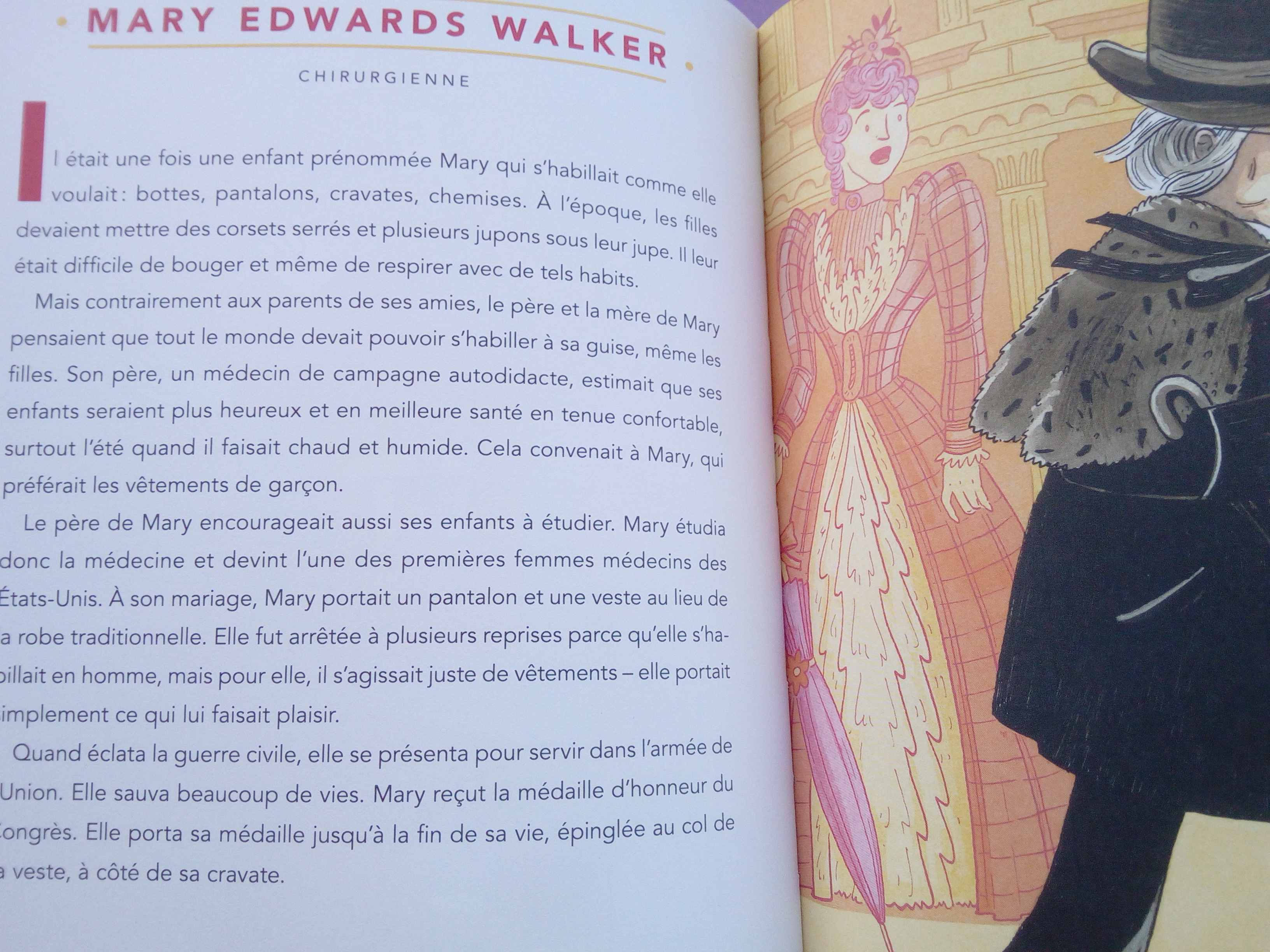
Each double page follows the same calm, predictable structure, which makes it ideal for a nightly ritual. The left-hand page tells the woman's story in a few vivid paragraphs, picking out the anecdotes that reveal her personality rather than listing dry dates. The right-hand page offers a portrait by one of more than sixty women artists, with a quotation printed beneath it.
That rhythm means you can read one portrait per evening without losing the thread, and children quickly learn where to look. If your child is still very young, you may wonder reading to baby is worthwhile at this stage; it is, and this format grows with them. Readers who enjoy building and making things alongside a story may also like our ideas on making towers as a quiet pre-bed activity.

Famous Names and Unsung Heroines
Some of the women will already be familiar: Rosa Parks, Marie Curie, Serena Williams, Malala Yousafzai, the Brontë sisters, Florence Nightingale. Their presence anchors the book in known history and gives children a way in. But the real pleasure lies in the lesser-known figures, such as Fadumo Dayib from Somalia, the Apache woman Lozen, or Mary Anning, the nineteenth-century palaeontologist.
The range of professions is deliberately wide, covering architects, boxers, scientists, activists and musicians. A poor Indian girl named Mary Kom grows up to win an Olympic boxing medal; the four Mirabal sisters stand up to a Dominican dictator; the first woman flies solo across the Atlantic. These are stories of courage and tenacity in a specific time and place, and they invite conversation about what it cost each woman to persist.

| Age | What to do | What to expect |
|---|---|---|
| 4-5 years | Read the story, talk about the picture | Short attention, focus on images |
| 6-7 years | Read together, repeat the quotation | Questions about fairness and courage |
| 8-10 years | Child reads alone, then discusses | Interest in the historical context |
| 11+ years | Use the blank pages as a project | Reflection on their own ambitions |
Quotations That Stay With Children
The quotations are short enough for a child to remember and repeat, and they carry the emotional weight of the book. A ballerina with a skin condition says never to be afraid of being a poppy in a field of daffodils. An engineer who joined NASA at twenty-four notes simply that she worked on every crewed Apollo mission. A suffragette compares a single vote to one raindrop in a shower.
These lines work well as conversation starters rather than lessons to be learned. Ask your child which one they would keep on their wall, and why. For children who find the dark or bedtime unsettled, pairing this book with our suggestions for overcoming fear can make the evening calmer, and a predictable wind-down routine helps too, as we explain in our guide on child falling asleep.
Illustrations by Women Artists
More than sixty illustrators, all women, contribute the portraits, and the styles vary from delicate line work to bold colour. That variety is part of the point: there is no single way to be a girl, and no single way to draw one. Children often linger over the pictures and ask about the clothes, tools or backgrounds, which opens another route into the story.
Because the artwork is so engaging, the book also works as a browse-alone volume for early readers who want to look before they read. If your child prefers hands-on play to sitting still, keep a small basket of quiet toys nearby; our round-up of fidget toys offers options that won't distract from the page.

Writing Your Own Story
At the back, the authors leave two blank pages so that the reader can write and draw their own portrait in the same format. It is a simple idea and a powerful one: the book ends by handing the pen to the child. Some families use it as a project, filling it in over a year and revisiting it on birthdays.
Maria Montessori appears among the hundred women, which sits comfortably with the book's broader message about respectful, child-led education. For families who follow that approach at home, our piece on housework according to age shows how everyday tasks can build the same independence the stories celebrate.

Why Role Models Matter
The book's quiet ambition is to help girls identify with emancipated female models and to educate all children about equality, well beyond gender stereotypes. The author of the original article notes that girls as young as six may already rate themselves as less brilliant than boys, which makes early, positive representation feel almost like a public service.
That said, no single book does the work alone. Pair it with everyday choices, including how you talk about food and rewards, as we discuss in our article on rewarding with food. And if you are looking for more screen-free gifts for older children, our selection of gift ideas for teenagers may help you extend the theme.

My hands-on take
We started this book when my eldest was about five, and the routine stuck: one portrait, one quotation, then lights out. What surprised me was how often a story came back days later, in the middle of an unrelated conversation about fairness at school or a friend who had been left out. The quotations turned out to be the part my children remembered longest, and we ended up writing a favourite on a card above the bed.
The blank pages at the back took us much longer to fill than I expected, because my child wanted to choose carefully. We worked on it slowly, a few lines at a time, and it became a small record of what mattered to them that year. My advice is not to rush that part, and not to treat the book as a lesson to be finished. Read one page, let it sit, and see what your child brings back to you.
Frequently asked questions
What age is this book suitable for?
The publisher suggests it for children from about five years old. Younger children enjoy the illustrations and short quotations, while older readers can handle the full text independently.
Is it only for girls?
No. The stories are written to inspire both girls and boys, and the book's wider aim is to educate all children about equality and to move beyond gender stereotypes.
How long is each story?
Each portrait fits on a single page of text opposite an illustration, so one entry makes a comfortable five-minute bedtime read.
Can a child who reads slowly use it?
Yes. The double-page format means each story stands alone, so a child can dip in and out without needing to follow a long narrative.
Product Reviews
 Best Toys for Dogs With High Prey Drive |
Best Outdoor Toys for 3-4 Year Olds |
Best Outdoor Toys for 6 Year Olds |
Best Harness for Poodle |
Best LEGO Sets for Adults |
Best Travel Toys for 4 Year Olds on Airplane |
Best Toy Stores in Washington DC |
Best Potty Training Toys |
Best Toys for Tripod Dogs |
Maillot equipe de france







