


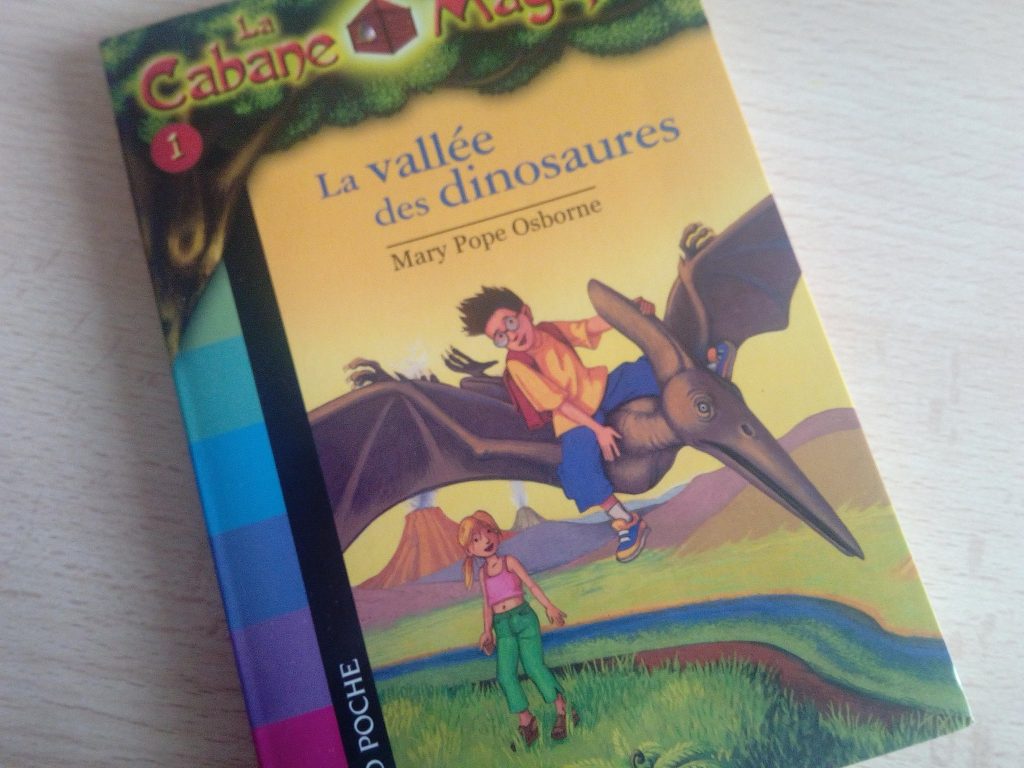
Magic Tree House, written by Mary Pope Osborne, works well as a first chapter book for young readers, thanks to an entertaining story that mixes dinosaurs and magic. On a walk, Tom and his sister Lea come across a mysterious tree house that sends them back to the age of the dinosaurs, where plenty of adventures await. Step into the time-travelling tree house and see where it takes you.
The premise is simple enough for a child who is just starting to read alone, yet it opens a door onto history and fantasy at the same time. That balance is exactly what makes a first novel feel exciting rather than intimidating.

Quick takeaways
- Magic Tree House works as an accessible first chapter book for ages six to eight.
- Large print, short chapters and illustrations support beginner readers.
- A running mystery about the tree house owner keeps children engaged.
- Each volume introduces a new historical setting, from dinosaurs to pirates.
- Boys and girls can both identify with Tom and Lea.
- Ideal for children in CP, CE1 and CE2.
Why This Series Works as a First Chapter Book
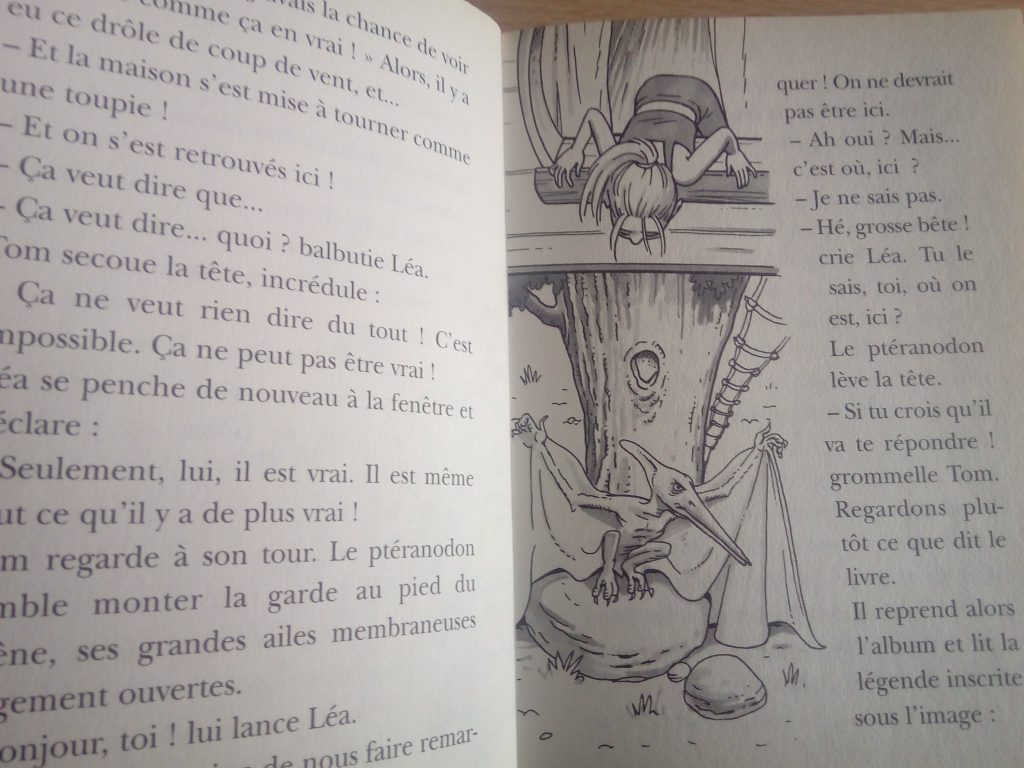
I only discovered this series of short novels for young readers when my daughter received the first volume for her seventh birthday. The mother of one of her friends told me her own daughter had read them all in one go and was completely captivated by Tom and Lea's adventures. It is easy to see why: the layout uses airy text, fairly large letters and a few illustrations that brighten up the story. The heroes are the same age as the reader, so children can identify with them easily. There is also a starting puzzle worth solving, one that keeps them hooked: who on earth does the magic tree house belong to?
For families building a home library, this sits comfortably alongside children's vocabulary books that stretch a child's word bank without overwhelming them. The short chapters also make bedtime reading feel manageable rather than like a marathon.
A Mystery That Runs Across the Whole Series
This series has a particular feature that sets it apart from other novels for young readers. The volumes follow one another, and readers are invited to hunt for clues inside the story to work out who owns the magic tree house. That thread gives a real sense of continuity and reward for finishing each book. Boys and girls alike can let themselves be carried away by this entertaining tale of dinosaurs and magic.
It is ideal for children in CP, CE1 and CE2, roughly the first three years of primary school. We have only read Dinosaurs Before Dark (volume one) so far, but other volumes follow the same principle and take readers to the Middle Ages, ancient Egypt or the age of pirates. If your child enjoys seasonal themed reading too, a collection of autumn stories can complement the series nicely between volumes.
| Feature | What it looks like | Why it helps young readers |
|---|---|---|
| Layout | Airy text, large letters | Less intimidating on the page |
| Illustrations | A few per chapter | Breaks up text and adds interest |
| Heroes | Children of a similar age | Easy to identify with |
| Mystery | Who owns the tree house? | Keeps readers hooked |
| Structure | Short chapters, cliffhangers | Builds reading stamina |
Reading Level and Format at a Glance
The physical design matters more than parents often realise. Large print, generous spacing and frequent illustrations lower the barrier for a child moving up from picture books. Short chapters give a satisfying sense of progress, and the cliffhangers at the end of each one pull the reader forward.
What to Expect Inside
Each volume blends a light history lesson with fantasy, so children absorb a few facts without feeling taught. The mystery of the tree house's owner runs quietly in the background, rewarding attentive readers. For a broader look at how reading shapes language, see these tips on expanding vocabulary through stories.
Parents who want to pair reading with play might enjoy the importance, since imaginative games often grow out of a favourite book.
Turning the Story into Family Conversation
A book like this invites talk well beyond the page. Ask your child who they think owns the tree house and why, and let them defend their guess. You can also compare the dinosaur era with the other settings the series visits later.
If your child is curious about how big animals really were, a chat about a testicular ultrasound is obviously unrelated, so keep the science talk focused on fossils and palaeontology instead. For quieter moments, a simple pretzel recipe makes a pleasant kitchen activity to share after reading.
Children who like building as much as reading may enjoy recreating scenes with construction toys; our guide to fixing loose LEGO joints keeps favourite sets usable for years.
Where to Find the Books and What Comes Next
Dinosaurs Before Dark: Magic Tree House by Mary Pope Osborne is available in libraries, bookshops and online stores, so it is easy to try before committing to the whole series. Start with volume one and see how your child responds. If they are hooked, the next volumes open up the Middle Ages, ancient Egypt and pirate times.
For children who prefer facts alongside fiction, a look at potatoes in children's diets shows how everyday topics can become reading material too. And if you are stocking a playroom as well as a bookshelf, our roundup of toys for four year olds may help you match book themes with hands-on fun.

My hands-on take
I came to this series late, only when my daughter was given the first volume for her seventh birthday. A friend's mother told me her daughter had devoured the whole collection in one sitting, and I was sceptical until we started reading together. What struck me was how quickly my daughter began asking who the tree house belonged to, turning the story into a conversation rather than a one-way read.
We have only finished Dinosaurs Before Dark so far, and I am deliberately pacing us rather than rushing through the series. My practical tip is to let your child guess the mystery owner out loud after each chapter; it slows the reading down in a good way and keeps them thinking about the book between sessions.
Frequently asked questions
What age is Magic Tree House suitable for?
It is best suited to children in CP, CE1 and CE2, roughly ages six to eight, who are moving from picture books to short novels. Stronger younger readers may also enjoy it with support.
Do the books need to be read in order?
The volumes follow one another and a mystery about the tree house owner runs across the series, so starting with volume one makes the most sense. Each story still works reasonably well on its own.
What topics does the series cover?
The first volume visits the age of the dinosaurs, and later books travel to the Middle Ages, ancient Egypt and the era of pirates. History and fantasy are blended in each adventure.
Is it a good choice for reluctant readers?
Yes, the short chapters, large print and frequent illustrations make it feel achievable. The cliffhangers give children a reason to keep turning pages.
Product Reviews
 Best Toys for Dogs With High Prey Drive |
Best Outdoor Toys for 3-4 Year Olds |
Best Outdoor Toys for 6 Year Olds |
Best Harness for Poodle |
Best LEGO Sets for Adults |
Best Travel Toys for 4 Year Olds on Airplane |
Best Toy Stores in Washington DC |
Best Potty Training Toys |
Best Toys for Tripod Dogs |
Maillot equipe de france







