


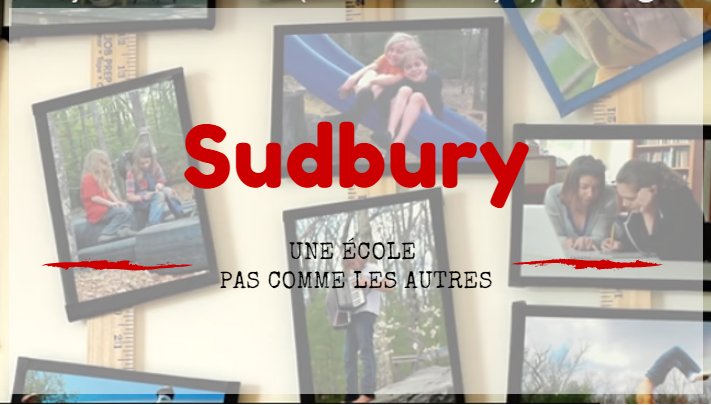
Democratic schools built on the Sudbury model turn the traditional classroom upside down, and more than forty schools around the world now draw inspiration from it. Ramin Farhangi, co-founder of a democratic school in Paris, argues that the approach works because it turns schools into genuine democratic communities rather than places where adults decide everything.
Beyond the idea of autonomous, informal learning, the organisational structure of a Sudbury school is itself democratic. The school is run by a school meeting where every pupil and every staff member holds a single voice, and that covers everything: collective rules, the budget, administration, hiring, dismissals and discipline.

As Farhangi puts it, society is at once the mother and the child of its own education system, so children who grow up in democratic schools may go on to build a world of real freedom, equality and fellowship.
Quick takeaways
- More than forty schools worldwide draw on the Sudbury model
- Every student and staff member has one vote in the school meeting
- The meeting decides rules, budget, hiring, dismissals and discipline
- The model rejects the idea that good grades guarantee a good life
- Children are trusted to learn reading, writing and maths in their own time
- Adults step back from instruction but stay present and available
What makes a Sudbury school different
In the video shared by the school community, young people and adults explain a simple idea: humans learn everywhere and all the time. We tend to assume that if nobody tells us what to do, what to learn and how to learn it, we will learn nothing, yet in reality we learn far more than we think.
Most of us have been persuaded by a myth: that good grades at school, followed by good grades at university, guarantee a successful life. Democratic schools start from a different premise, that children and teenagers can find for themselves what they want to do, and that nobody can do this work in their place.
This has obvious echoes of how reading and writing develop in children at their own pace, and of the way nervous children often thrive when pressure is removed rather than added.
The myth of grades and guaranteed success
The schools inspired by Sudbury are founded on the belief that when children are left in peace and adults stop pointing out their shortcomings, they learn everything they need in their own time. This principle applies to reading, writing and mathematical skills just as much as to anything else.
That does not mean adults disappear. It means the adult role shifts from instruction to trust, observation and availability. For parents, the hardest part is often unlearning the habit of measuring progress against a timetable, the same reflex that makes us worry when a child seems behind in teenage daughter makeup or other markers of growing up.
If you want to support self-directed learning at home, the practical starting point is a rich environment: books, materials, space and time. Think about educational toys that leave room for open-ended play rather than toys that only work one way.
| Feature | Conventional school | Democratic school |
|---|---|---|
| Who sets the rules | Adults and leadership | School meeting, one vote each |
| Curriculum | Imposed and scheduled | Chosen by the learner |
| Role of the adult | Instructor and assessor | Facilitator and community member |
| Discipline | Handled by staff | Decided collectively |
| Measure of progress | Grades and tests | Self-direction and engagement |
| Pace of reading and maths | Fixed timetable | Learner's own timing |
How the school meeting actually works
The democratic structure is not symbolic. The school meeting handles the rules of collective life, the budget, administration, hiring, dismissals and discipline, and each student and staff member has one vote. In practice this means a child can propose a rule, argue for it, and see it adopted or rejected by the whole community.
This is where the model differs most sharply from a conventional school with a student council. Responsibility is real, so the consequences are real too, and children learn negotiation, compromise and accountability by using them daily.
Parents often ask how such freedom coexists with boundaries. The answer is that boundaries exist, but they are written and revised by the community itself. The same logic of clear, fair rules applies at home, whether you are setting screen limits or deciding which Christmas gifts suit a child's age.
What children actually learn in a democratic school
Supporters argue that humans learn everywhere and all the time, and that informal learning is not the absence of learning but a different route to it. A child who spends weeks building, negotiating or reading voluntarily is still acquiring skills, just not on an imposed schedule.
The claim that reading, writing and maths can be acquired in their own time rests on trust in the learner rather than on a fixed curriculum. That is a big leap for most families, and it helps to read about the opening a LEGO store mindset of following a genuine interest, or to look at how Transformers toys build patience and persistence through play.
For younger children, the same principle shows up in everyday choices, from babies and candy to how much freedom a toddler gets with materials.

Questions parents ask before choosing this path
Choosing a democratic school is a family decision, not just an educational one. It helps to visit, talk to students and staff, and watch how the meeting actually runs rather than relying on the brochure.
It also helps to be honest about your own comfort with uncertainty. Some parents find the freedom liberating, others find it unsettling, and both reactions are normal. If you are exploring alternatives more broadly, it can be useful to compare how other settings handle materials and play, for instance the LEGO storage containers debate in a busy household, or what makes fine motor skill toys genuinely useful at four.
Whatever you decide, keep the conversation open with your child. The model only works when the child's own voice is part of the decision.

My hands-on take
When I first read about the school meeting, my instinct was scepticism: surely a child would vote for no rules at all. Then I watched a group of children debate a fairly boring practical question and realised they were far more careful than I expected, because the decision actually affected their day.
At home, I tried a small version of it. We now hold a short weekly conversation where everyone, including the youngest, gets a say on one household rule. It is imperfect and sometimes chaotic, but the shift in attitude is noticeable: the rules are treated as ours rather than mine. I would not claim it turns a family into a democracy overnight, but it has made me much more willing to leave space for my children to find their own way to things.
Frequently asked questions
Do children in democratic schools really learn to read and write?
The model holds that reading, writing and maths are acquired when the learner is ready and motivated, rather than on an imposed schedule. Adults stay available and provide a rich environment, but they do not force the timing.
Is a Sudbury school the same as a school without rules?
No. Rules exist, but they are written, debated and revised by the school meeting, where every student and staff member has one vote. The difference is who holds the authority, not whether authority exists.
How do I know if this approach suits my child?
Visit the school, watch the meeting in action and talk to current students and staff. Then consider your own comfort with uncertainty, because the family's attitude matters as much as the child's.
Can I bring elements of this model into a conventional school year?
Yes. Protecting unstructured time, offering open-ended materials and letting your child pursue a genuine interest are all compatible with a standard school routine.
Product Reviews
 Best Toys for Dogs With High Prey Drive |
Best Outdoor Toys for 3-4 Year Olds |
Best Outdoor Toys for 6 Year Olds |
Best Harness for Poodle |
Best LEGO Sets for Adults |
Best Travel Toys for 4 Year Olds on Airplane |
Best Toy Stores in Washington DC |
Best Potty Training Toys |
Best Toys for Tripod Dogs |
Maillot equipe de france







