


Breaking the cycle of child abuse is possible, and the work of therapist Alice Miller explains why some maltreated children grow into violent adults while others do not. Her central claim is that mistreatment, whether physical or psychological, can produce monsters later in life only when the child never meets a witness.
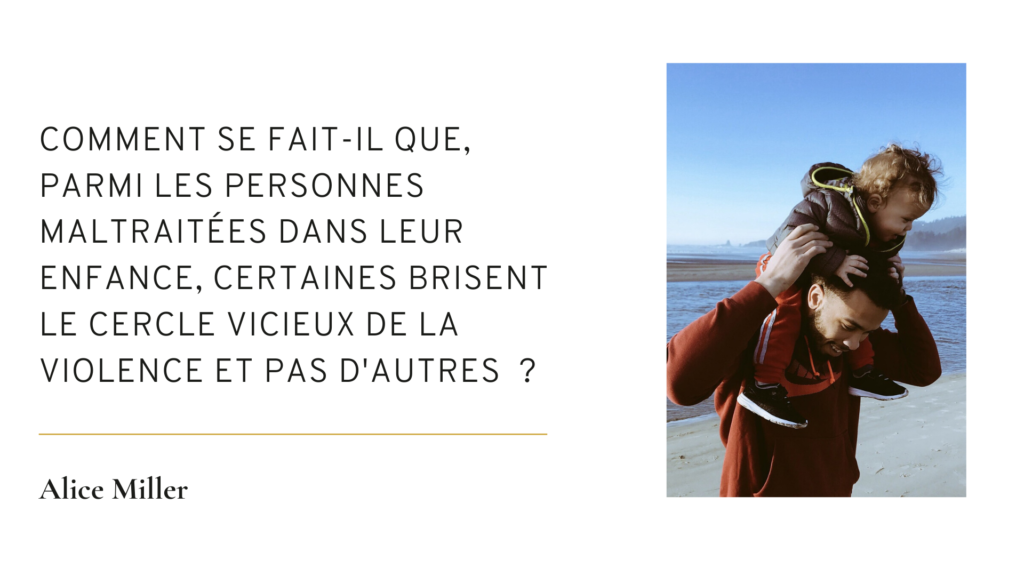
That witness is someone who shows care and confirms what the child actually feels: abandonment, anger towards the abusive parent, immense sadness, fear. Understanding those feelings lets a child recognise an enormous injustice, see that it is outside the normal order of things, and reject violence as a way of relating to others.

Quick takeaways
- Maltreatment can produce violent adults when no lucid witness is present
- A witness confirms the child's feelings instead of denying them
- Understanding the injustice suffered lets a child reject violence
- Hitler and Stalin are Miller's examples of an emotional desert
- Educational violence includes humiliation and isolation, not only blows
- Every adult can act as a lucid witness for a child
When a maltreated child's feelings are repressed
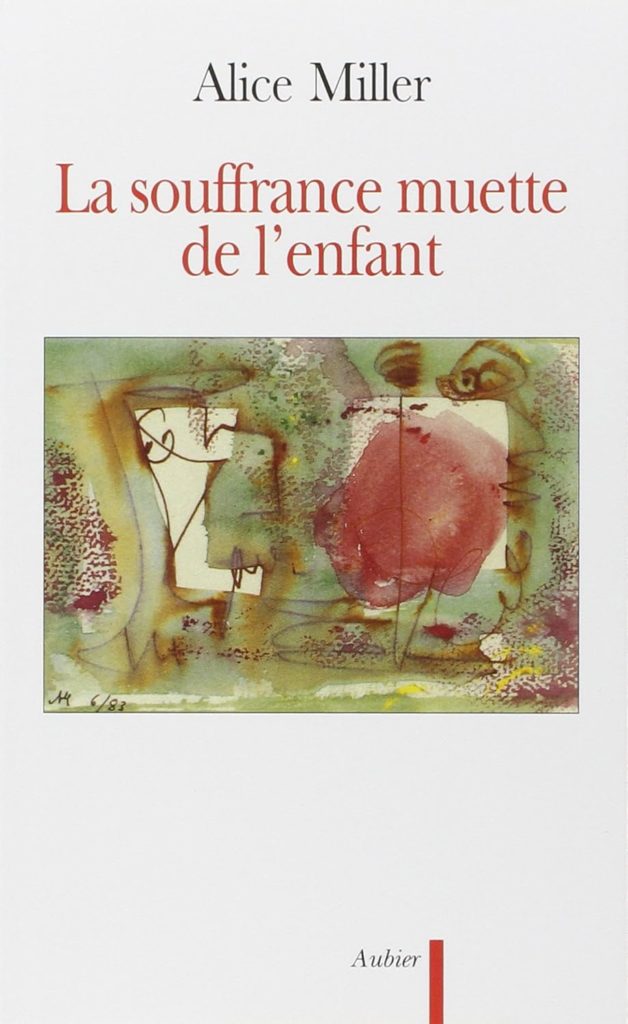
Alice Miller specialised in the consequences of mistreatment received in childhood. Her thesis is that abuse inflicted on children, physical as much as psychological, can produce monsters in adulthood. This happens when the child has never known a witness who would have allowed them to understand the violence of what was happening and to know that other ways of being in relationship exist.
Such witnesses show solicitude and confirm what the child feels: abandonment, anger towards the abusive parent or parents, immense sadness, fear. It is precisely the understanding of this felt experience that allows the child to grasp that they are suffering an immense injustice, outside normality, and to reject violence as a way of relating. As Miller put it, to combat cruelty we must at least first perceive it. Without that perception, the inherited fears of a family simply pass from one generation to the next.
The example of Adolf Hitler
Miller takes Adolf Hitler as her example. No lucid, compensating witness allowed him to make contact with the violence inflicted on him under the cover of a "good upbringing". All his feelings as a maltreated child had to be repressed, and he had no right to doubt the value of his parents' acts, on pain of redoubled violence: punishment for insolence, blows to subdue rebellion.
Quoting extracts from biographies and drawing on archives, Miller describes "the stifling of feelings and the denial of all the child's needs, indeed of every human emotion". This is a useful reminder for anyone raising children today, whether you are managing back contractures from carrying a growing child or simply trying to stay patient on a difficult day.
| Child's need | Lucid witness response | Emotional desert |
|---|---|---|
| Feeling confirmed | Names sadness, fear or anger | Feelings denied or punished |
| Sense of injustice | Says clearly that it was unfair | Child believes they are bad |
| Other relationship models | Shows care and consistency | Only threat and loneliness |
| Permission to doubt | Allows criticism of the adult | Doubt brings more violence |
| Joy in living | Encourages play and affection | Tenderness repressed |
Why lucid witnesses make the difference
Miller compares Hitler's childhood with those of other children maltreated in childhood who did not become tyrants as adults. The main difference lies in the absence of a lucid witness throughout Hitler's life; he lived in an "emotional desert". He was forced to believe himself guilty of the suffering inflicted by his parents, in the sense that he believed himself bad by nature. From earliest infancy he was forced to repress tenderness, emotional vulnerability and the search for affection.
Even when a child does not receive generous, responsible, protective and reassuring love, physical closeness, caresses and affection can awaken feelings in them: nostalgia, pain, loneliness, revolt, anger, but also joy in nature, pleasure in their own body and in others' bodies, and above all joy in living. That joy can certainly be disturbed by the exercise of adult power, but the emotional climate and the attitude of other reference figures make a difference.
Stalin and Hitler, side by side
According to Miller, both Stalin and Hitler knew only "loneliness, permanent threat, the certainty of being worthless in others' eyes, guilt, and no one to protect them from ill-treatment and constant persecution, no one to tell them or show them that they were not at fault". The contrast with children who had even one caring adult is what makes her argument so practical for parents and bystanders alike.
Denouncing educational violence
This is why Miller wrote so much to denounce educational violence: smacks, slaps and ear-pulling as much as emotional censorship, humiliation or isolation. She also reminded all of us of our duty to be lucid witnesses for the children we cross paths with, for instance by intervening in the street when a parent smacks a child, a smack that is in fact prohibited by law.
Being a witness does not require a qualification. It requires attention, and sometimes a calm word. The same attentiveness serves us well elsewhere in family life, whether we are choosing bath products for a small child or planning toys for flights to keep a journey calm and predictable.
What this means for everyday parenting
You do not need to be perfect to protect a child from the emotional desert Miller describes. You need to be present, to name what you see, and to let a child express anger or sadness without punishing them for it. A child who is allowed to say "that was unfair" learns that violence is not the only way to be in relationship.
Everyday routines carry this message too. Shared meals, games and small rituals all tell a child that they matter, and simple activities such as learning numbers together or a calm riding a bike session are opportunities to confirm a child's feelings rather than dismiss them. None of this erases hardship, but it builds the inner sense that other ways of relating exist.
Building the network of witnesses
Miller's argument is not only addressed to parents. Teachers, neighbours, grandparents and family friends can all be the person who confirms a child's experience. Sometimes a single adult outside the home is enough to show a child that another way of being in relationship exists, and that what happens at home is not normal or deserved.
That is why it matters to build support around families rather than isolate them. Sibling bonds, friendships and community ties all widen the circle of people who can notice and confirm. If you are expecting, thinking about sibling bonds early or simply reading about what friends as family can mean, you are already part of that wider network of witnesses for the children around you.

My hands-on take
I first read Miller's work when my own children were small, and what stayed with me was how ordinary the witness role is. I remember a supermarket queue where a tired parent grabbed a child's arm hard; I said nothing, and I still think about it. Since then I have learned that a calm sentence, offered without judgement, can be enough to change the temperature of a moment.
At home, the practical lesson was simpler than I expected: let the anger out and name it. When one of mine shouted that something was unfair, my instinct was to correct the tone. Now I try to confirm the feeling first and deal with the behaviour afterwards. It is slower, and I get it wrong often, but the house feels less like a desert and more like a place where feelings are allowed to exist.
Frequently asked questions
What does Alice Miller mean by a lucid witness?
A lucid witness is an adult who shows care and confirms what a maltreated child actually feels. This allows the child to understand that the violence is an injustice rather than something they deserve.
Does this mean abused children always become violent adults?
No. Miller's point is the opposite: many maltreated children do not become tyrants, and the presence of a lucid witness is the key difference she identifies.
Is smacking a child legal?
In the context Miller discusses, smacking is prohibited by law, yet it remains common. Bystanders can still intervene calmly and support the child.
Can one adult outside the family make a difference?
Yes. A single caring adult can show a child that other ways of being in relationship exist, which is often enough to interrupt the pattern.
Product Reviews
 Best Toys for Dogs With High Prey Drive |
Best Outdoor Toys for 3-4 Year Olds |
Best Outdoor Toys for 6 Year Olds |
Best Harness for Poodle |
Best LEGO Sets for Adults |
Best Travel Toys for 4 Year Olds on Airplane |
Best Toy Stores in Washington DC |
Best Potty Training Toys |
Best Toys for Tripod Dogs |
Maillot equipe de france







