


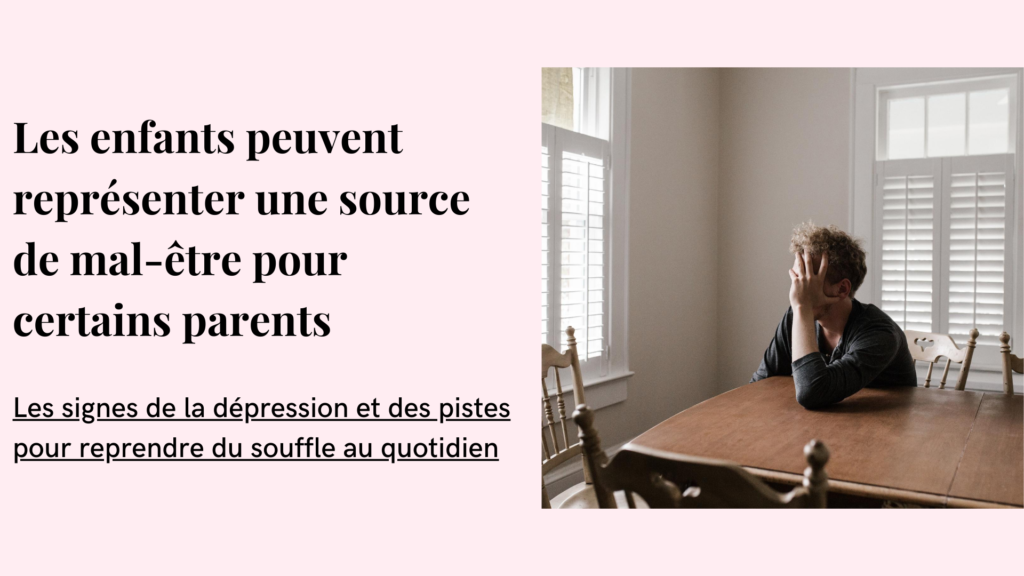
Parental depression is a reality many caregivers hide, because admitting that children can be a source of anxiety or deep unhappiness still feels shameful. In their book on handling children's and teenagers' tantrums, child psychiatrist Nathalie Franc and psychologist Raphaëlle Scappaticci note how often parents struggle to tell a doctor the truth.
They describe mothers and fathers who feel well only at work, and who sense physical anxiety the moment school pickup approaches: stomach aches, shallow breathing, negative thoughts. These are the early signs of burnout, and when chronic stress settles in, it can pave the way for depression.

Quick takeaways
- Feeling relief only at work is an early burnout signal worth naming
- Five symptoms from the standard list can indicate a depressive episode
- Three or four symptoms still justify seeing a psychiatrist
- Protecting the couple and social ties lowers the risk of depression
- Sleep, food, exercise and stimulants all affect emotional control
- Play and emotional coaching help children and parents alike
When exhaustion turns into suffering
Many parents seen in consultation say they only feel calm at work. As the hour to collect their child draws near, the body reacts: stomach pain, poor breathing, spiralling negative thoughts. The authors point out that these are the same signals as the beginning of burnout, which in professional life tends to appear on Sunday evening and fade during holidays.
When chronic stress becomes established, a general exhaustion sets in that can open the door to parental depression. Weekends and school holidays can be especially risky periods. The authors describe a child assessed urgently in child psychiatry after his mother attempted suicide; the trigger was the start of the summer holidays with no childcare solution, since he had already been excluded from the holiday club for difficult behaviour. Parental suffering should never be dismissed.
The warning signs of depression in parents
Certain signals may point to a major depressive episode: a sad mood most of the day, loss of interest or pleasure, disturbed sleep (insomnia or oversleeping), changes in appetite and weight, agitation or slowing down, fatigue or loss of energy, feelings of worthlessness or excessive guilt, reduced concentration or indecision, and thoughts of death or suicide.
According to the authors, five of these symptoms allow a diagnosis of depression to be made. Even with only three or four, help from a psychiatrist is necessary. Around 15% of the population has experienced or will experience a characterized depressive episode, so there is no shame in seeking support. Care matters all the more because treating parental depression changes the relationship with children, through a better ability to step back and handle crises.
Why early help changes family life
Getting support is not a luxury reserved for extreme cases. It is a way of protecting the parent-child bond before exhaustion takes over, and small daily routines, such as household chores, can help share the load. Simple protective habits also matter, like choosing sunglasses for children for time outdoors.
| Sign | What it may mean | Practical response |
|---|---|---|
| Sad mood most of the day | Possible depression | Talk to a doctor |
| Anxiety at school pickup | Early burnout | Plan a decompression routine |
| Dread of evenings | Emotional overload | Reduce stimulants, add rest |
| Conflict with partner | Couple under strain | Agree a de-escalation strategy |
| Loss of interest | Withdrawal | Reconnect with social contacts |
Protecting the couple and rebuilding a social life
Having a child with behavioural difficulties is a risk factor for parental conflict, sometimes leading to separation. If parents cannot adjust and agree on a shared de-escalation strategy, the risk of conflict between them grows. Looking after the couple is therefore part of caring for the whole family.
Rebuilding a social life matters too. Connecting with others makes it possible to talk about the child's difficulties and to be helped when needed, and social contact protects against depression. Parents who feel isolated may also find it useful to look at controlling visits so that family gatherings stop being a source of tension, and to think about feminism and equality when shared chores become a source of resentment at home.
Learning to regulate your own emotions
The ability to regulate emotions depends on many factors, some genetic, some contextual. It helps to know what weakens emotional control: depression, lack of sleep, unbalanced diet, lack of physical activity, too many stimulants such as coffee or tobacco, alcohol, and other stressors like overwork or conflict. Therapists note that some parents dread evenings with their children and tend to smoke more or drink a few glasses to feel calmer.
Spotting risk factors and emotional triggers in daily life is a first step before trying to remove them, and therapeutic support may prove necessary. Regulating emotions also means looking at the meaning of your life and perhaps making important decisions, such as changing job. Small daily routines help: a short walk, a fixed bedtime, or a moment of play with toys for toddlers that keeps the evening calm rather than chaotic.

Supporting children's emotional skills
Developing children's emotional skills means accompanying their frustrations and helping them express what they feel. A child who can name an emotion is less likely to explode, and a parent who stays steady rather than joining the child's chaos makes tantrums shorter.
Play is one of the simplest vehicles for this learning. Board games teach turn-taking and losing gracefully, and games that build number sense also build patience, as with games to learn numbers. For quieter moments, science toys invite curiosity and shared attention, while kitten toys can be a gentle way to introduce care and responsibility. Even choosing a first LEGO set becomes a lesson in persistence when a parent stays nearby without taking over. Calm, caring routines like applying after sun also reinforce that steady, attentive presence.

My hands-on take
I remember a stretch when the sound of the school bell made my stomach tighten. I told myself I was just tired, and I kept going until the evenings became something I dreaded. What helped first was not a grand plan but small things: writing down when the anxiety started, cutting back on late coffee, and telling one friend the truth instead of saying everything was fine.
I also learned to step out of the chaos instead of matching it. When a tantrum started, I stopped trying to win and simply stayed calm nearby. It felt passive at first, but it lowered the temperature for both of us. If you recognise yourself in these pages, please speak to a professional; that conversation was the turning point for me.
Frequently asked questions
How many symptoms suggest depression?
Five symptoms from the standard list allow a diagnosis of depression to be made. With only three or four, seeing a psychiatrist is still recommended.
Is it shameful to tell a doctor that parenting feels unbearable?
No. Around 15% of the population experiences a depressive episode at some point, and seeking help is a responsible step rather than a failure.
Can treating a parent's depression help the child?
Yes. Care improves the parent's ability to step back and manage crises, which changes the relationship with the children.
What makes holidays risky for some families?
Loss of routine and childcare can remove the only breathing space a parent had. Planning support in advance helps prevent a crisis.
Product Reviews
 Best Toys for Dogs With High Prey Drive |
Best Outdoor Toys for 3-4 Year Olds |
Best Outdoor Toys for 6 Year Olds |
Best Harness for Poodle |
Best LEGO Sets for Adults |
Best Travel Toys for 4 Year Olds on Airplane |
Best Toy Stores in Washington DC |
Best Potty Training Toys |
Best Toys for Tripod Dogs |
Maillot equipe de france







