


An emotions chart for kids can turn a meltdown into a shared ritual, and the "path of emotions" is a simple homemade version worth trying at home. It is built around four primary feelings — fear, sadness, joy and anger — and a physical path a child follows with a finger.
The idea comes from a picture book for children aged three and up, but you do not need the book to copy the method. A wheel, a few symbols in different sizes, some textured materials and a drawn path are enough to start.

Quick takeaways
- Start with four feelings: fear, sadness, joy, anger.
- Let the child point to the feeling before explaining it.
- Tell the story for them if words fail, then check.
- Use symbols in shrinking sizes to show the feeling fade.
- Add rough and soft textures for touch and calm.
- Finish with a bridge and a new feeling chosen freely.
Naming the feeling on the wheel
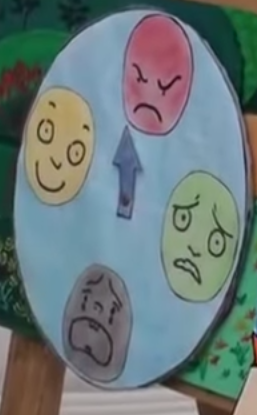
Everything begins with a wheel showing the four primary emotions: fear, sadness, joy and anger. When a child is overwhelmed, you do not ask questions first — you invite them to move an arrow onto the feeling they sense in their heart.
This small gesture matters because naming an emotion already lowers its intensity. Children who are still learning to speak can point instead of explaining, which is why this pairs so naturally with baby sign language as a first communication bridge. For the youngest children, simple learning toys can reinforce this kind of emotional vocabulary through play.
Keep it slow and quiet
Do not rush the choice or correct it. If the child hesitates, offer two options only and wait. The wheel is a tool for the child, not a test of vocabulary.
Telling the story of the emotion
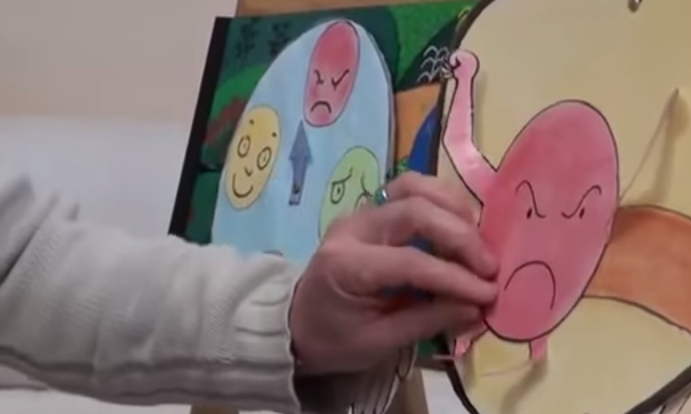
Once the feeling is identified, the child is invited to tell what happened: the circumstances, the source, who was involved, and how the emotion came out. In the original example the feeling is anger, and the story matters as much as the label.
If the child cannot manage it yet, the adult tells the story instead and then checks: is that what happened, and is that how you felt? This mirrors the calm, descriptive tone used in talking about sex, where short honest words work better than long speeches. The same short, honest approach helps when you plan daycare milk.
Keep your version factual and short. Two or three sentences are enough, and the child's correction is the real goal. For calmer hands-on play afterward, see these foam block toys.
| Step | Child's action | Material |
|---|---|---|
| 1. Identify | Moves the arrow to a feeling | Wheel with four emotions |
| 2. Verbalise | Tells what happened | None, or your own retelling |
| 3. Symbolise | Places the emotion symbol | Box of symbols |
| 4. Crossroads | Names who is involved | Word cards, rough card |
| 5. Fade | Touches the soft hand | Soft fabric or card |
| 6. Calm | Crosses the bridge, picks a new feeling | Bridge drawing, coloured sky |
Using a symbol to hold the feeling
After the first telling, the child picks the symbol of that emotion from a box and places it at the start of the path. Then they tell the story again, this time moving a finger along the path: "at the beginning, you are very, very angry because…"
The symbol does the memory work, so the child does not have to hold everything in their head. This is the same principle behind good foam block toys: simple objects that let a child build and rebuild without words getting in the way.
Let the child choose the symbol themselves. Ownership keeps them engaged, even when the story is uncomfortable.
The crossroads: who is involved
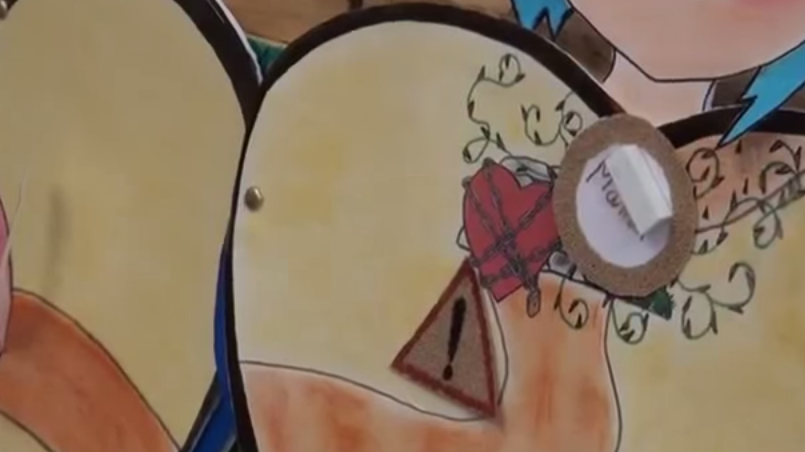
At the crossroads of the path, the child says who they are angry at or who they hold responsible, and what they are thinking inside. In the video example it is mum, so the word "mum" is placed next to a "tight heart" picture.
The child is also invited to touch a rough piece of card beside that heart. The physical sensation anchors the moment, much as a familiar object helps a toddler settle during crawling practice or any big transition.
A smaller symbol leaves the crossroads
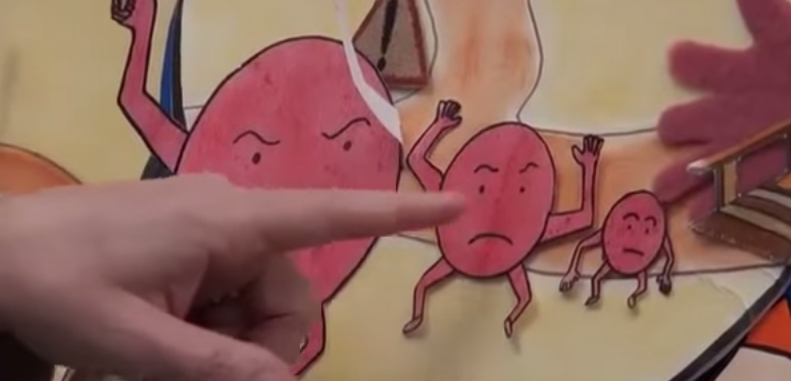
Once the anger has been spoken, it feels a little weaker. The child then places a smaller anger symbol at the exit of the crossroads, and the shrinking is visible.
Feeling the emotion fade
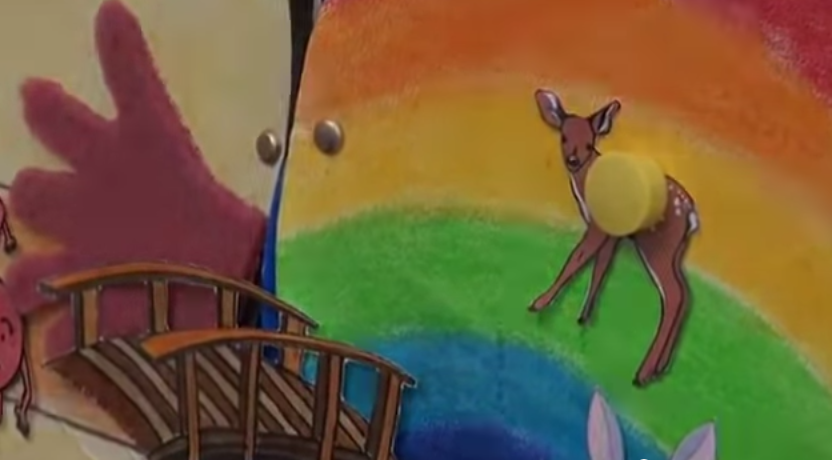
Further along the path there is a soft hand to touch. Touching it helps the child calm down and notice that the anger is smaller again, and at the very end of the path the last symbol is tiny.
This is the heart of the method: the emotion is like a wave. It rises, grows, and then disappears naturally when someone walks beside it. The same patience is useful with everyday hurdles such as a child who will not chew, where pressure rarely helps.
Say the change out loud: "look, it is smaller now." Children often cannot see their own progress without a marker.
Crossing the bridge back to calm
A bridge at the end of the path symbolises the move from agitation back to calm. Once across, the child arrives in a colourful, joyful place and picks a drawing from a box to show the new feeling.
The path works for every emotion, not only anger — fear and sadness follow the same route. Keep the materials in a basket so the ritual is always available, the way a box of baby shower toys stays ready for play.
Preparation takes an evening: four emotions drawn in several sizes, a path, rough and soft textures. With imagination, paper and a pencil are enough.

My hands-on take
I tried this with a child who was crying too hard to speak, and the wheel was the turning point. Pointing at "sad" took two seconds, while asking "what is wrong?" had produced nothing for ten minutes. I drew the four faces on a sheet of paper that same evening and cut a few circles in three sizes.
What surprised me was the rough card. Touching it gave the child something to do with their hands while the words came out, and the story arrived on its own. I would not set this up in the middle of a crisis, though — prepare it on a calm afternoon, keep it in one basket, and let the child lead.
Frequently asked questions
What age is this tool for?
The book it comes from is aimed at children aged three to six, and the method suits that range well. Younger children can point at the wheel with help, older ones can tell the story themselves.
Do I need to buy anything?
No. You can draw the wheel, the path and the symbols on paper and use fabric scraps for the rough and soft textures. The book is optional.
Can it be used for positive emotions?
Yes. Joy follows the same path, and naming it out loud strengthens the habit. The tool is not only for difficult moments.
How long does one path take?
Usually a few minutes, and it is best done once the first heat has passed. Keep it short and stop if the child loses interest.
Product Reviews
 Best Toys for Dogs With High Prey Drive |
Best Outdoor Toys for 3-4 Year Olds |
Best Outdoor Toys for 6 Year Olds |
Best Harness for Poodle |
Best LEGO Sets for Adults |
Best Travel Toys for 4 Year Olds on Airplane |
Best Toy Stores in Washington DC |
Best Potty Training Toys |
Best Toys for Tripod Dogs |
Maillot equipe de france







