


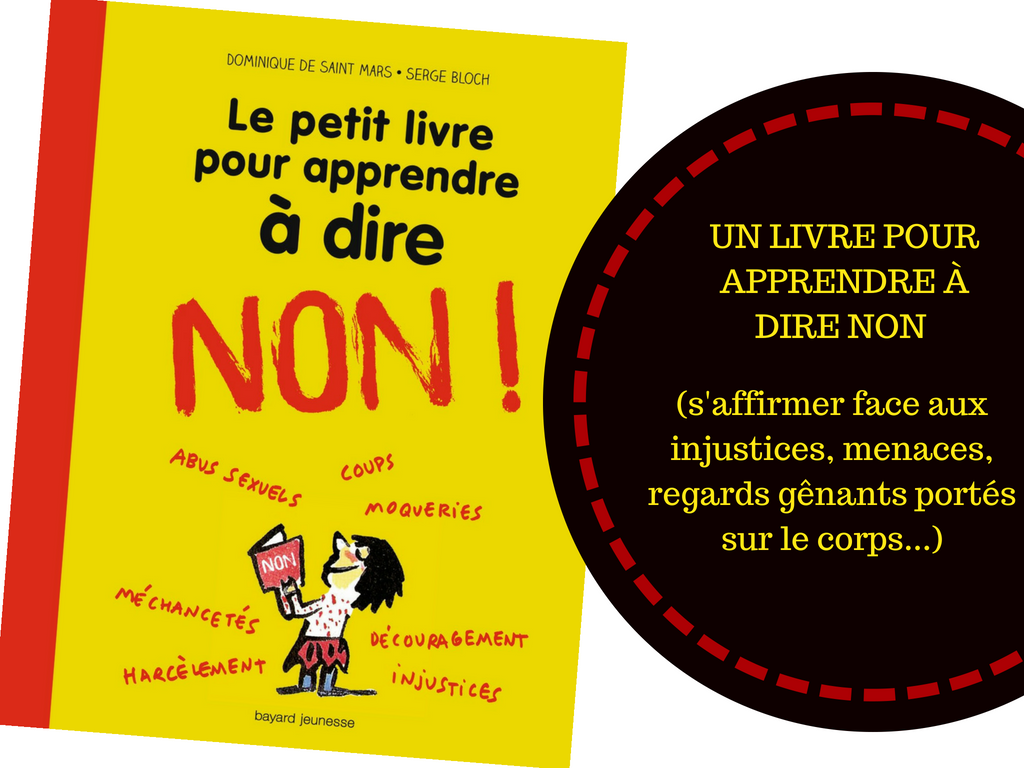
Teaching children to say no is one of the quietest but most protective skills a parent can nurture, and a small picture book makes it far easier to start the conversation. The book walks young readers through everyday situations where refusing is simple, then moves gently toward the harder ones.
Written by Dominique Saint Mars and illustrated by Serge Bloch, the duo behind the well-known Max and Lili series, it is designed to be read in family or at school. Rather than frightening children, it gives them language for discomfort, injustice and pressure.

What follows is a closer look at why the book works, how to use it, and the small habits that help a child trust their own voice.
Quick takeaways
- The book gives children explicit permission to say no, calmly and firmly.
- It starts with easy refusals to build trust before harder topics.
- Everyday settings (family, school, clubs, friends) make situations recognisable.
- Listening to intuition and the inner "no" is a central lesson.
- The closing pages list trusted people and useful contact numbers.
- Best used as a shared family or classroom read, not a one-off lecture.
Why a book about saying no matters
Children are often praised for being agreeable, so the idea that they may refuse deserves explicit permission. This book offers that permission calmly and firmly, showing that saying no is not rudeness but a way to be heard, respected and helped. It also reminds children that they can defend themselves when something feels wrong.
The tone matters as much as the message. Saint Mars begins with the easy refusals, the ones children already master at home, and uses that playful familiarity to build trust before touching delicate subjects. That sense of complicity is part of why the Max and Lili books resonate so widely with young readers.
If you are thinking about how children grow into confident speakers, it helps to pair this reading with everyday talk about feelings, much like the everyday encouragement described in learning to speak.
The strengths of this little book
The layout is colourful and airy, which keeps the pages inviting rather than heavy. The situations feel familiar because they happen in the family, at school, in sports clubs and among friends, so children recognise themselves quickly. One especially notable line grants children the right to say no when they are no longer hungry, since nobody knows their own stomach better than they do.
Saint Mars also insists on the importance of listening inward: what is it that makes me say no? She encourages children to follow their intuition, that small inner voice that nudges them to refuse. This is a subtle but powerful lesson in self-knowledge and self-assertion.
For parents who want to raise children who can name what they feel, this connects naturally with the reflection in easy things difficult, which explores why simple decisions can still feel hard.

| Situation | Difficulty for a child | Useful adult response |
|---|---|---|
| Refusing more food | Low | Respect the no without negotiation |
| Declining an unwanted gift | Moderate | Acknowledge politeness and honesty |
| Resisting peer pressure | Moderate | Rehearse a simple refusal phrase |
| Facing injustice or threats | High | Name it, listen, involve a trusted adult |
| Unwanted looks or touch | High | Reassure, believe, seek help |
From easy refusals to harder ones
The book opens by acknowledging that saying no is sometimes very easy, especially to parents. Then it moves into situations where refusing is much harder: injustice, threats, being asked to choose between two parents, or unwanted looks at one's body. Naming these moments gives children a vocabulary they may otherwise lack.
Other pages cover the grandmother's gift that does not please, friends inviting a child to break a rule, school bullying and sexual aggression. These are handled with care rather than alarm, which makes them usable as a shared reading rather than a lecture.
Some of these themes deserve a separate conversation at home. If a child has questions about bodies and privacy, the guidance in genitals of children can help you answer calmly and accurately.

Trusted people and useful numbers
At the end, the book lists trusted people a child can confide in, and notes that these are not necessarily the parents. It also gathers useful phone numbers and addresses children should know so they can find shelter from mistreatment of any kind. This closing section turns a story into something practical.
Helping a child identify more than one safe adult is a small step with real weight. It also supports the broader work of helping children feel secure enough to speak, which is echoed in instinct teaches mother when it discusses how adults learn to read a child's needs.
Reading together, pausing on each page and asking "what would you do?" keeps the book active rather than passive, and gives you a sense of what your child already understands.

How to use the book at home or at school
Read it in short sessions and let the child lead the pace. Ask open questions, share your own small examples of respectful refusal, and avoid turning the book into a test. The goal is comfort with the topic, not a perfect answer.
Teachers can use single pages as discussion starters, while families may prefer to revisit the book over several evenings. Keeping it on a visible shelf signals that these conversations are welcome anytime, not only once.
For children who need extra reassurance about their own bodies and boundaries, the perspective in teenager's space shows how respect for privacy grows with age. And for a lighter moment after heavier pages, a shared story such as Christmas stories children can restore a sense of warmth.

Building the habit of self-assertion
A book plants the idea, but daily life waters it. Practise small refusals at home, respect a child's no over food, touch or play, and model saying no politely yourself. When a child does speak up, acknowledge it before correcting anything else.
Keep the language simple: "You can say no. You can tell me. I will listen." Repetition builds the reflex, and the reflex is what protects a child when you are not in the room.
If you are choosing more resources for the shelf, the selection in toy stores Columbus and the ideas in STEM toys five show how thoughtful materials can support development alongside conversation.
My hands-on take
When I first read this book with my own child, I expected a serious mood, but the opening pages made us both laugh about how easily children say no at home. That lightness was the doorway. By the time we reached the harder pages, my child was already talking freely, offering examples from school and the playground without prompting.
What stayed with me was the line about hunger. I had spent years coaxing "just three more bites", and reading that a child is the best judge of their own stomach quietly changed our dinners. I stopped negotiating and started trusting, and the tension at the table eased. We now keep the book on a low shelf, and every so often my child pulls it out and asks to revisit a page. That, more than any lecture I could give, tells me the message landed.
Frequently asked questions
What age is this book suitable for?
It is aimed at primary-school children who can follow a short illustrated story, and it works best when an adult reads alongside. Younger children can enjoy single pages, while older ones can discuss the harder situations.
Does it cover serious topics like abuse?
Yes, gently. It mentions sexual aggression and bullying among other situations, always with the aim of giving children language and pointing them toward trusted adults rather than frightening them.
Can it be used in a classroom?
The book is explicitly designed to be read at school as well as at home. Teachers can use individual pages as discussion starters and follow up with the trusted-people list at the end.
What if my child says no to everything?
That is a normal stage. The book itself jokes about how easy it is to refuse parents, and the aim is to help children distinguish a genuine inner no from simple opposition.
Product Reviews
 Best Toys for Dogs With High Prey Drive |
Best Outdoor Toys for 3-4 Year Olds |
Best Outdoor Toys for 6 Year Olds |
Best Harness for Poodle |
Best LEGO Sets for Adults |
Best Travel Toys for 4 Year Olds on Airplane |
Best Toy Stores in Washington DC |
Best Potty Training Toys |
Best Toys for Tripod Dogs |
Maillot equipe de france







