


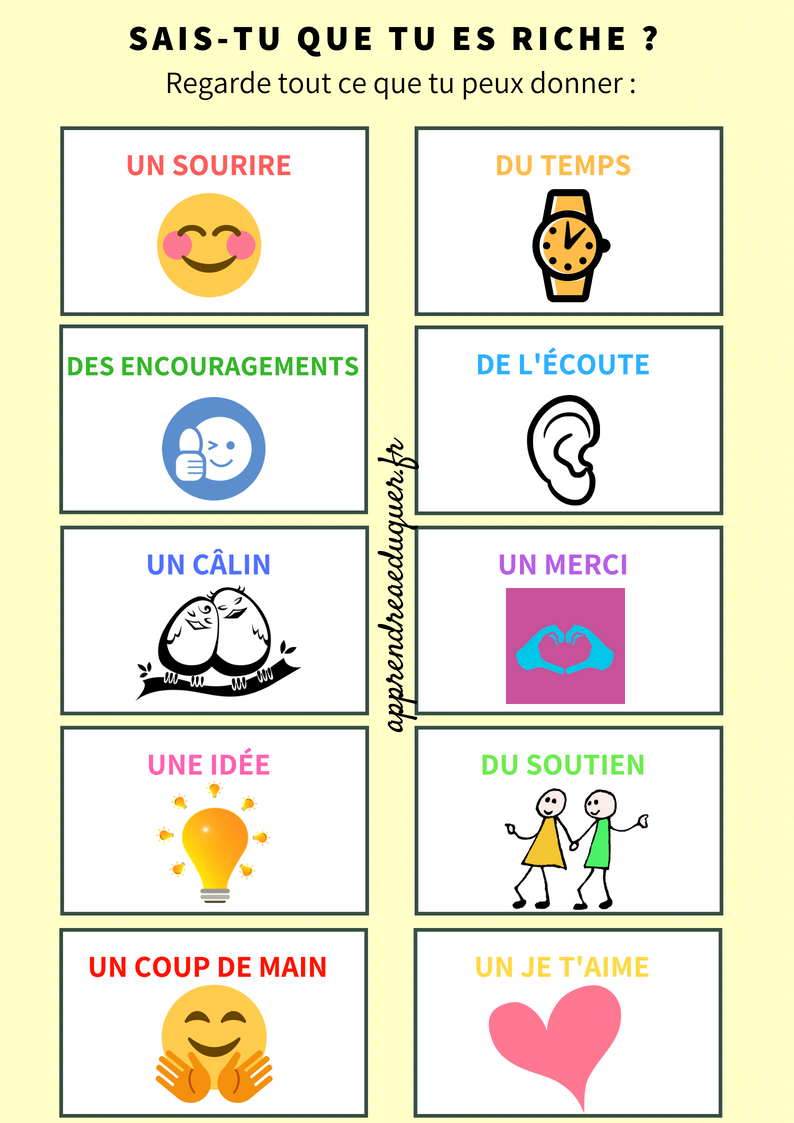
Teaching kids kindness starts with a simple idea: you are richer than you think, and you can change someone's day by giving something that costs nothing at all. That is the whole point of the "Do you know you are rich?" poster — a small visual prompt for children (and adults too) to notice what they already have to offer.
The message is not about money. It is about the free gifts we all carry: a smile, a hand, a bit of time, a kind word. Used well, these small gestures make a real difference in someone's life, and they cost nothing to give.

This article shows how to use that idea at home, how to talk about it with children, and why kindness grows best through practice rather than through lectures.
Quick takeaways
- Being rich is about what you can give, not what you own.
- Kindness is a verb: it grows through practice, not lectures.
- Free gifts include help, advice, trust, listening and time.
- Ask children what they have received for free and how it felt.
- Small acts several times a week are enough to build the habit.
- Model kindness daily; children copy what they see.
Start With the Poster and a Conversation
The poster works best as a conversation starter rather than a decoration. Sit with your child, look at it together and ask what they think it means to be rich in something other than money. Children often surprise us with how quickly they connect the idea to friends, family and everyday moments.
From there, invite them to list what they can give for free: help, advice, a massage, their trust, their attention. Then turn the question around and ask whether they have ever received something free — a smile, a helping hand, support, a thank you, a hug, someone listening, encouragement or simply time. Ask how it felt. Naming that feeling is what makes the giving real.
If you are looking for gentle ways to build these habits early, activities that support psychomotor skills and shared play give children plenty of natural chances to help and cooperate.
Kindness Is a Verb, Not a Label
Children learn kindness by doing it, not by hearing about it. As school psychologist Michele Borba puts it, kindness is taught as a verb of action, not a static noun — it strengthens with practice. Watching lessons or filling in worksheets does little; comforting, helping, caring for others and cooperating do a great deal.
The good news is that training to be kind costs little, takes no extra time and requires no special talent. Simple, regular acts several times a week are enough: holding a door open for someone, helping a classmate with homework, or asking a child who looks lonely whether they want to play. Even simple shared games can become small lessons in taking turns and cheering others on.
Why Small Acts Matter
These gestures let children take care of others while making them happier themselves. They also connect children to one another, giving them the chance to step into someone else's shoes and build caring relationships. Kindness, in short, opens the door to empathy.
Stories are a quiet ally here; a shelf of books about art or any shared reading time creates space to talk about how characters feel. Everyday moments work too — soothing a baby with hiccups is a gentle first lesson in comforting someone.

| Free gift | What it looks like | When to try it |
|---|---|---|
| A smile | Greeting a neighbour or classmate | Morning walk to school |
| Help | Carrying bags or tidying up | After meals |
| Listening | Letting a friend finish talking | Playtime |
| Encouragement | Cheering a teammate on | After a game |
| Time | Playing with a lonely child | Break time |
| Trust | Believing a friend's word | Group projects |
Free Gifts Children Can Give Every Day
Help your child build a personal menu of free gifts. Younger children can offer a smile, a hug, a drawing or a hand with tidying. Older ones can give advice, encouragement, a listening ear, patience with a sibling or genuine trust in a friend. The list belongs to them, which is what makes them likely to use it.
Daily routines are full of openings. Walking to school, waiting in line, setting the table — each holds a small chance to notice someone who needs a hand. Point these moments out without turning them into a test, and let your child choose when to act.
Group settings help too. Team games, classroom projects and even something as ordinary as clothing name labels before a school trip can become a lesson in looking out for the group, not just yourself.
Model It, Don't Lecture It
Children copy what they see far more than what they hear. If you thank the bus driver, check on a neighbour or listen without interrupting, you are teaching kindness without saying a word. Narrate it lightly now and then — "I'm going to call Grandma because she sounded tired" — so the reasoning is visible.
Keep the tone warm rather than moralising. The goal is not to produce a child who performs goodness for approval, but one who notices others and responds naturally. Praise the effort and the noticing, not just the outcome.
Values like these sit alongside the ones adults carry into teaching and caregiving, as explored in core teaching values. At home, a calm and predictable environment — the kind that also helps with things like baby care myths — leaves more room for patience and generosity. The same steady patience matters when you handle separation worries or work through a scholarship application together.
Make Giving a Family Habit
Turn the poster's message into a light family ritual. Once a week, each person can share one free gift they gave and one they received. No scores, no prizes — just a few minutes of noticing. Over time, this builds a shared language of kindness that children carry into friendships and school.
Keep expectations small and realistic. A single act done regularly beats a grand gesture done once. If a child forgets or refuses, stay curious rather than critical; kindness grows faster in safety than in pressure.
And remember the adults. Giving time, attention and encouragement is not only good for children — it is good for the people around them, including the new parents in your life who may be juggling twins and babies or simply need a friendly word.

My hands-on take
I tried the poster idea on a rainy afternoon when the house felt loud and everyone was grumpy. Instead of launching into a talk about being nice, I simply asked my child what she could give someone that day for free. She thought for a moment and said she could help her little brother find his missing shoe. It took two minutes, but the mood in the room shifted.
Since then we sometimes play a small game at dinner: one free gift given, one received. Some days nobody remembers, and that is fine. What I have noticed is that the noticing matters more than the gesture itself — once children start looking for chances to help, they find them everywhere.
Frequently asked questions
What is the "Do you know you are rich?" poster for?
It is a simple visual prompt that helps children notice what they can give for free. It works best as a starting point for a family conversation rather than as a rule sheet.
Does teaching kindness require special materials or time?
No. Practising kindness costs little, takes no extra time and needs no particular talent. Regular small acts several times a week are enough.
How do I talk to my child about giving?
Ask what they could give for free, then ask what they have received for free and how it made them feel. Keep the tone curious rather than moralising.
What if my child is not interested?
Stay patient and keep modelling the behaviour yourself. Kindness grows more easily in a calm, safe atmosphere than under pressure or reward.
Product Reviews
 Best Toys for Dogs With High Prey Drive |
Best Outdoor Toys for 3-4 Year Olds |
Best Outdoor Toys for 6 Year Olds |
Best Harness for Poodle |
Best LEGO Sets for Adults |
Best Travel Toys for 4 Year Olds on Airplane |
Best Toy Stores in Washington DC |
Best Potty Training Toys |
Best Toys for Tripod Dogs |
Maillot equipe de france







