


Peaceful communication cards offer a gentle, visual way to bring more kindness into everyday family conversations. There are moments when our words escape us, when despite our best intentions the words hurt, and when conflict seems to take over against our will. This card set proposes playful, visual tools to help you navigate relational storms and treat dialogue as an art, with yourself and with others.
Laetitia Marre, known as L'Apprentie Girafe, invites us to better understand what eases or hinders relationships. The aim is to help you express yourself with more authenticity, offer loved ones a caring ear, and discover how to turn everyday conflicts into creative opportunities.

Quick takeaways
- Peaceful communication is a visual, practical art of dialogue with yourself and others
- The set draws on Marshall Rosenberg's Nonviolent Communication process
- It contains a theory booklet plus 42 illustrated cards in six categories
- Use it to prepare hard talks, recenter, or check in on a difficult subject
- Built-in lists of emotions, sensations and needs help you name what you feel
- A shared family vocabulary makes kind conversations easier to repeat
What peaceful communication really means
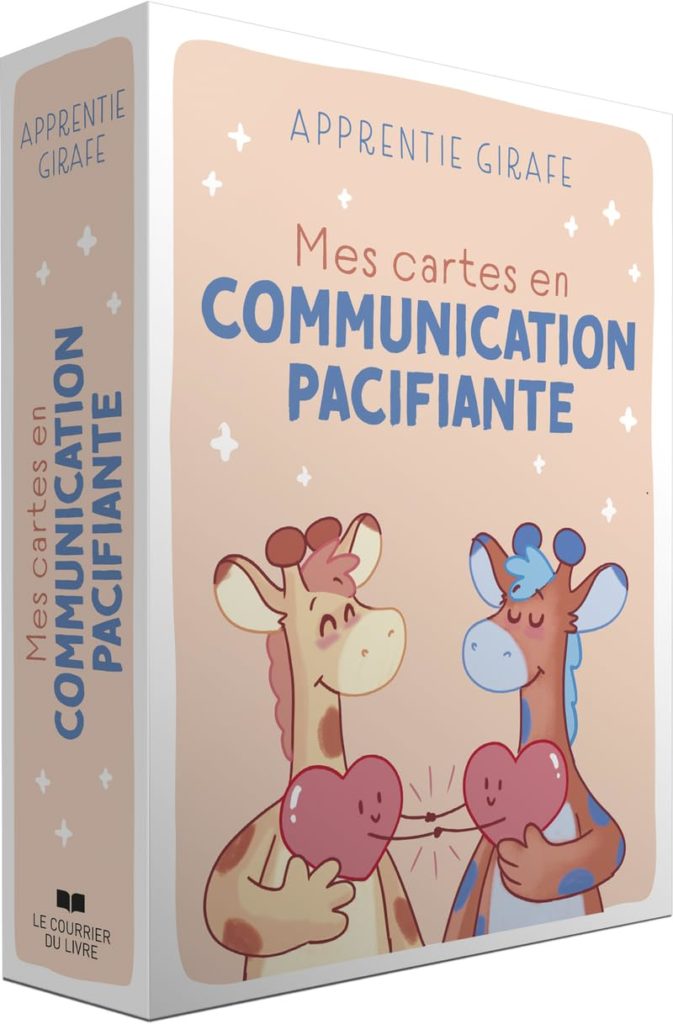
Peaceful communication is first an art of dialogue, a way of staying connected to yourself while staying open to the other person. Laetitia Marre presents the set as a companion for cultivating a caring presence, in yourself and with others. She draws on the teachings of Marshall Rosenberg, founder of the Nonviolent Communication process.
She uses the phrase "peaceful communication" to reflect the visual approach she developed, helping people move from a power struggle toward a genuine encounter. Rather than winning an argument, the goal is to meet the other person where they are. This mindset pairs well with the idea of accompanying from love, which reminds parents to respond to connection rather than react to fear.
From power struggle to meeting
The shift is subtle but powerful: instead of trying to prove a point, you try to understand what is alive in the conversation. That same spirit of mutual support shows up when mom and dad work as allies rather than opponents in family life.
What is inside the box
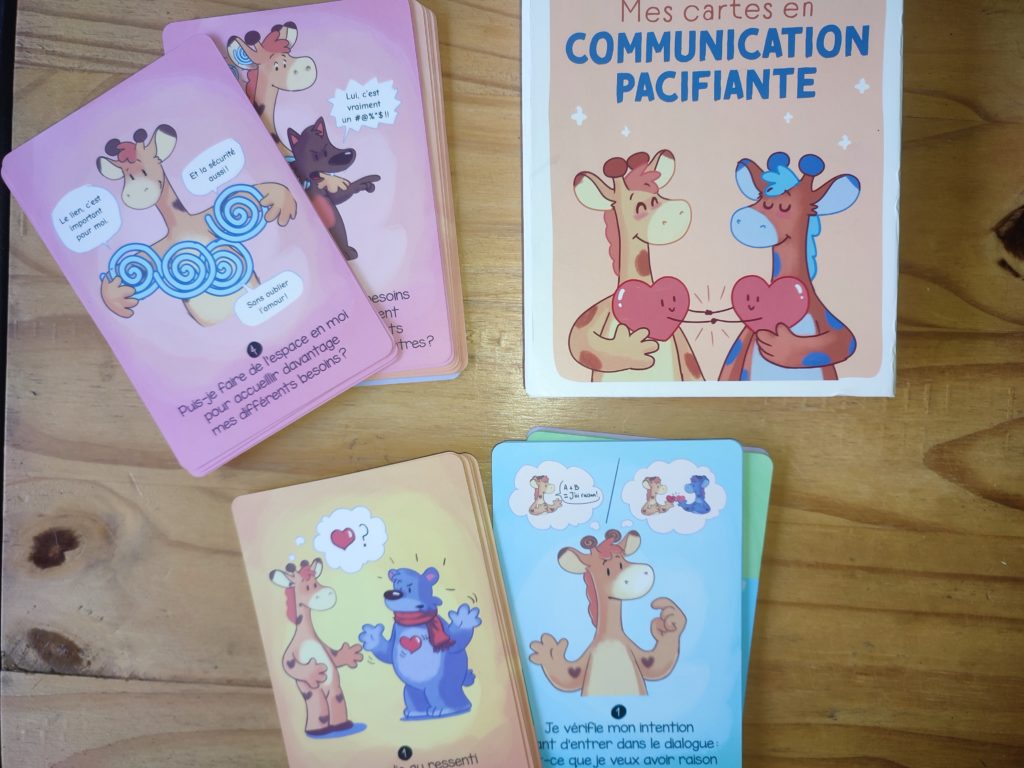
The set contains a theoretical booklet alongside 42 illustrated communication cards, divided into six categories. These categories are listening to yourself, authentic expression, empathetic listening, intention and presence, connected dialogue, and gratitude and celebration. Together they cover the full arc of a caring conversation, from checking in with your own feelings to closing on a note of appreciation.
The booklet explains the foundations of peaceful communication, including what a sensation is, what an emotion is, the list of needs, and the notions of aspiration and intention. It also provides complementary tools such as a list of emotions, a list of bodily sensations, and a list of fundamental needs. These references make it easy to put words on what you feel, which is often the hardest part, much like finding the right words when you motivate children to name their own emotions.
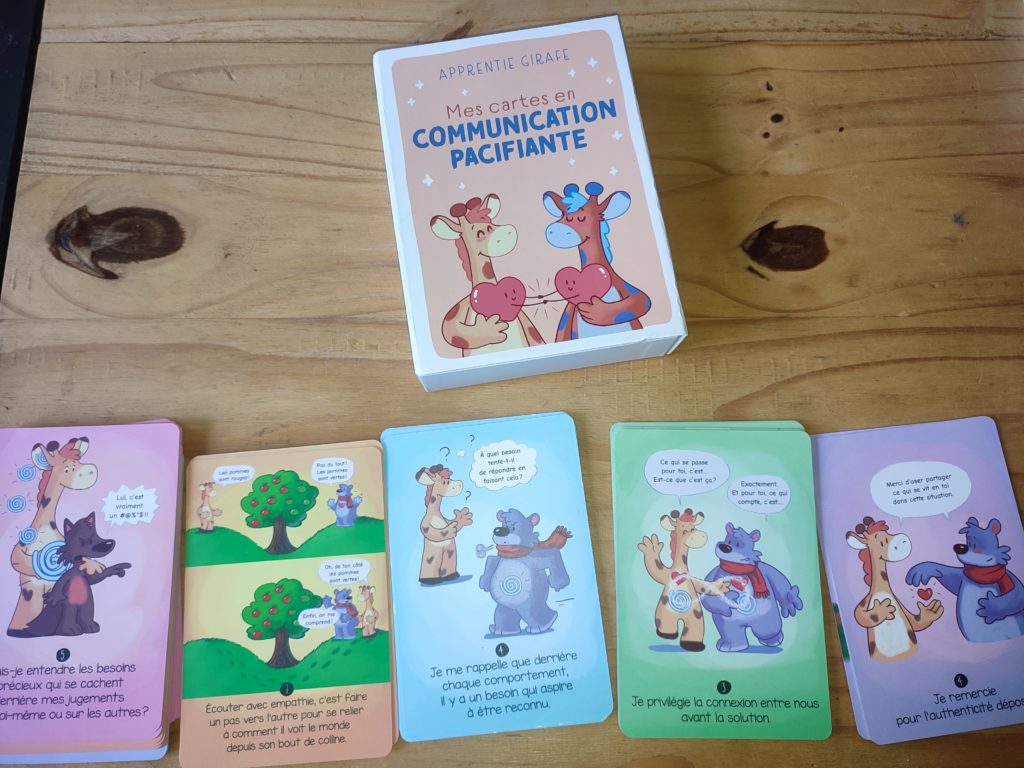
| Category | What it supports | Good moment to use it |
|---|---|---|
| Listening to yourself | Noticing your own feelings and needs | Before a tense conversation |
| Authentic expression | Saying what is true for you kindly | When something has been left unsaid |
| Empathetic listening | Truly hearing the other person | During a disagreement |
| Intention and presence | Setting a caring tone | At the start of a hard talk |
| Connected dialogue | Staying in the exchange | Mid-conversation when it heats up |
| Gratitude and celebration | Closing on appreciation | At dinner or bedtime |
How to use the cards day to day
You can use the set in several flexible ways. Reach for it to help you dialogue with someone about a difficult subject, to prepare yourself before a hard conversation, or simply to recenter and take stock. Because the cards are visual, they give everyone in the family a shared vocabulary, including children who may not yet have the words for big feelings.
One practical habit is to pull a single card before a tense moment, such as a card from the empathetic listening category, and keep it in mind as your intention for the exchange. Parents who feel overwhelmed by clutter may appreciate that this is a compact, screen-free tool, unlike the many toys for 5 year olds that pile up at home. It sits quietly on a shelf and comes out exactly when a conversation needs it.
Preparing a difficult conversation
Before a hard talk, choose a card that names what you need and another that names what you want to offer. This small ritual slows you down and sets a caring tone. It is a bit like the calm preparation behind a thoughtful letter from a mother, where intention matters more than perfect phrasing.
Why the booklet and cards work together
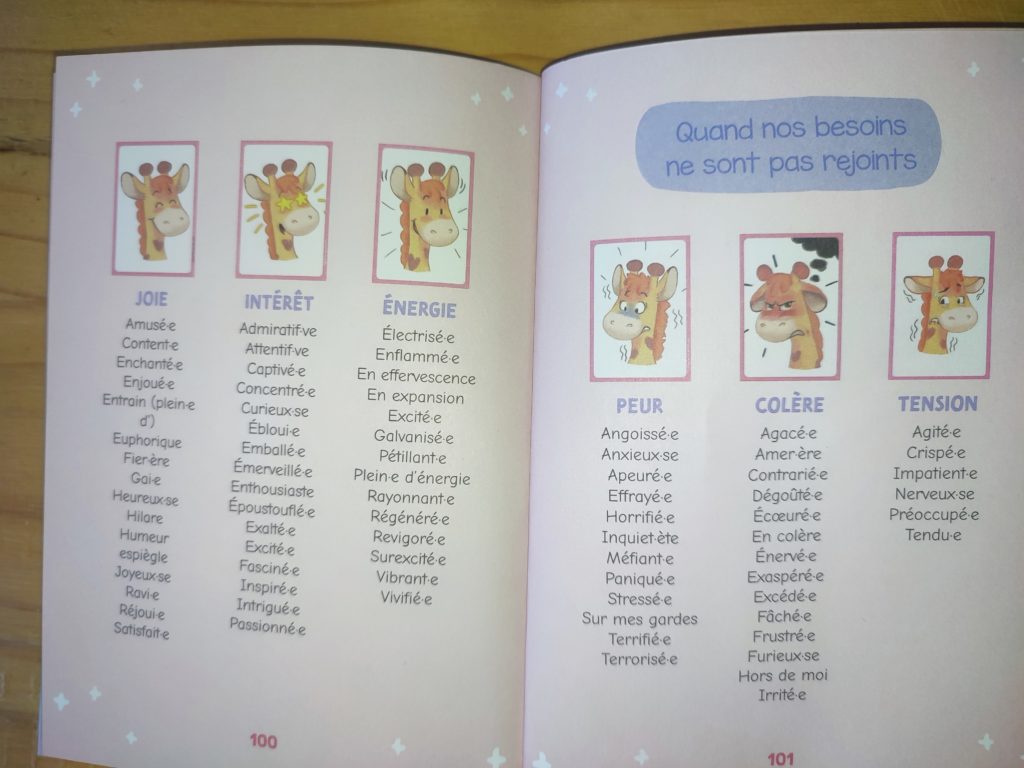
What stands out is the complementarity between the cards and the booklet. The cards give you an immediate, visual entry point, while the booklet offers ways to use them and explains the underlying theory. This pairing means you are not left guessing; you can understand the "why" behind each category as you practice.
The built-in lists of emotions, sensations and needs act as quick references when you get stuck. Many adults find that naming a bodily sensation first, then the emotion, then the need, makes a conversation far less heated. This gentle scaffolding supports the kind of steady, importance of play and practice that helps new habits stick, because you learn by doing rather than by memorizing rules.
Bringing it into family life
These cards are not only for adult conflicts; they translate beautifully into parenting. A gratitude card at dinner, an authentic expression card after a hard day, or an empathetic listening card during a sibling dispute all help children see communication as something you practice together. Over time, families build a shared language for feelings and needs.
If you are thinking about how to keep home life organized around such tools, a few simple routines go a long way, much like the strategies in tips to keep toys organized. Keep the deck somewhere visible and reachable, and let children pick a card themselves. When children feel they have a say, they are far more likely to engage, echoing the way attention and focus improve when activities feel chosen rather than imposed.

My hands-on take
I started keeping a small deck like this on the kitchen counter, and the biggest surprise was how often my children reached for it themselves. After a squabble over a shared game, my eldest picked a card without being asked and tried to name what she was feeling. It did not magically solve the argument, but it changed the tone from blame to curiosity, which felt like a real win.
What I appreciate most is the honesty it invites. Naming a need out loud, even clumsily, has made me a calmer parent on ordinary afternoons. I still lose my temper sometimes, but now I have a simple ritual to return to, and that small pause is often enough to turn a tense moment into a real conversation.
Frequently asked questions
Who is this card set for?
It is designed for anyone who wants to communicate with more kindness, from parents to partners to colleagues. The visual format makes it accessible to children as well as adults.
Do I need to know Nonviolent Communication first?
No. The accompanying booklet explains the foundations, including what a sensation, an emotion and a need are, along with practical lists you can refer to.
Can I use just one card at a time?
Yes. Many people pull a single card to set an intention or recenter before a conversation, rather than working through the whole deck.
Is it only for conflicts?
Not at all. The gratitude and celebration category is there to help you mark good moments, not just navigate hard ones.
Product Reviews
 Best Toys for Dogs With High Prey Drive |
Best Outdoor Toys for 3-4 Year Olds |
Best Outdoor Toys for 6 Year Olds |
Best Harness for Poodle |
Best LEGO Sets for Adults |
Best Travel Toys for 4 Year Olds on Airplane |
Best Toy Stores in Washington DC |
Best Potty Training Toys |
Best Toys for Tripod Dogs |
Maillot equipe de france







