


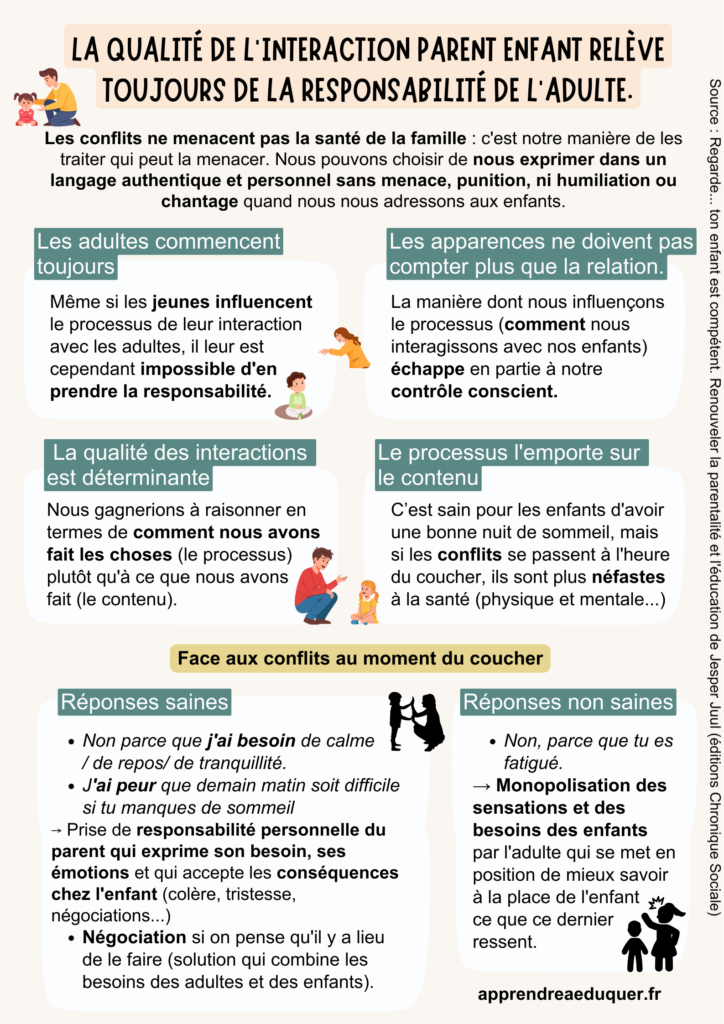
The quality of parent-child interaction is always the responsibility of the adult, even when children influence how a moment unfolds. Kids shape the process, but they cannot carry the burden of it, and when that responsibility slips into their hands they do not develop healthily.
This is the core idea behind respectful, ethical authority: parents lead, children follow, and the adult owns the emotional weather of the relationship. It sounds simple, yet much of how we influence our children escapes our conscious control.

This article unpacks that responsibility and turns it into something practical you can act on today.
Quick takeaways
- The adult always owns the quality of the interaction, even when children influence it.
- Mood, stress, beliefs and unconscious history shape how we interact.
- Focus on the process of how you act, not only on what you achieve.
- Destructive behaviour in children usually starts with unaware adult behaviour.
- Repair openly when you misstep; that models responsibility.
- Give choices within limits instead of carrying every responsibility for the child.
Why the adult carries the responsibility
Children and teenagers genuinely influence the flow of any interaction with an adult, but they cannot be held responsible for it. When responsibility ends up in a child's hands for whatever reason, healthy development suffers. The adult is the one who sets the tone, holds the boundary and repairs what breaks.
This does not come naturally overnight. It takes time to get used to the idea and to learn the principles behind healthy interactions. The tricky part is that the way we influence the process, meaning how we interact, is partly outside our conscious awareness.
Recognising this is the first step toward real change, and it pairs well with understanding the perfect age debate many parents wrestle with before children even arrive.
What shapes the interactions we create
We influence every exchange with a child through many invisible channels. Our personality, our mental rumination, work worries, family conflicts with a partner or in-laws, and our momentary mood all leak into the room. Stress, fatigue and money trouble colour our patience before a single word is spoken.
Then come our beliefs: the zeal to do everything right, rigid ideas about what a good parent does, and the anxiety of getting it wrong, often rooted in low self-esteem. Advice from magazines, relatives, friends, books and media adds another layer, as does the unconscious inheritance of our own history and social expectations.
Even everyday routines carry this weight, whether it is mobile phones at the table or the way we handle fights between siblings.
Content versus process
Earlier generations often missed that the quality of interaction determines whether good intentions succeed. We still tend to focus on doing the right thing, and when it fails we assume something is wrong with the child. We would do better to ask how we did things, not just what we did.
| Dimension | Content control | Ethical process |
|---|---|---|
| Focus | Child's perfect adaptation | Quality of the interaction |
| Authority style | Imposed, knows best | Respectful, holds limits |
| When things fail | Blame the child | Examine adult behaviour |
| Responsibility | Carried for the child | Modelled and shared |
| Repair | Rarely named | Openly owned |
| Goal | Obedient, high-achieving child | Healthy development and trust |
Control of content and imposed authority
Controlling content means chasing an ideal of total adaptation through imposed authority, an adult who knows best and has the right to cause harm for the child's good. The priority becomes nice, diligent, high-achieving children who simply do what they are told.
This approach looks tidy on the surface and quietly erodes the relationship underneath. It also feeds the pressure many families feel around too many toys and constant stimulation rather than genuine connection.
Respectful authority works differently. It holds limits without humiliation and keeps the relationship, not the performance, at the centre.
Parents always start
When a child begins behaving in self-destructive ways, such as low self-esteem, withdrawal or self-harm, or destructive ways, such as rebellion or revenge, three things are almost certain. The child is not the first in the family to act this way; the adults always start. The adults are usually unaware of their own destructive or self-destructive conduct. And the behaviour has been building for months or years, even if a recent event seems to have triggered it.
This is why we need an ethic of relationship with children: eyes and ears alert to the missteps we will inevitably make, and the openness to own them. Only that ethical practice frees children to develop healthily again. The help is already there in the competent messages children send us, which lead us back to where we ourselves got stuck.
Owning our part also changes how we handle hard moments, from taking a child to a few days at grandparents where routines shift.
Ethical responsibility in daily life
Many problems stem from parents taking over the child's personal responsibility entirely. This shows up around food, sleep, school, clothing, pocket money, waking time, relationships, hygiene and tidying up. Carrying all of it for them teaches dependence rather than competence.
It is irresponsible, in the sense of not exercising power responsibly, for parents to load children with the guilt of family conflict. Instead, adults assume that responsibility and model what taking ownership looks like.
The bedtime example
Children are perfectly capable of managing their bedtime and will largely imitate their parents, usually meeting their sleep needs. Sometimes, like adults, they lose sleep because something important, relaxing or fascinating is happening. That does not mean they should choose their own bedtime if parents prefer otherwise, for peace, rest or a rested tomorrow.
Similar logic applies to board games evenings, expanding vocabulary through reading, and language development play.
Building respectful authority step by step
Start by noticing your own state before correcting your child. A tired, worried adult reads as an unsafe adult, so name your mood and steady yourself first. Then separate the process from the content: ask how the exchange went, not only whether the rule was followed.
Apologise openly when you get it wrong, because repair is the lesson. Give children age-appropriate choices within limits you set, so they practise responsibility without carrying the whole weight. Keep routines predictable and calm, and let natural consequences do some of the teaching.
Play and shared activities remain powerful tools for connection, whether it is outdoor toys on a weekend or 10 Best Toys that invite you to sit on the floor together.


My hands-on take
In my own home, the biggest shift came when I stopped asking why my child was behaving badly and started asking what I had brought into the room. On the evenings I came home distracted and short-tempered, the same small requests turned into battles. On calmer evenings, those requests passed without a word.
I now try to pause at the door, name my own mood silently and take a breath before stepping in. When I snap, I go back and say so plainly, without excuses. That small habit of repair has done more for our relationship than any rule I have ever set, and it keeps the responsibility where it belongs: with me.
Frequently asked questions
Does this mean children have no say in family life?
No. Children influence interactions and should have age-appropriate choices. The point is that they cannot carry responsibility for the relationship itself, which stays with the adult.
What if I lose my temper and get it wrong?
Expect it, because missteps are inevitable. What matters is noticing them and openly owning them, which teaches children that responsibility includes repair.
Should children set their own bedtime?
They can often manage sleep well and imitate parents, but they do not have to choose their own bedtime if parents prefer otherwise for rest or peace.
How do I start changing things?
Begin with self-awareness before correcting your child, then separate how you handled a moment from what the rule was, and practise repair.
Product Reviews
 Best Toys for Dogs With High Prey Drive |
Best Outdoor Toys for 3-4 Year Olds |
Best Outdoor Toys for 6 Year Olds |
Best Harness for Poodle |
Best LEGO Sets for Adults |
Best Travel Toys for 4 Year Olds on Airplane |
Best Toy Stores in Washington DC |
Best Potty Training Toys |
Best Toys for Tripod Dogs |
Maillot equipe de france







