


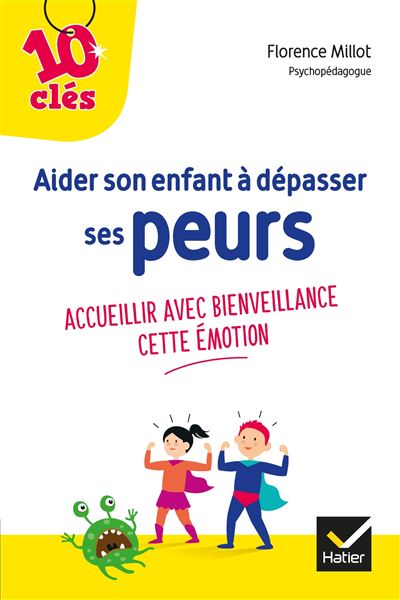
Accompanying the fears of young children begins with accepting that fear is a normal emotion and has every right to exist. All children experience fears at some point, and an empathetic approach helps them feel understood rather than dismissed.
Phrases like "It's no big deal", "Everyone feels that way" or "There's no reason to be scared" are well-meaning but they tend to block the emotion instead of welcoming it. Welcoming an emotion starts by saying YES to yourself and to the child: yes, it really can be scary.

Once the fear has been heard, reflected and respected, ideas can be mobilised to overcome it, without forcing or rushing the child. Here are four gentle paths for children aged three to six.
Quick takeaways
- Accept fear as a normal emotion and avoid dismissive phrases like "it's no big deal".
- Reflect the child's feeling first: "I can see this scares you".
- Let the child put the fear into a balloon and release it.
- Build a den or calm corner where the child feels safe.
- Protect free play and pretend play to restore a sense of control.
- Explain the sequence of events to reduce unpredictability.
Start by welcoming the fear before anything else
Reflecting a child's emotion can sound like "I can see this scares you" or "You think about it a lot, is that right?". You might also say "It's true that not knowing how long something will last can be scary" or "It's normal to feel afraid in this situation".
Fear is necessary in the face of danger: it is what pushes us to protect ourselves, to remember to wash our hands or to stay indoors. When a child feels fully understood and heard, they experience a real relaxation in their heart and body.
Only after this step does it make sense to offer ideas for overcoming the fear. This patient approach echoes the learning together mindset, where adults grow alongside children rather than rushing ahead of them.
Invite the child to put the fear into an object
A child can imagine putting their fear into a balloon. First they place their bodily sensations inside it, like the knot in the stomach or the trembling, then the emotion itself, named clearly and rated from one to ten.
Finally they add the thoughts that feed the emotion, such as "I'm going to fall", "People will laugh at me" or "I won't manage". Then they let the balloon float up into the air, and the fear with it.
This kind of symbolic play works well alongside the free, self-directed play that helps children process their world, and it pairs naturally with the reassurance found in baby intelligence myths, reminding us that children understand far more than we assume. As our pediatrician reminds us, parents are the mirror in which children see themselves.

| Approach | What the child does | When it helps most |
|---|---|---|
| Balloon technique | Names sensations, emotion and thoughts, then releases | When fear feels big and physical |
| Den or hiding place | Gathers comforting objects in a safe corner | When the child needs containment |
| Free and pretend play | Acts out scary situations and takes control | When fear is linked to daily events |
| Explaining what comes next | Listens, anticipates and asks questions | When the unknown feeds the fear |
| Welcoming the emotion | Feels heard and understood before anything else | Always, as the first step |
Help the child build a den or a hiding place
Children need to experience physical containment. This can happen through building a den, finding refuge in a large cardboard box, or having a calm corner available that is sheltered from view.
Frightened children find security in this enclosed, protected and warm space that belongs only to them. There they can gather the things that comfort them: soft toys, cushions, books and other familiar objects.
A cosy corner like this is a small anchor in the home, much like the familiar routines and sayings passed down through generations, as explored in mother phrases that still sound familiar today.
Offer free play and pretend play
If children are deprived of free, self-directed play, they lose the chance to understand that the world is not so frightening, to release their emotions and to heal emotional wounds. Play counters the loss of meaning and control over their lives, and not feeling master of one's life is fertile ground for anxiety.
Through play, children learn that they are capable of controlling their lives and they experience that control directly. Pretend play also helps them master what might happen and what frightens them.
For example, a child afraid of school tests can play the teacher and give tests to their parents or their soft toys. This mirrors the gentle preparation described in school route tips, where predictability builds confidence. Choosing toys for baby showers with open-ended potential also supports this kind of imaginative play.
Explain what happens next to reduce fear
Children do not have the same sense of time as adults, and the unpredictability linked to a lack of control can generate fear. Putting words to the situation and to the sequence of events helps them anticipate better and feel less afraid.
It also cuts short the imagination that can lead to anxiety, with unlikely scenarios built up in the child's mind. The more detail given about the timeline, the more the child's sense of control increases, because they could prepare and ask questions about any grey areas.
Clear explanations are a form of everyday care, in the same spirit as the practical guidance found in family interference situations, where honest communication protects the child's sense of security. The same steady reassurance runs through virtual babysitters who help parents who telework.

My hands-on take
In my own home, the balloon idea became a small ritual whenever something felt overwhelming. We would sit together, name the wobbly feeling in the tummy, add the worried thought, and then watch the imaginary balloon drift out of the window. It rarely solved everything at once, but it gave my child words and a way to let go.
The den was just as useful. A corner with cushions and a favourite soft toy became the place to retreat to when the world felt too loud. What I learned is that welcoming the fear first, before offering any solution, changes everything: the child stops fighting the feeling and starts trusting that someone is on their side.
Frequently asked questions
Should I tell my child there is nothing to be afraid of?
It is better to avoid it. Saying there is no reason to be afraid tends to block the emotion, while reflecting it helps the child feel understood and relax.
At what age can I use the balloon technique?
It suits young children around three to six, as long as it is offered as a game. The child names sensations, the emotion and the thoughts, then lets the balloon float away.
Why is pretend play so important for fears?
Pretend play lets children master what frightens them and experience a sense of control. A child afraid of tests can play the teacher and give tests to parents or soft toys.
How much detail should I give about what happens next?
Give as much detail about the timeline as the child can absorb. More detail increases their sense of control and lets them ask questions about anything unclear.
Product Reviews
 Best Toys for Dogs With High Prey Drive |
Best Outdoor Toys for 3-4 Year Olds |
Best Outdoor Toys for 6 Year Olds |
Best Harness for Poodle |
Best LEGO Sets for Adults |
Best Travel Toys for 4 Year Olds on Airplane |
Best Toy Stores in Washington DC |
Best Potty Training Toys |
Best Toys for Tripod Dogs |
Maillot equipe de france







