


Youth agency is the capacity young people have to act intentionally, make choices and shape their own environment instead of passively enduring what happens to them. Adults often fail to protect the interests of children and teenagers, but young people can speak up for themselves.
Their desire to rebel is not only a wish: they put it into practice, sometimes almost invisibly through small verbal resistances, sighs or eyes raised to the ceiling, and sometimes politically and in self-organised groups. These revolts can be read as ways of asking adults for the respect young people deserve.

Quick takeaways
- Youth agency means acting intentionally, choosing and influencing one's environment.
- Adult domination often works by convincing children they have no power.
- Insolence can be a way of protecting dignity when orders show no respect.
- Resistance ranges from sighs and sulking to petitions and student unions.
- Asking what hostility expresses reveals the hidden need behind it.
- Equal dignity and mutual respect require unlearning our own adultism.
Politicised and self-organised revolts
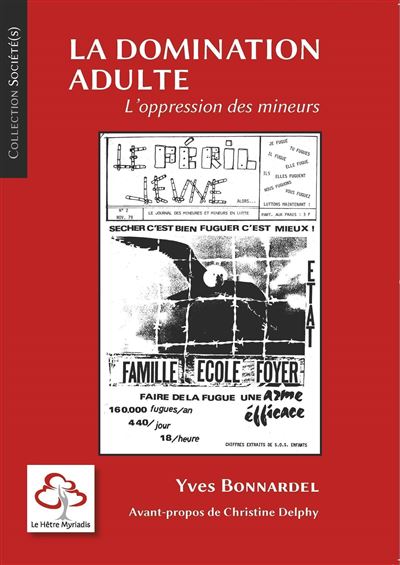
In his book on adult domination and the oppression of minors, published in 2015, Yves Bonnardel documented the struggles of minors, meaning children and teenagers who have not yet acquired adult status and the rights that come with it, such as the right to work or to vote. He recalled that revolts by young people marked the end of the nineteenth and the twentieth century in Europe.
These youth revolts denounced confinement through compulsory schooling, the ideology of childhood that must be protected and locked away “for its own good”, and the status of minors deprived of basic rights such as freedom of movement. More than 200 secondary-school revolts against school confinement took place in the nineteenth century.
In France, a newspaper was created in 1882 by a group of lycéens to defend the rights of youth. They criticised the adult order and rejected dominant-adult versus dominated-child relationships. Closer to us, in the 1970s, a youth liberation movement was created to demand free disposal of their own lives for minors and access to fundamental human rights that minor status denies, including the right to manage a budget, to work, to move freely and to take part in democratic life through voting. Its founders stated: “We are not against the old, we are against what made you grow old.” In Germany, the Kraetzae collective even brought a case against the state over compulsory schooling as contrary to fundamental human rights. Just as adults instinctively hold a baby without being taught, young people too can organise their own lives.
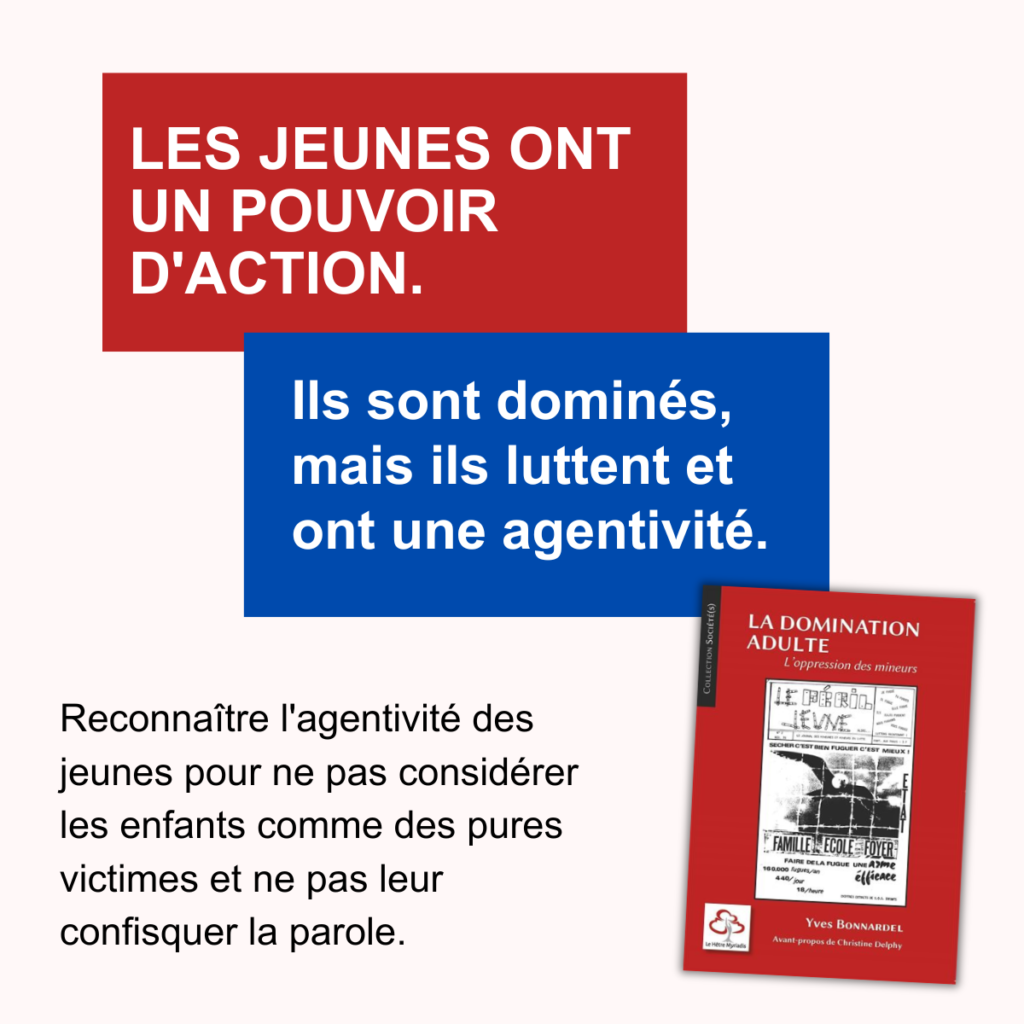
Recognising youth agency instead of seeing children as victims
The term agency highlights resistances, sometimes discreet ones, and helps move beyond the status of pure victim. One way adults hold power over children is by making them believe they have neither competence nor force for action.
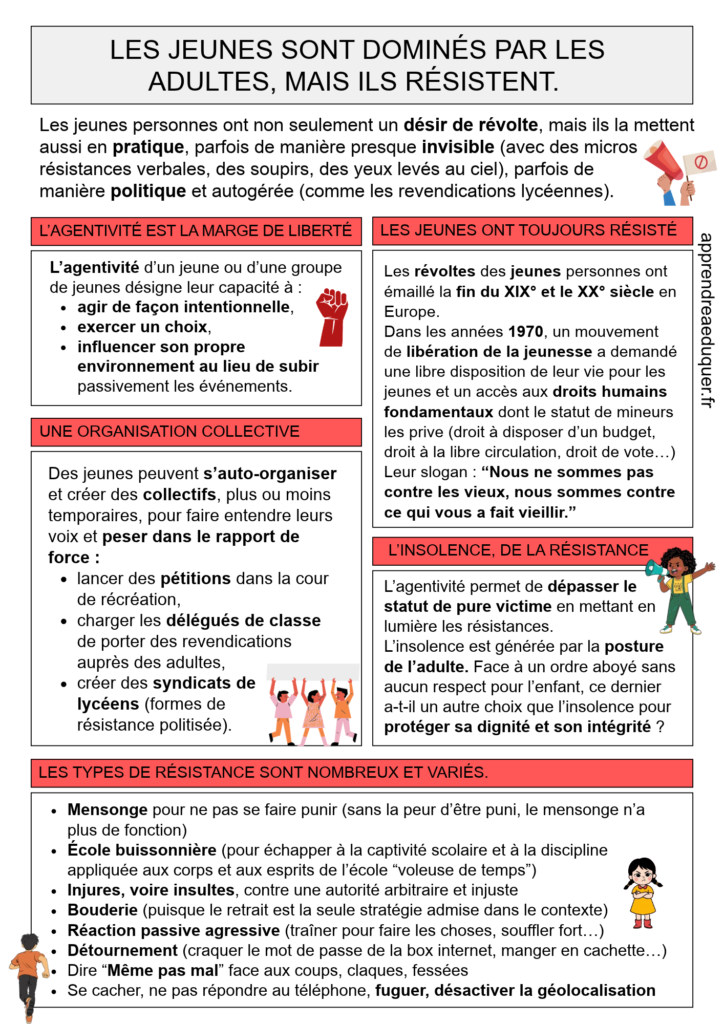
The agency of a young person or a group of young people refers to their capacity to act intentionally, to exercise a choice, and to influence their own environment instead of passively undergoing events. In the humanities, agency defines a person's margin of freedom and power of emancipation against social structures or constraints. This lens is useful whenever we think about how children grow and learn, whether we are choosing books about colours for a toddler or learning toys for toddlers that let a child lead the play. It also helps explain why young children get car sick more often, since their developing bodies respond differently to motion.
Treating children as active agents also changes everyday parenting decisions, from how we handle hiccups in babies without overruling their cues to how we let a school-age child have a say in small choices, such as picking from the best science toys for their own projects.
| Form of resistance | What it may express | Adult response to consider |
|---|---|---|
| Lying | Fear of punishment | Reduce threats, invite honesty |
| Skipping school | Feeling trapped or bored | Ask about school experience |
| Insults | Anger at unjust authority | Check the fairness of the rule |
| Sulking | Arguing feels unsafe | Offer a calm moment to talk |
| Dawdling | Passive protest | Clarify expectations together |
| Petitions, delegates | Wish to be heard | Take demands seriously |
Reading insolence through adult domination and youth agency
Children and teenagers who are insolent can therefore be considered resistants. When adults talk about insolent children, it often relates to a perceived lack of respect shown through behaviour that challenges authority, meaning the adults themselves. Adults consider themselves “not open to challenge” regardless of how fair or ethical their demands on children are.
Can we consider that insolence is generated by the adult's posture? Faced with an order barked without any respect for the child, does the child have any other choice than insolence to protect their dignity and integrity? Asking this question does not mean abandoning boundaries; it means separating a rude tone from a legitimate need to be treated with dignity.
This reframing matters at every stage, including the newborn period, when parents are already juggling toys for newborns and broken nights, and later when a teenager negotiates screen time or privacy.
The many and varied types of resistance
Resistance to adultist oppression can take many forms: lying to avoid punishment (without the fear of punishment, lying loses its function), skipping school to escape school captivity and the discipline applied to bodies and minds by a time-stealing school, and insults against arbitrary and unjust authority at home, at school or in a care home. Even the choice of toys can become a small act of autonomy, as explored in our guide to the best toys.
It also appears as sulking, since arguing is repressed and withdrawal is the only strategy allowed in the context, as passive-aggressive reactions such as dawdling, doing things badly or sighing loudly, and as circumvention such as cracking the internet box password or secretly eating a forbidden food. Saying “it didn't even hurt” in response to blows, slaps or spankings, hiding, not answering the phone and running away are further expressions.
Some young people self-organise and create collectives, more or less temporary, to make their voices heard and weigh on the balance of power. This can mean launching petitions in the schoolyard or asking representatives, sometimes class delegates, to carry demands to adults, for example postponing a test date. Student unions are also forms of politicised resistance. Recognising these manifestations helps us understand the legitimacy of the position of the young people behind them, and to ask what apparent hostility really expresses and which hidden needs sit behind what children show or say. That allows us to reason in terms of equal dignity and mutual respect, a path of deconditioning our own adultism, much as we might reflect on the best apps and how they shape young people's autonomy.

My hands-on take
I remember a phase when my child answered every instruction with a long sigh and a raised eyebrow. For a while I read it as pure defiance and answered with sharper orders, which only made the sighs louder. When I started pausing to ask what the sigh was about, the answers were surprisingly ordinary: too many instructions at once, no warning before a transition, feeling unheard.
What helped was small and unglamorous. I began giving one instruction at a time, naming the reason behind it, and leaving a little room for negotiation on things that did not really matter to me. The sighing did not vanish, but it softened, and arguments became conversations more often. I still catch myself expecting instant obedience, and I try to notice that reflex and treat it as something to unlearn rather than a rule to enforce.
Frequently asked questions
What does youth agency mean?
It is the capacity of a young person or group to act intentionally, make choices and influence their environment rather than passively endure events. It highlights resistances that are often discreet.
Is insolence always a problem?
Not necessarily. Insolence can be a way for a child to protect dignity when an adult's demand is disrespectful. It still deserves a calm response that addresses the underlying need.
How can parents respond to hidden resistance?
Ask what the behaviour expresses and which need sits behind it. Reasoning in terms of equal dignity and mutual respect helps replace punishment reflexes with dialogue.
Do young people organise politically?
Yes. Petitions in the schoolyard, class delegates carrying demands and student unions are all forms of self-organised, politicised resistance documented across history.
Product Reviews
 Best Toys for Dogs With High Prey Drive |
Best Outdoor Toys for 3-4 Year Olds |
Best Outdoor Toys for 6 Year Olds |
Best Harness for Poodle |
Best LEGO Sets for Adults |
Best Travel Toys for 4 Year Olds on Airplane |
Best Toy Stores in Washington DC |
Best Potty Training Toys |
Best Toys for Tripod Dogs |
Maillot equipe de france







