


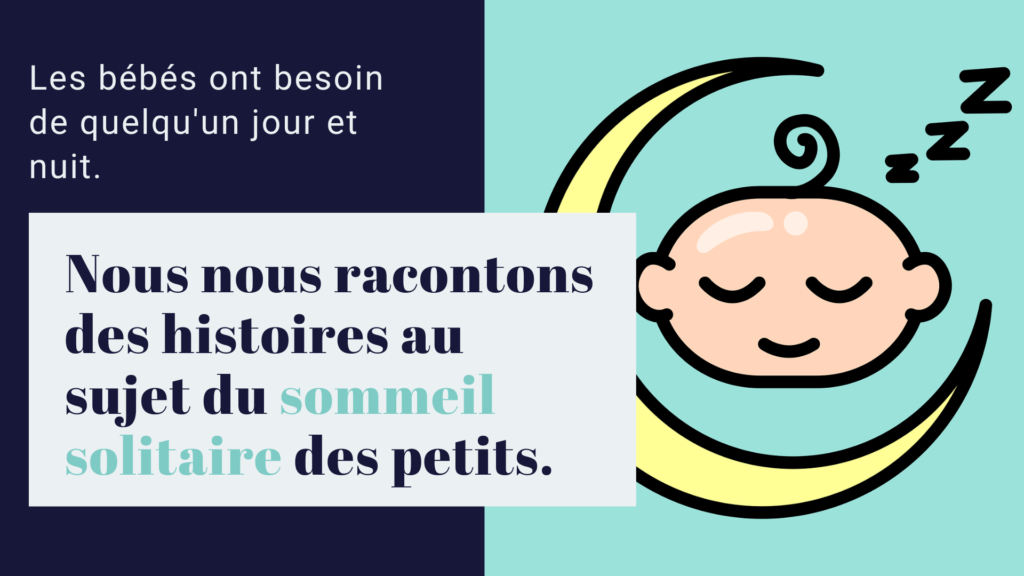
Babies need someone day and night, and that simple fact sits awkwardly beside the way many of us organise sleep. In modern life, parents and children are separated early, often, and for long stretches, both physically and emotionally. Human babies and their parents are built for continuity and connection.
Yet we tell ourselves stories about infant sleep to make the separation feel natural: that children sleep better alone, that a couple needs its intimacy, that adults rest badly with a baby nearby. This article unpacks those stories and what they hide.

Quick takeaways
- Human babies and parents are built for continuity and contact, day and night.
- Solitary sleep is imposed, not chosen by the baby, and babies clearly dislike it.
- Many adults sleep poorly, delay bedtime, or wake unable to resettle.
- We tell ourselves stories about sleep to avoid feeling our own infant pain.
- A baby can become sleepless within weeks from fear of being left alone.
- Continuity is the real necessity; solutions must be built around it.
The cost of solitary sleep
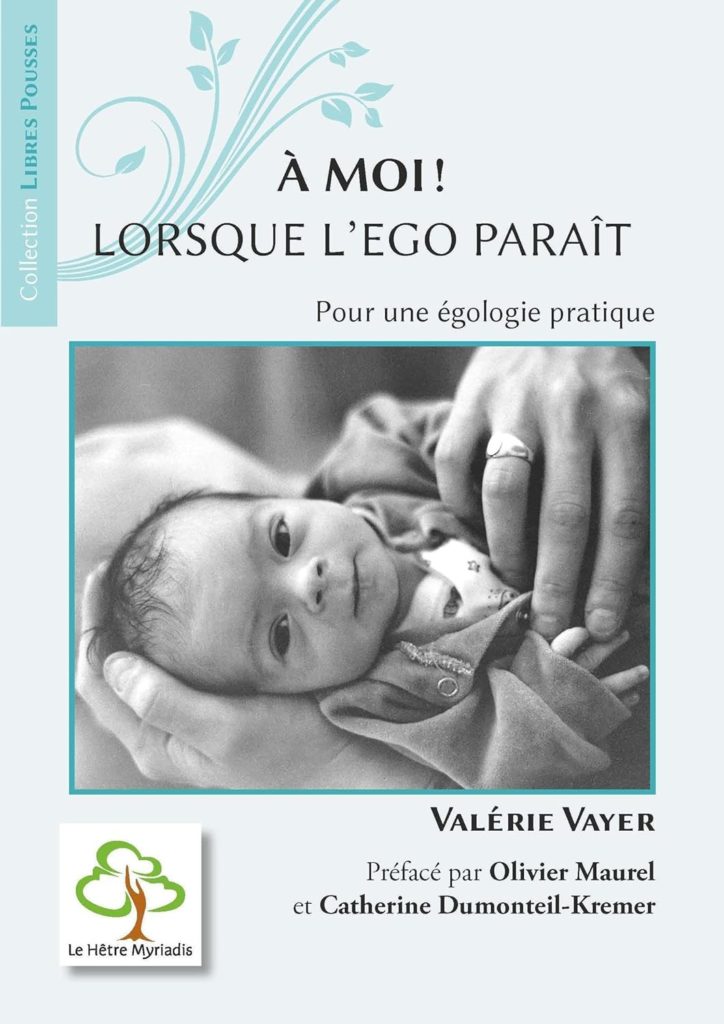
Valérie Vayer, author of À moi ! Lorsque l’ego paraît, argues that solitary sleep imposed on babies and young children is a source of unease with long-term effects. She points out that few adults actually enjoy a satisfying night, and some can only fall asleep under rigid conditions: a light on, noise, the television, the sofa rather than the bed.
Others delay bedtime until a partner insists, and when they wake in the night they struggle to fall back asleep. Repeated insomnia is part of what gets described as depressive experience. Vayer asks how anyone can claim solitary sleep is good when babies and children so obviously dislike it.
What “training” leaves behind
The adults who result from this training, and from chronic sleep deprivation through adolescence, often sleep poorly and wake unrested. If you are navigating the early weeks, practical help like these night breastfeeding tips can make continuous nights feel far more manageable.
The stories we tell ourselves
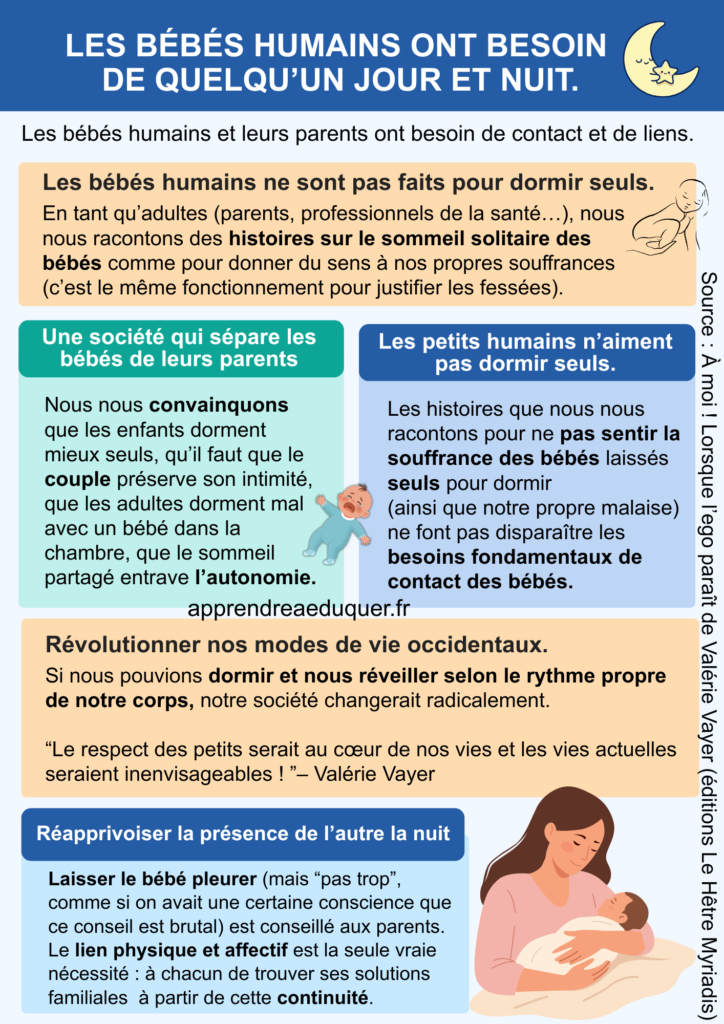
As adults, parents, health professionals and relatives, we tend to narrate babies’ sleep in ways that give meaning to our own infant suffering, much as people justify spanking and punishment. We tell ourselves children sleep better alone, that the couple must protect its intimacy, that adults sleep badly with a baby in the room, that shared sleep hinders autonomy.
These stories do not erase babies’ fundamental need for contact, nor the consequences of solitary sleep. Vayer writes that war begins in the guts of small children left abandoned, and that these sensations remain present in most adults even when pushed out of ordinary awareness.
The unease persists and seeps into how we treat living beings, the planet and objects; our ailing bodies testify to it. When a child is struggling with big feelings around sleep, reading he wants can help you see the request behind the behaviour.
| Belief we repeat | What it hides | Practical alternative |
|---|---|---|
| Children sleep better alone | The baby’s need for contact | Stay close and respond at night |
| The couple needs its intimacy | Adult discomfort with closeness | Find intimacy at other times |
| Adults sleep badly with a baby | Desynchronised family rhythms | Adjust routines gradually |
| Shared sleep hinders autonomy | Fear of dependence | Let independence grow from security |
| Let them cry, but not too much | The baby’s distress | Build continuity-based solutions |
Babies need someone day and night
A very small baby can become sleepless at fifteen days old from fear of being left while asleep or waking alone. That does not mean the baby will not sleep, but the sleep will be fragile or numbing rather than restorative. You cannot fully rest while rigid, even when exhausted, and you cannot rise fully if you feel adrift with nothing to anchor to.
If parents and children have not slept together from birth, getting used to each other’s presence at night can take time. Desynchronised rhythms between parents and children, caused by a separating lifestyle, can make family sleep difficult, and it requires learning to tolerate the baby’s rhythm.
Small comforts that support rest
That innocent-sounding statement is an invitation to rethink Western lifestyles. Simple evening routines help, and if your baby is unsettled and gassy, knowing how to help your baby pass can rescue a whole night.
Why “let them cry” is not a solution
Letting the baby cry, but “not too much”, as if such things could be measured, is the most common advice given to desperate parents who wanted something more respectful and who also want to sleep. Continuity is the only real necessity; the solutions have to be built from there.
Vayer suggests that if we could simply sleep and wake when our bodies benefit most, most doctors would be out of work and society would change radically, with respect for small children at the centre of our lives. Parents who want to rethink their family rhythm often find it helps to look at how they spend time together, whether that means natural Europe routes for slower days or simply protecting quiet evenings at home.
For families with older children too, the same principle of connection applies: attention and shared time matter more than any sleep gadget. If you are also managing screen habits at home, these ideas on TV and children pair well with a calmer bedtime.
Building continuity in real family life
Moving toward shared or responsive nights is not about perfection. It is about deciding that the baby’s need for presence comes first, then arranging the practical details around that decision: who gets up, when, and how the adults recover.
Some families find that a slower, more connected daily rhythm makes night-time closeness easier, and small shared activities, such as pool games, can help siblings feel included in family time rather than displaced by the baby.
Others lean on support networks and practical tools, and even choosing everyday items thoughtfully, from maternity bags to the toys in the room, can reduce friction. What matters is the direction of travel: toward continuity, not away from it.
What this means for parents
None of this asks parents to ignore their own exhaustion. It asks them to notice the stories they tell themselves about sleep and to question whether those stories serve the baby or merely soothe an old discomfort. Recognising that babies need someone day and night is the starting point, not a verdict.
From there, families can experiment: a mattress on the floor, a partner taking a shift, a quieter evening, a willingness to tolerate the baby’s rhythm while it settles. If you want to build connection through play as well, these baby shower toys and simple shared games are a gentle place to start.

My hands-on take
When my first child arrived, I had already absorbed the idea that a baby should sleep alone in a cot in another room. I tried it, and I spent those nights half awake, listening, getting up, and feeling like a failure for not “teaching” sleep. What changed things was admitting that neither of us was resting.
We moved the mattress onto the floor and stopped watching the clock. Nights were not instantly perfect, and there were weeks of adjusting to each other’s rhythms. But the fear went out of bedtime, and the mornings felt different. I still value my own sleep, and I still ask for help, but I no longer believe the story that distance is what babies need.
Frequently asked questions
Is it wrong to want my own sleep?
No. Wanting rest is legitimate, and the article does not ask parents to ignore exhaustion. It asks you to notice the stories you tell about sleep and to build solutions around the baby’s need for continuity rather than against it.
Can a very young baby really become sleepless?
According to Vayer, a baby can become sleepless at around fifteen days old from fear of being left while asleep or waking alone. The baby still sleeps, but the rest is described as fragile or numbing rather than restorative.
Why is “let them cry a little” criticised?
The article argues that distress cannot be measured or dosed, and that continuity is the only real necessity. Advice to let a baby cry is presented as the most common response to desperate parents rather than a respectful solution.
Does shared sleep always work straight away?
Not necessarily. If parents and children have not slept together from birth, getting used to each other at night can take time, and desynchronised rhythms can make family sleep difficult at first.
Product Reviews
 Best Toys for Dogs With High Prey Drive |
Best Outdoor Toys for 3-4 Year Olds |
Best Outdoor Toys for 6 Year Olds |
Best Harness for Poodle |
Best LEGO Sets for Adults |
Best Travel Toys for 4 Year Olds on Airplane |
Best Toy Stores in Washington DC |
Best Potty Training Toys |
Best Toys for Tripod Dogs |
Maillot equipe de france







