


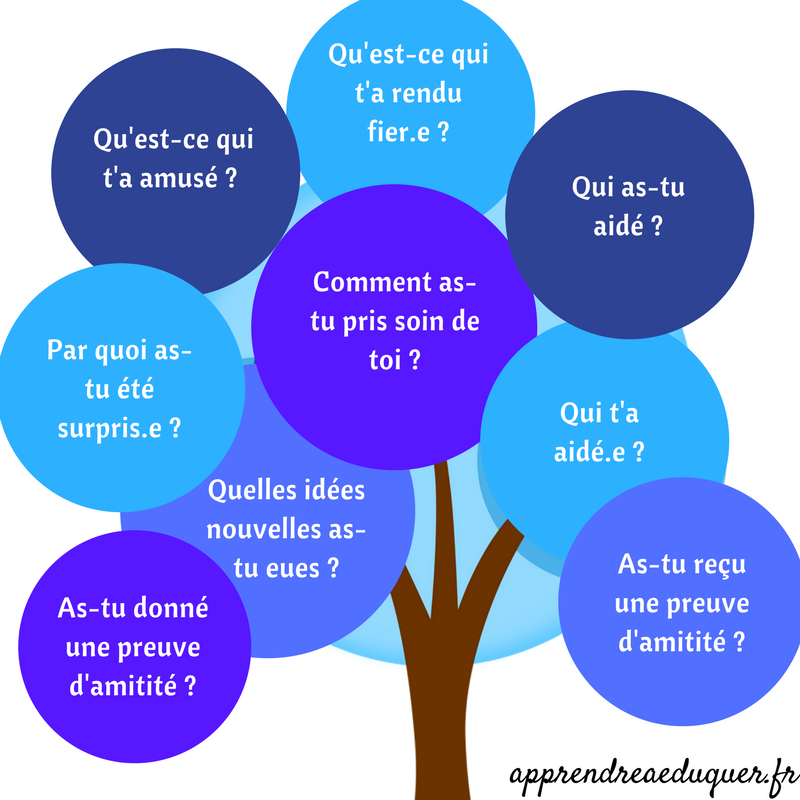
The well-being tree activity is a simple, low-prep way to help children revisit positive experiences and put them into words. It draws on ideas from positive psychology and works just as well one-to-one as it does with a group, though it tends to strengthen self-esteem and empathy most when it is shared.
When you run it with several children, set the tone first: stress authenticity and kindness, and make it clear that nobody judges or mocks anyone. Remind each participant that all emotions, their own and other people's, are acceptable. Children can write their answers down first, then read them aloud to the group.

Try it at the end of a day, a week or even a month to share a moment of emotional connection and generate the positive emotions that support well-being and resilience.
Quick takeaways
- The well-being tree is a simple drawing-based activity about positive experiences.
- It works alone or in a group, but builds self-esteem and empathy best when shared.
- Set ground rules first: authenticity, kindness and no judgment.
- Writing answers before speaking helps quieter children take part.
- Positive emotions broaden thinking, build gratitude and support resilience.
- Repeat it at the end of a day, week or month to build a habit.
What the well-being tree activity involves
The activity is built around a simple tree drawing that children fill in with answers to guided questions about positive moments. It is flexible: it can be done alone or in company, and it adapts to a quiet evening at home or a small group session.
Because it invites children to talk about what pleased them and what made them happy, it anchors the experience inside them, where it becomes a resource they can draw on later. If you are looking for more calm, screen-free rituals to slot into family life, these apps for children can complement the routine rather than replace it.
There is no need to wait for a special occasion. A short, regular slot works better than a long, rare one, and it fits naturally alongside other everyday parenting habits such as the commandments for parents many families use as gentle reminders.
Talking about positive experiences
Naming a happy moment out loud does more than make a child smile in the moment. Recounting what brought pleasure helps fix the memory in place, so the child can return to it later when things feel harder.
Keep the questions open and specific: what made you laugh this week, who helped you, what did you manage on your own? Specific prompts are easier for young children than broad ones, and they gently steer attention towards detail.
This habit of noticing good moments is useful well beyond the activity itself. It supports the kind of steady, reassuring presence that matters during bigger transitions too, such as the first night away or the run-up to a school trip. It can also ease everyday challenges like car sickness on journeys, and help you decide whether to let him go.

| Step | What to do | Why it helps |
|---|---|---|
| Set the tone | Agree that nobody judges or mocks | Creates safety for honesty |
| Prepare | Hand out the tree sheet and pencils | Gives thinking time |
| Write first | Children note their answers privately | Supports quieter children |
| Share | Each person reads what they wish | Builds belonging and empathy |
| Close | Ask what they enjoyed hearing | Reinforces listening |
Generating positive emotions
Positive emotions play an important role in our lives. They broaden our horizon, build us socially, physically and intellectually, and boost creative thinking. They also increase gratitude and recognition, and they cultivate optimism.
In practical terms, they put children in a better position to find ways of reaching their goals and clearing the obstacles along the path. They encourage a fresh look at the world, give life meaning and purpose, and lend more strength to face everyday worries.
You do not need a formal lesson to spark these feelings. Shared, playful moments do the job just as well, whether that is a board game, a building project like a LEGO transformer or a walk outside. What matters is that the child notices and names the feeling afterwards.
Feeling connected to yourself and to others
Sharing answers in a group creates a deep sense of belonging and builds authentic links between participants. Children learn to feel their emotional responses and to communicate them, which is the foundation of empathy.
The activity also orients thoughts and actions towards kind, considerate behaviour, and it encourages gratitude for the small acts of everyday life. A child who notices that someone helped them is more likely to help in return.
This sense of connection is worth nurturing in ordinary moments as well, from a shared story at bedtime to a conversation about a fear of the dark. Small, repeated exchanges build the trust that makes bigger conversations possible later.
How to run it well with a group
Start by agreeing on the ground rules: everyone listens, nobody comments unkindly, and every answer is allowed. Give children a few minutes to write or draw their answers before anyone speaks, so quieter children are not put on the spot.
Then go round the group and let each participant read what they wish to share. Model the process yourself with a short, honest example, and accept a pass without pressure. If a child raises a worry, acknowledge it and return to the positive focus gently.
Finally, close with a short reflection: what did you enjoy hearing from someone else? This step turns a nice exercise into a genuine lesson in listening, and it pairs well with other reflective habits, such as the English for children games that build confidence through conversation. Just as learning to walk works best without rushing, group sharing benefits from a patient pace.

My hands-on take
I started using the well-being tree with my own children on Sunday evenings, mostly because it was short enough to survive the end-of-weekend rush. The first attempt was bumpy: one child answered in single words and the other wanted to list everything that had gone wrong. I stopped pushing for a perfect answer and simply shared my own three small good moments first.
That changed things. Once they heard me name something ordinary, like a good cup of tea or a walk where we spotted a heron, they relaxed and joined in. Now the tree sheet lives on the kitchen shelf, and we fill it in when the mood takes us rather than on a strict schedule. My main tip is to keep your own example short and real, and to let silence sit for a moment before anyone speaks.
Frequently asked questions
What age is the well-being tree suitable for?
It works best with children who can express simple ideas, roughly from early primary school upwards. Younger children can draw their answers or dictate them to an adult instead of writing.
Can it be done with just one child?
Yes. It is a calm one-to-one activity, but the empathy benefits are strongest when answers are shared with at least one other person, whether a parent, a sibling or a small group.
How often should we repeat it?
There is no fixed rule. Many families use it at the end of a day, a week or a month, which keeps it fresh and gives children a regular moment to notice good things.
What if a child only mentions negative things?
Accept the answer without correcting it, then gently guide them towards one small positive moment. All emotions are allowed; the aim is to add balance, not to dismiss difficult feelings.
Product Reviews
 Best Toys for Dogs With High Prey Drive |
Best Outdoor Toys for 3-4 Year Olds |
Best Outdoor Toys for 6 Year Olds |
Best Harness for Poodle |
Best LEGO Sets for Adults |
Best Travel Toys for 4 Year Olds on Airplane |
Best Toy Stores in Washington DC |
Best Potty Training Toys |
Best Toys for Tripod Dogs |
Maillot equipe de france







