


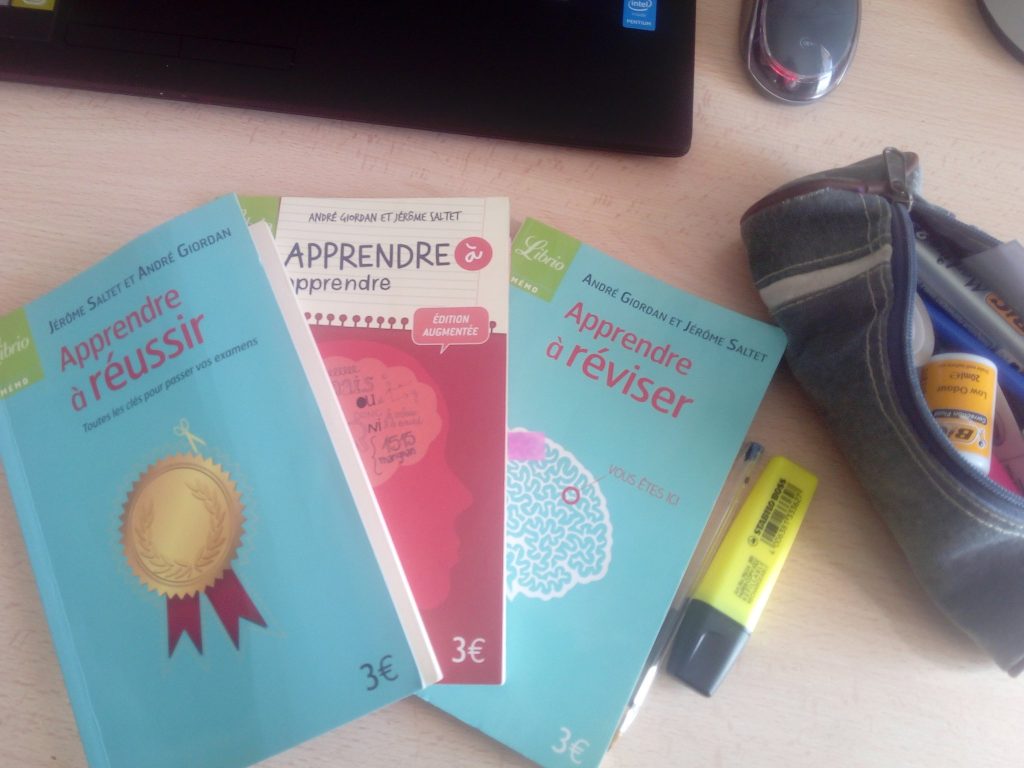
Study skills books for students rarely feel essential, yet a few short guides can change how you approach your whole year. This small trio of pocket-sized titles focuses on three connected skills: learning efficiently, revising intelligently, and preparing calmly for exams and competitive entry tests.
What makes them stand out is the balance between brevity and depth. Each one is short enough to read in an evening, serious enough to be written by specialists in education and pedagogy, and cheap enough to buy without thinking twice. They are aimed at high school pupils, university students, and anyone preparing for a competitive exam.

Quick takeaways
- Three short, affordable guides cover learning, revising and exam success.
- Know yourself and learn from mistakes before building a method.
- Identify the nature of each test and set objectives before planning revision.
- Train memory, use digital tools wisely, and look after your body.
- Prepare orals and plan how to react after a setback.
- Read the three in order for a weekend course in study skills.
Learning how to learn
The first book starts from a simple question: learning effectively and intelligently is fine, but how do you actually go about it? Its answer rests on two prerequisites. Knowing yourself well and drawing lessons from your own mistakes come first, because they are what allow you to organise your work and build a reliable method.
From there, the guide insists on knowing where you are going, calmly setting out a problem before trying to solve it, and taking your own form and energy into account. Many examples and practical tips show how to make knowledge grow, carry out long-term work, and bounce back after a setback. That last point matters as much as the rest: recovering from a bad result is a skill in itself, and the book treats it as one.
The overall aim is to help you approach your studies with less friction and waste far less time. It is a complete little tool for school life and for competitive exams, and it suits anyone willing to give themselves the means to succeed.
Revising with a real method
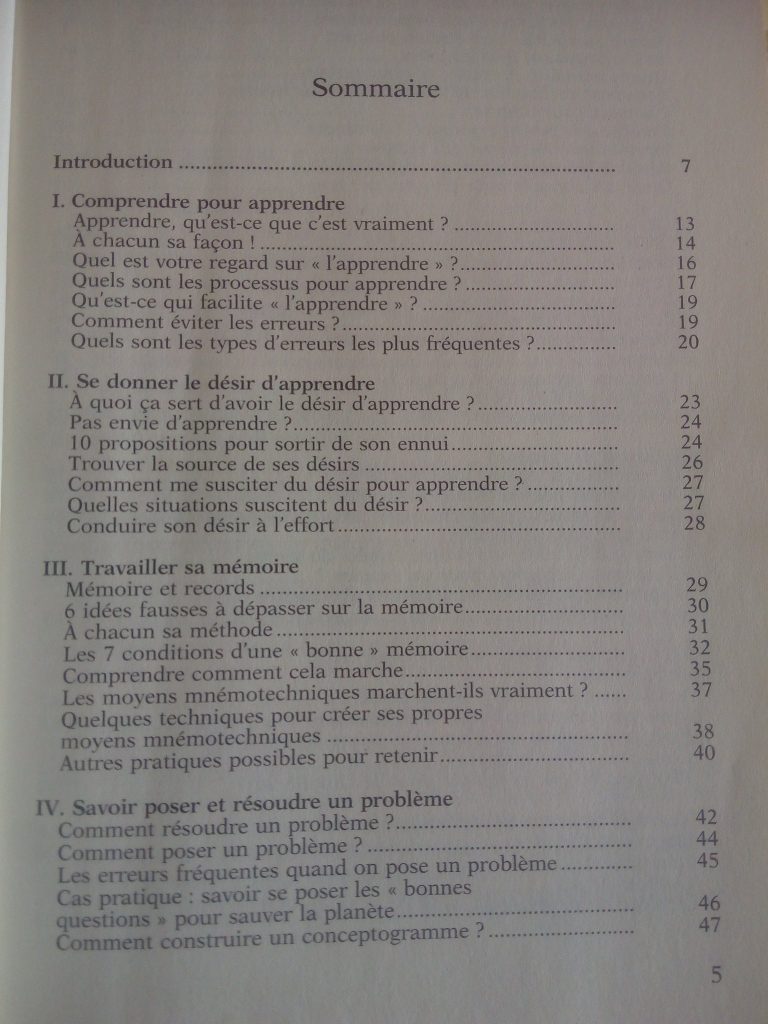
The second book is a short intensive course for anyone facing an exam or a competitive test alone with their notes. Its starting point is straightforward: before revising, you need to know the nature of the tests ahead and set your objectives in advance. Only then can you plan your revision calmly and progressively.
Planning is not just a timetable. The guide shows how to train your memory, choose the right exercises, and use digital tools sensibly, while also building your confidence and looking after your body. Practical advice and concrete examples help you optimise the time you spend revising rather than simply extending it. For late starters, there is even a commando session for the final stretch.
This is the volume to reach for when the exam date is fixed and the pile of notes is not getting smaller. It pairs well with a realistic weekly routine, similar to the way simple routines help parents manage everyday family life, as these tricks to control visits show. Just as outdoor toys make playtime purposeful, and knowing the facts about fertility supports family planning, a clear method makes study time count.
| Guide | Main focus | Best moment to read it |
|---|---|---|
| Learning how to learn | Self-knowledge, method, long-term work | Start of the school year |
| Revising with a method | Planning, memory training, exam technique | Weeks before the exam |
| Preparing to succeed | Organisation, stress, oral exams | Final preparation phase |
| All three together | A complete study routine | Any time, read in order |
Preparing to succeed on the day
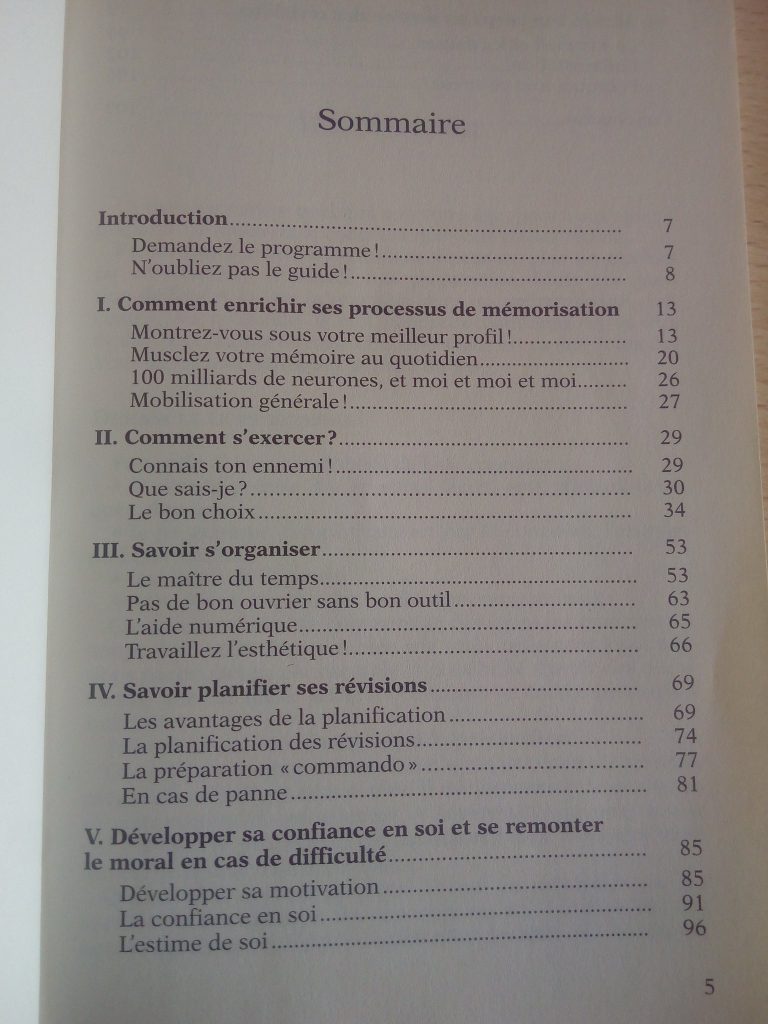
The third book widens the angle: how do you put every chance on your side for an exam, a competitive test, or a challenge prepared well in advance? Understanding what is at stake, knowing the particularities of each test and subject, having self-confidence, and getting organised are presented as the keys to giving your best.
It moves from setting up a work schedule to stress management techniques, with efficient note-taking and rock-solid organisation in between. Oral exam preparation is covered too, along with the right reactions when something goes wrong. Nothing is left out, which makes it a useful companion for the weeks before a decisive deadline.
Organisation is the thread running through all three books, and it is the same principle that keeps a household running when a new baby arrives, as this baby care guide illustrates. Students who master it early carry the habit into adult life, as shown by Carlos's early admission to university. Even modest tools, like the best toys under $20, can support that habit.
Why short guides work for teenagers
Long study manuals often stay on the shelf. Short ones get read, and reading is the first step towards applying anything. The format chosen here, brief, complete, serious and accessible, is precisely what makes these books usable for teenagers who already have a full timetable and limited patience for lectures about working harder.
Accessibility also means price. At a few euros each, they remove the financial excuse and make it easy to try one before committing to the whole set. A student who reads one in an evening can test a single method the following week and keep what works.
Parents can support this quietly. A calm space, a regular rhythm, and a little interest in what is being revised often do more than pressure. The same patient approach helps when a child is unusually gifted and needs a different kind of stimulation, as these tips for gifted children explain.

Building habits that outlast the exam
Methods only pay off when they become habits. The three books share a common logic: understand yourself, define a goal, plan, act, then review what happened. Repeated over a term, that loop turns revision from a panic exercise into a routine.
It also protects wellbeing. Sleeping enough, moving regularly, and taking real breaks are not distractions from study; they are part of the method, and the guides say so plainly. A student who manages energy as carefully as time usually performs better and burns out less.
These habits travel well beyond school. The ability to organise, to recover from a setback, and to prepare calmly for a high-stakes moment is useful in family life too, whether you are planning a trip or simply keeping a household of young children on schedule, much like the reusing old toys routine many parents develop.

A small investment for a whole school year
For the price of a cinema ticket, this trio covers the fundamentals of learning, revising, and succeeding. None of them promises miracles, and that is part of their appeal: they offer structure, examples, and practical advice that a motivated student can apply immediately.
They work best as a set. The first builds self-knowledge, the second turns it into a revision plan, and the third prepares the ground for the exam itself. Read in that order, they form a short course in study skills that fits into a single weekend.
Older students preparing for university or competitive exams will get the most from them, but motivated teenagers can start earlier. Parents looking for a simple gift with real value will find these a sensible choice, and they sit comfortably alongside the practical resources families already use, such as these disinfecting wipes for keeping a study corner clean.
My hands-on take
I have always been suspicious of study guides that promise transformation in three hundred pages, because most students never finish them. What convinced me here is the format: I read one of these on a train journey and could apply a single planning idea the same week. That is the test I now use for any advice book, whether it is about revision or about choosing toys for a child, as these toys under $25 show.
In practice, I suggest buying one first, trying one method for a fortnight, and only then adding the others. A student who keeps a simple weekly plan and reviews mistakes honestly will get more from these short books than from a shelf of longer manuals left unopened.
Frequently asked questions
Who are these books written for?
They target high school pupils, university students, and anyone preparing a competitive exam. The content stays accessible enough for motivated teenagers but assumes real exam stakes.
Do I need to read all three?
No, each works on its own, but they complement each other well. Reading them in order builds a full method from self-knowledge to exam-day preparation.
Are they expensive?
They are deliberately cheap pocket books, so the whole set costs very little. That accessibility is part of why they are easy to recommend to students.
Can parents use them too?
Yes. The organisation and stress-management advice applies to family life as much as to exams, and parents can use it to support a teenager without adding pressure.
Product Reviews
 Best Toys for Dogs With High Prey Drive |
Best Outdoor Toys for 3-4 Year Olds |
Best Outdoor Toys for 6 Year Olds |
Best Harness for Poodle |
Best LEGO Sets for Adults |
Best Travel Toys for 4 Year Olds on Airplane |
Best Toy Stores in Washington DC |
Best Potty Training Toys |
Best Toys for Tripod Dogs |
Maillot equipe de france







