


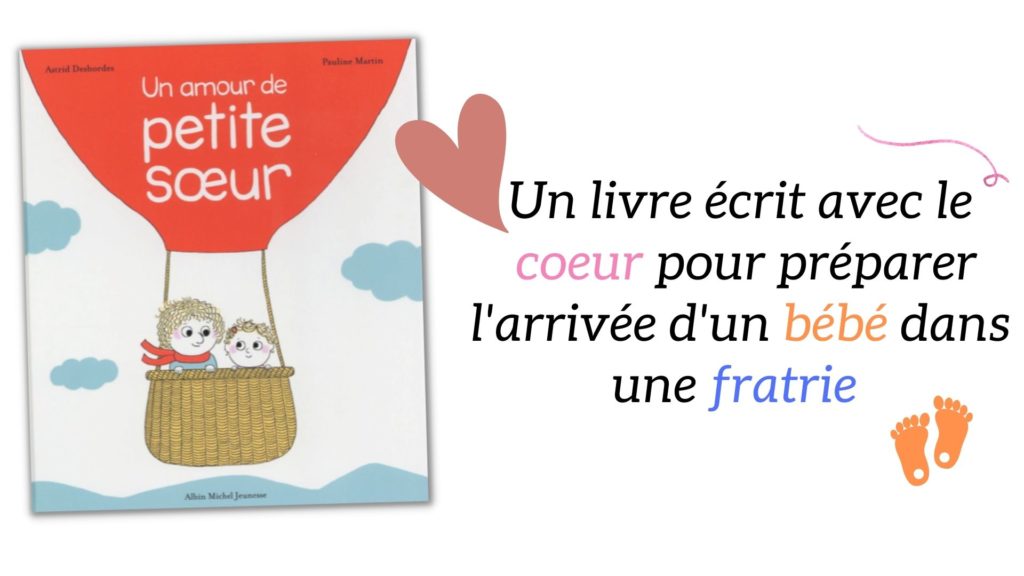
"Un amour de petite soeur" is a picture book built to help a family prepare a toddler for the arrival of a new baby, told through the eyes of a small boy named Archibald. His opening confession sets the tone: his parents simply announced one day that a little sister was coming, and he cannot remember ever asking for one.
That honest, slightly puzzled voice is what makes the album so useful. Across the pages the baby grows, finds her place in games and in hearts, and stirs up jealousy, tenderness and pride in equal measure. It works just as well for a little brother.

Quick takeaways
- A first-person sibling story told by a small boy named Archibald
- Names jealousy, tenderness and pride without hiding the hard moments
- Warm, humorous text matched by soft, colourful illustrations
- Works just as well for preparing a child for a little brother
- Recommended from age two and suited to repeated read-alouds
- Available in libraries, bookshops and online
A Big Brother's Honest Voice
The story is narrated by Archibald, the curious and slightly doubtful boy first met in the earlier album "Mon Amour". Here he takes on the role of big brother, and his voice carries the whole book: amused, a bit suspicious, and entirely believable. Children recognise themselves in that mix of curiosity and reluctance, which is why the book opens conversations rather than lectures.
Because the narrator is a child, the arrival of a sibling is never presented as a tidy happy event. It is something that happens to him, and he has to make room for it. That perspective is exactly what a toddler needs when a family is preparing for a new baby and the household is full of talk about cribs, naps and baby bathing routines.
Why the child's perspective matters
Adults tend to explain logistics; children live in feelings. A first-person narrator closes that gap, so the book can sit beside practical conversations about midwife support and hospital bags without ever feeling like a checklist.
Growing Up Together, Page by Page
As the pages turn, the little sister grows. She moves from a bundle that mostly sleeps to a small person who wants to join the games, and the book shows her gradually finding her place in the family's daily life. The shift is gentle but real, and it mirrors what happens at home over the first months.
Archibald notices everything: the toys she grabs, the attention she takes, the way his own feelings swing from irritation to tenderness. Sibling love and sibling squabbles sit side by side, which is precisely how most brothers and sisters experience each other, from shared foam block toys to the same favourite chair.
The ambivalence is the point
Rather than smoothing over the clashes, the story treats love and conflict as two sides of the same bond. That framing gives a child permission to admit both, and gives parents language for the moments when affection and rivalry arrive in the same afternoon.

| Element | What the book shows | How to use it |
|---|---|---|
| The announcement | Parents share news the child never asked for | Read before the birth, let the child react |
| Growing baby | A sister who gradually joins the games | Match pages to real milestones at home |
| Jealousy | Open rivalry alongside affection | Name the feeling calmly when it appears |
| Pride | The boy's joy at being a big brother | Celebrate the older child's role out loud |
| Parental love | A heart as big as the sky | Revisit the line when comfort is needed |
Jealousy, Tenderness and Pride
The book is careful never to hide the harder moments. Archibald is sometimes jealous, often tender, and finally very proud of his new role. His favourite thing about having a little sister, he says, is simply being her big brother, which is the quiet emotional payoff of the whole story.
Parents reading aloud will find plenty of openings here. A jealous outburst can be named without drama, and a proud moment can be celebrated out loud. If you are also working on other big transitions, such as diaper removal or a first pregnancy test before the next baby, the same calm naming of feelings carries over.
One line in particular stays with readers: a mother explains that in a parent's heart there is never a problem of space, because it is as big as the sky. It is a simple image a small child can hold onto.

A Tone That Stays Warm Without Being Sappy
Astrid Desbordes writes with subtlety and humour, and the text never tips into sentimentality. The kindness is steady and just, the jokes land for adults as well as children, and the illustrations by Pauline Martin are soft, joyful and full of colour. Together they keep the book light enough to reread many times.
That balance matters when you are choosing books for a difficult season. The same instinct guides good illustrated books generally: warmth without sugar, honesty without fear. For a child who is naturally cautious about change, a calm story can do more than a long explanation, much as you would reassure a child who is unusually shy in new situations.
Easy to adapt for a little brother
Although the title says little sister, the story transfers easily to a baby boy. Nothing essential depends on the baby's gender, so the same book can prepare a child for either arrival.

Reading It Together at Home
The book is recommended from age two, which fits the audience best: toddlers who understand a great deal more than they can say. Reading it repeatedly in the weeks before the birth lets the child absorb the idea at their own pace, and returning to it afterwards helps them match the story to reality.
Keep the sessions short and let the child lead. Pause on the pages that show jealousy or conflict, and ask what Archibald might be feeling. If mealtimes or outings are already stressful, the same relaxed approach helps, whether you are eating out with a baby or simply managing a wriggly toddler at the table.
You can also pair the story with everyday play: naming the bump, practising gentle touch, and letting the older child help with small tasks. Practical preparation and emotional preparation work best side by side.

Where It Fits in a Family Library
This is a picture book for the shelf rather than a parenting manual. It sits comfortably alongside other gentle stories and alongside the practical side of family life, from choosing outdoor toys for the garden to planning how the first weeks will run.
It is widely available in libraries, bookshops and online retailers, so borrowing before buying is easy. If you are building a small collection for a child who is about to become a sibling, this is a strong, honest addition.



My hands-on take
I read this one with my eldest during the last few weeks before his sister arrived, and the thing that struck me was how quickly he picked up on the jealousy pages. He did not want to talk about them at first, but a few days later he pointed at the picture and said the boy was angry, then added that he would be angry too. That small admission was worth more than any explanation I could have prepared.
What I appreciated most was the tone. It never asks the child to be excited, and it never scolds him for feeling displaced. We kept the book on the low shelf afterwards, and he went back to it on his own during the first messy months, usually when the baby was crying and I was busy. Reading it again together became a way of saying that his place had not moved, even when the days felt upside down.
Frequently asked questions
At what age is this book suitable?
It is recommended from age two. Toddlers of that age follow the pictures and the simple emotional thread, and they benefit most from hearing it several times before and after the birth.
Can it be used to prepare a child for a little brother?
Yes. Although the title refers to a little sister, the story is easily transposed, and nothing essential depends on the baby's gender.
Does the book avoid difficult feelings?
No, and that is its strength. Jealousy and conflict appear openly next to tenderness and pride, so a child sees that both belong in a sibling relationship.
Is it a parenting guide or a story?
It is a picture book, not a manual. Parents use it as a read-aloud tool to open conversations rather than as a source of practical instructions.
Product Reviews
 Best Toys for Dogs With High Prey Drive |
Best Outdoor Toys for 3-4 Year Olds |
Best Outdoor Toys for 6 Year Olds |
Best Harness for Poodle |
Best LEGO Sets for Adults |
Best Travel Toys for 4 Year Olds on Airplane |
Best Toy Stores in Washington DC |
Best Potty Training Toys |
Best Toys for Tripod Dogs |
Maillot equipe de france







