


Postpartum recovery is too often treated as a black box: women give birth and are sent home with little explanation of what their bodies and minds will go through. Many expectant mothers do not know they may bleed for weeks, that uterine contractions continue after delivery, or that emotional destabilisation can last far beyond the first days.
This lack of information is not harmless. Facing difficulties you never anticipated, without knowing whether they are normal or how long they will last, leaves new mothers worried and helpless. Preparing for what may come — while accepting that every body is different — makes the whole period easier to approach with calm.

Quick takeaways
- Postpartum is often a “black box”: many mothers are never told what to expect.
- Bleeding, afterpains, haemorrhoids, breast pain and extreme fatigue are common.
- Postpartum depression affects 10–20% of new mothers and is often hidden in shame.
- New mothers need care themselves, not only attention for the baby.
- A six-month definition with two phases allows better, adapted follow-up.
- Knowing what is normal reduces fear and self-blame.
Why the silence around postpartum hurts mothers
The hardest part is the fog: not knowing that what you are living is normal, nor how long it will last. Many women are never told they will bleed for weeks, sometimes heavily, or that contractions will continue after birth. These symptoms do not affect every woman with the same intensity, but being prepared for the possibility changes everything.
As one writer puts it, there is nothing more frightening than living a painful, transforming experience while ignoring its manifestations. Is it scarier to know in advance that discomfort will settle in, or to learn on the job and feel dirty, abnormal, or convinced something serious is happening to your health? Honest preparation protects women from that fear.

Common physical symptoms after birth
Lochia — the bloody discharge that can be heavy and prolonged — requires thick pads or protective underwear. Tranchées, or afterpains, are intense uterine contractions that help the uterus return to its pre-pregnancy size and place. Haemorrhoids, perineal heaviness, urinary leakage and pain from an episiotomy or caesarean section are also frequent.
Breast engorgement can be painful, with red, hard breasts, and may progress to infection such as mastitis when milk is not expressed. Extreme fatigue and back pain complete the picture. Knowing these possibilities exist helps you organise rest, ask for help and plan a check-up; if you are still choosing practical baby gear, our guide to best newborn toys can wait until you feel ready.
Preparing your body and your home
Practical preparation matters as much as information. Think about comfortable clothing, thick pads, easy meals and someone to help with household tasks. If your baby arrives early and catches you unprepared, our article on reasons childbirth comes early explains what can happen; gentle midwifery water classes can also help you reconnect with your body afterwards.

| Period | Main focus | Suggested support |
|---|---|---|
| Birth to 40 days | Physical recovery and high risk | Multidisciplinary follow-up, rehabilitation |
| 40 days to 6 months | Adapted needs | Easy contact with health professionals |
| Up to 12 months | Emotional and identity adjustment | Psychological support if needed |
| Any time | Warning signs of depression | Speak to a professional quickly |
Psychological symptoms: beyond the baby blues
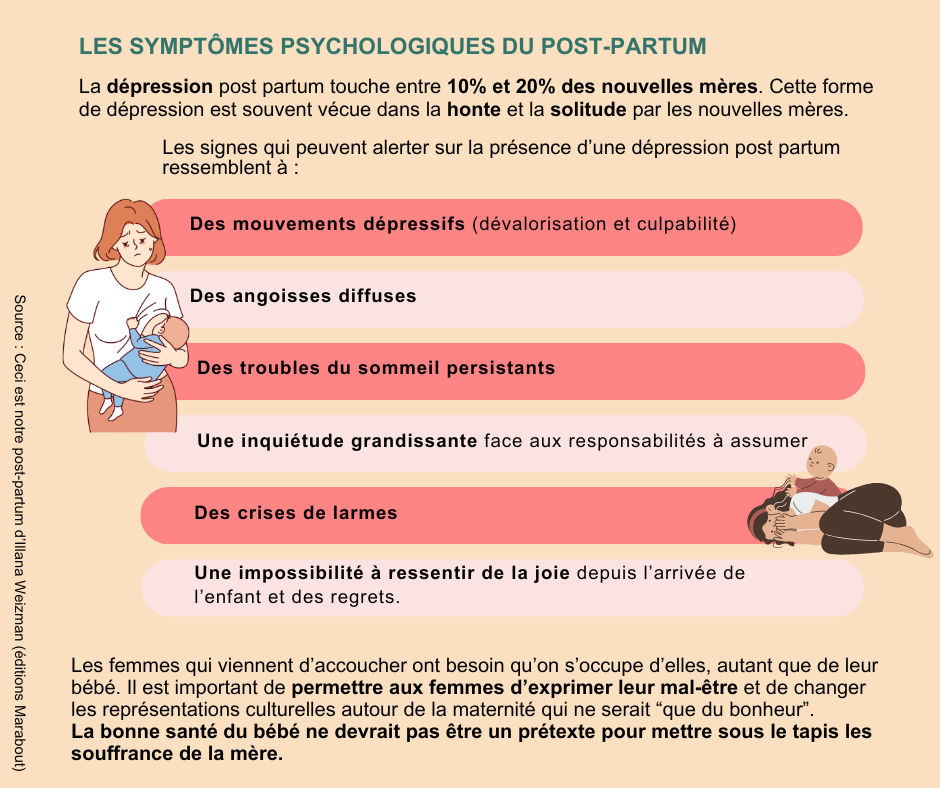
The term “baby blues” describes the hormonal upheaval of the days following birth, but it does not reflect the intensity of the emotional destabilisation many mothers experience. Postpartum depression affects between 10% and 20% of new mothers and is often lived in shame and solitude, which is why it deserves to be called a real public health issue.
Warning signs include a discourse invaded by sadness, self-devaluation and guilt; diffuse anxiety; persistent sleep problems; growing worry about responsibilities; crying spells; and an inability to feel joy since the baby arrived, sometimes with regrets. If this sounds familiar, do not wait: speak to a professional. Our selection of motherhood blogs can also remind you that you are not alone.
What to say and what to avoid
Well-meaning comments can isolate a struggling mother further. Our list of things not to a mother is worth sharing with those around you. And when a sibling arrives, big brother jealousy may add to the emotional load, so plan for it gently.
A society that must do better
Many mothers describe a culture incapable of offering an empathetic response and adapted support for the physical and psychological pain of postpartum. Women who have just given birth need someone to care for them as much as for their baby. Allowing women to express their distress, rather than hiding behind the idea that motherhood is “only happiness”, is essential.
The baby's good health should never be a pretext for sweeping the mother's suffering under the carpet. Changing cultural representations also means showing respectful, realistic images of family life — the kind of films we gather in our selection of movies educating respect — and talking openly about the realities of birth and recovery.
Redefining the postpartum period
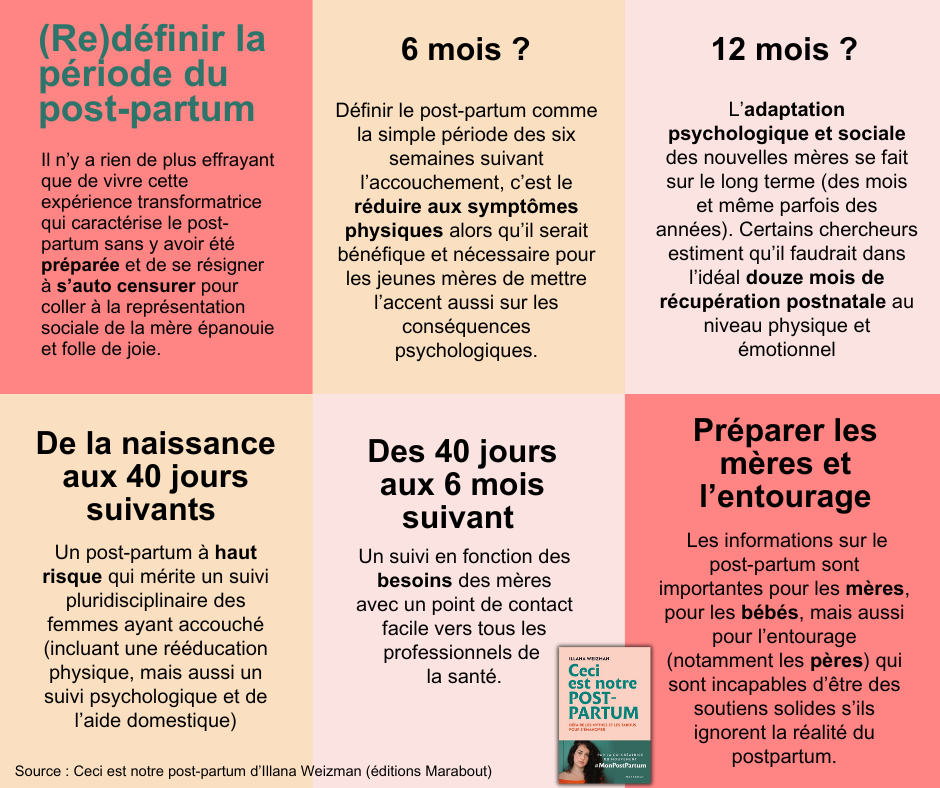
Defining postpartum as simply the six weeks after birth reduces it to physical symptoms, when the psychological consequences deserve equal attention. New mothers' psychological and social adaptation happens over the long term — months, sometimes years. Some researchers consider that twelve months of postnatal physical and emotional recovery would be ideal, given the physical, hormonal and identity changes a birth provokes.
A more useful definition covers the six months following birth, in two distinct phases. From birth to around forty days, postpartum is high-risk and deserves multidisciplinary follow-up: physical rehabilitation, psychological support and domestic help. From forty days to six months, follow-up should adapt to each mother's needs, with an easy point of contact towards all health professionals.
Building your support network
Put names and numbers in one place: midwife, doctor, physiotherapist, a trusted friend. If you are expecting, our guide to maternity swimsuits and our piece on children's bicycles for later family outings are small reminders that practical life continues too.

My hands-on take
When I came home after my first birth, I had read almost nothing about recovery. I expected to be tired; I did not expect the afterpains, the weeks of bleeding or the sudden tears over nothing at all. I remember wondering whether something was wrong with me, and that uncertainty was worse than the discomfort itself.
What helped most was simple: a friend who told me plainly what her own first weeks had been like, a midwife who reassured me that what I felt was common, and a short list of phone numbers kept on the fridge. The second time around, I prepared differently — meals in the freezer, pads within reach, and permission to accept help. Information did not make postpartum easy, but it made it far less frightening.
Frequently asked questions
How long does postpartum bleeding last?
Lochia can last for weeks and is sometimes very abundant. Thick pads or protective underwear are usually needed, and heavy bleeding should be mentioned to a health professional.
Is it normal to feel sad after giving birth?
The baby blues are common in the days after birth, but persistent sadness, anxiety, guilt or an inability to feel joy may signal postpartum depression, which affects 10–20% of mothers and deserves professional support.
Why redefine postpartum as six months?
Because psychological and social adaptation takes months, not weeks. A longer definition allows multidisciplinary follow-up in the first forty days and adapted support afterwards.
Do all women experience the same symptoms?
No. Symptoms vary in intensity and every body is different, but knowing what may happen helps mothers feel less frightened and less alone.
Product Reviews
 Best Toys for Dogs With High Prey Drive |
Best Outdoor Toys for 3-4 Year Olds |
Best Outdoor Toys for 6 Year Olds |
Best Harness for Poodle |
Best LEGO Sets for Adults |
Best Travel Toys for 4 Year Olds on Airplane |
Best Toy Stores in Washington DC |
Best Potty Training Toys |
Best Toys for Tripod Dogs |
Maillot equipe de france







