


Parental anger is one of the hardest things to admit out loud, because it arrives exactly when you love your child most and feel least able to cope. The rage rises, your efforts fail, and you sometimes end up with words or gestures you regret, followed by shame and intense guilt.
That anger is not a character flaw. It is a signal that your own resources are empty, and it can be worked on like any other skill. What follows are eleven concrete strategies for keeping children safe during a storm of anger while you learn to handle it, plus a few words you can say to your child afterwards.

Quick takeaways
- Tell your child you need a break, then leave the room before anger peaks
- Discharge the charge physically: cushions, stamping, tearing paper, running
- Ten slow breaths while picturing a soap bubble inflating
- Use a mirror, a silly magic word or lip tapping to interrupt the spiral
- Name body sensations out loud to lower their intensity
- Build a personal toolkit and share it with other parents
Why parental anger deserves your full attention
Unapplied anger is often described as a kind of uncontrollable dragon: it starts as irritation, builds in the body, and can tip into violence towards the children if nothing interrupts it. The point of working on it is not to become a parent who never feels anger, but to make sure no child is ever in the path of it.
It helps to explain the situation to your child in plain words: your own upbringing was sometimes hurtful, you are trying to do things differently, and some days are harder than others. That honesty removes secrecy without putting the burden of your emotions on the child. If tension between children is the trigger, these sibling fight solutions can lower the daily pressure.
Remember too that a child's behaviour is not the whole story; sleep, screen time and your own stress all feed the fire, much as small daily habits shape bigger outcomes in child self improvement.
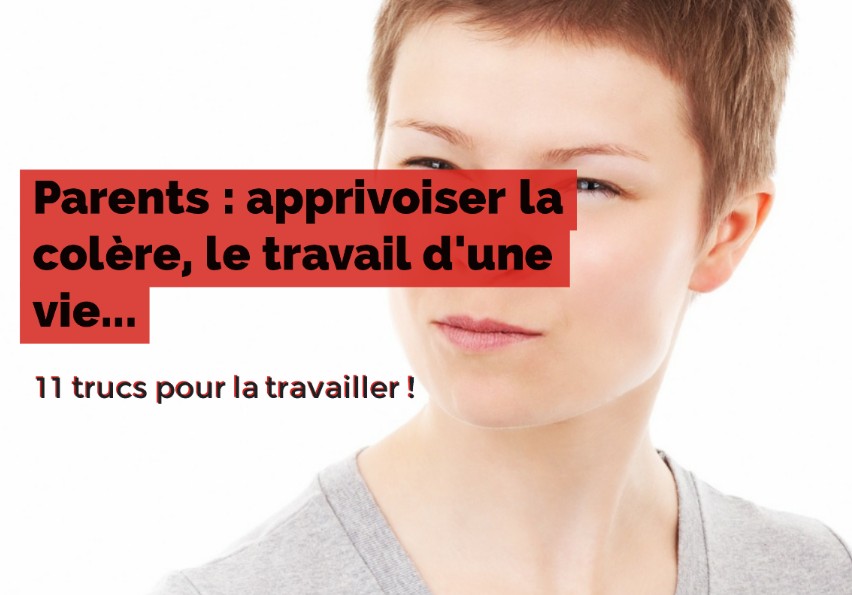
Announce your exit and let the storm out safely
The first strategy is prevention through words: say clearly, "I can't take any more, I'm going to my room for a while." Children cope far better with a parent who leaves than with one who explodes in front of them.
Once alone, let the emotion move: cry, shout into a cushion, shake your arms and legs, stamp on a cushion or hit it, tear magazine pages and screw them into balls to throw hard. The goal is discharge, not damage. A child who sees you leave and return calmer is learning a lesson no lecture can teach, and that same modelling supports rewarding good actions without turning behaviour into a transaction.
Breathe like a growing soap bubble
Take ten slow, deep breaths and picture yourself as a big soap bubble inflating a little more with each inhale. Keep your attention on the air entering and leaving, and let the image do the work.
| Situation | Strategy | Why it helps |
|---|---|---|
| Anger rising, child nearby | Announce you need your room | Keeps the child out of the blast |
| Peak rage, you are alone | Cushion, stamping, tearing paper | Physical discharge without damage |
| Restless, can't sit still | Jump, shake, run | Burns off the physical charge |
| Stuck in the spiral | Mirror, magic word, lip tapping | Interrupts the emotional loop |
| Numb or disconnected | Water, soft textures, pleasant smells | Brings you back to the senses |
| Tension held in the body | Slow foot self-massage | Grounding and discreet |
Move your body until the anger drains
Movement burns off the physical charge faster than thinking does. Jump, shake every part of your body, and put on music if it helps; you can growl and leap like a cave person or imitate a contemporary dancer. Nobody is watching, and the sillier it feels, the better it works.
Running is the simplest version: outdoors or indoors, keep going until the sensations of anger fade. For a child, the equivalent release often comes through play, which is why a box of outdoor toys earns its place in the garden.
When another adult is present, hand over and let go. Go for a drive, a walk or a bike ride, and once you are far away and alone, shout as loudly as you need to. Knowing a child is safe with someone else is often what finally lets your shoulders drop.
Small tricks that interrupt the spiral
Look at yourself in a mirror. Part of you is not caught up in the anger, and that part is usually the one looking back, which is often enough to make the feeling subside.
Choose a magic word whose silliness pulls you out of the unpleasant emotion, and say it when you feel fury rising. Then touch your lips, stroking them or tapping them gently with your index and middle fingers.
Name what is happening inside, aloud or silently: "My heart is beating faster, my jaw is clenching, my breathing is speeding up, my hands are tightening. I can feel anger rising in me." Sharing this with children teaches them that putting emotions into words reduces their intensity, a skill as useful as any English learning tips for the future.
Water and the senses
Drink a large glass of water. Then stimulate your senses: touch something soft such as a scarf, a pillow, a blanket, a pet or a soft toy; smell something pleasant such as a shirt carrying your partner's or baby's scent, or food you love; and visualise a pleasant scene, a refuge, a photo of your child as a baby, a happy memory.

Foot massage and building your own toolkit
A self-massage of the feet works as an anti-stress, anti-anger ritual: press, rub and roll each foot slowly, paying attention to the sensations. It is discreet enough to do anywhere and grounding enough to change your state in a few minutes.
This list is not exhaustive, and the real work is adding your own strategies and sharing them with other parents so the list keeps growing. The more tools you have, the more choice you have in a given moment, and the better your chances of responding with kindness instead of reacting. Parents who plan ahead in other areas, such as flying while pregnant or choosing children's sunglasses, already know that preparation reduces panic.
Some days the trigger is exhaustion rather than behaviour, and small routines help there too, whether that means learning to walk at the child's pace or simply accepting that pacifier questions matter less than your own calm.
My hands-on take
I learned most of this the hard way. For a long time I believed that a good parent simply did not feel that kind of rage, so when it arrived I hid it, which only made it denser. The turning point was the day I started saying out loud, "I'm going to my room for a few minutes," instead of white-knuckling it in the kitchen.
What surprised me was how much the physical strategies actually work. Shaking out my arms and stamping on a cushion felt ridiculous the first time and genuinely useful by the third. The mirror trick still catches me off guard. I keep a short list on my phone now, because in the middle of the storm I cannot remember a single good idea, and reading one line is enough to get me moving.
Frequently asked questions
Is it bad to let my child see me angry?
Not if the anger is expressed safely. Seeing a parent name the emotion, step away and return calmer teaches regulation far better than hiding everything. What harms children is being the target of the anger.
What if I can't leave the room?
Use the tools that work in place: ten slow breaths, the mirror, the magic word, lip tapping, naming sensations silently, or a glass of water. Ask another adult to take over as soon as one is available.
How long does it take to change this pattern?
There is no fixed timeline, and progress is rarely linear. The aim is fewer explosive moments and faster recovery, not perfection, so treat each difficult day as information rather than failure.
Should I apologise after losing my temper?
Yes, briefly and without asking the child to comfort you. Naming what happened and what you will try next time repairs the connection and models accountability.
Product Reviews
 Best Toys for Dogs With High Prey Drive |
Best Outdoor Toys for 3-4 Year Olds |
Best Outdoor Toys for 6 Year Olds |
Best Harness for Poodle |
Best LEGO Sets for Adults |
Best Travel Toys for 4 Year Olds on Airplane |
Best Toy Stores in Washington DC |
Best Potty Training Toys |
Best Toys for Tripod Dogs |
Maillot equipe de france







