


Narrative parenting begins with one sentence worth taping to the fridge: the person is the person, the problem is the problem, and the person is never the problem. When we say a child "is shy" or "is aggressive", we glue an adult's label onto a whole identity, and that label becomes very hard to peel off.
This approach, drawn from narrative practices, invites parents to externalise the problem instead of internalising it in the child. The difficulty usually lives in the relationship, the routine, the environment or the beliefs we inherited — places where change is actually possible.

Quick takeaways
- Separate the child from the behaviour with a shared name for the problem.
- Look for context: timing, environment, routines and adult beliefs.
- Map the problem's effects on every family member, including hopes.
- Ask what the problem wants and who its allies are.
- Hunt for exceptions where the child resisted the problem.
- State your position and back it with a real family story.
Why Labels Stick So Hard
Calling a child "slow" or "insolent" feels like a description, but it is really a verdict. Believing a problem reflects identity gives it a fatalistic, unchangeable quality, and the child may start living up to the label. The problem instead sits in the long-term quality of the relationship, the dynamic of a single interaction, the socio-cultural context and the beliefs adults inherited from their own upbringing.
The way a home is arranged matters too: a crowded, noisy or rushed environment can produce behaviour we then blame on the child. It also helps to notice that our irritation reveals what we value and what blocks our joy. If mealtimes regularly end in tears, it is worth checking whether the whole family is running on empty, much like when child fatigue turns every outing into a meltdown.
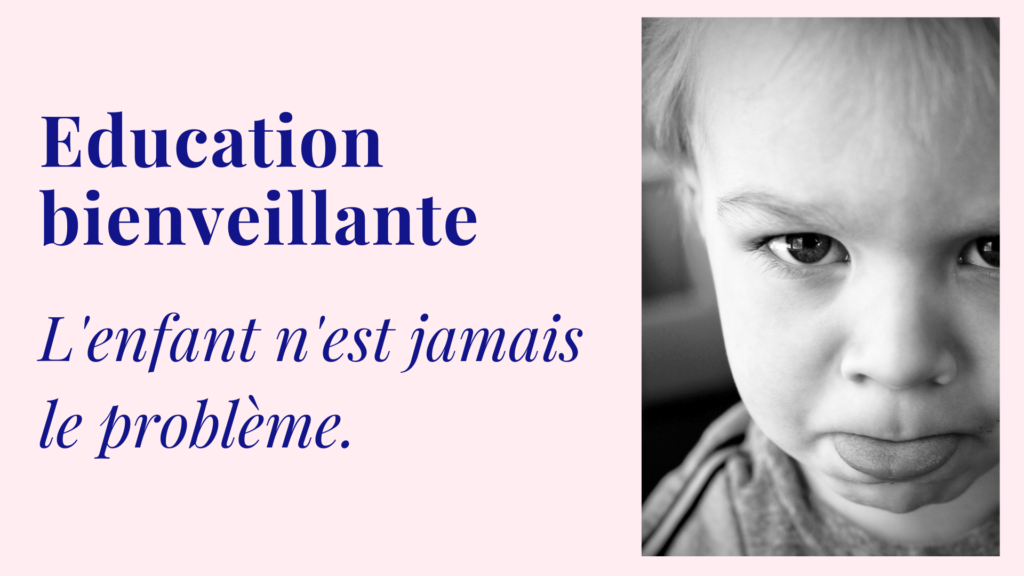
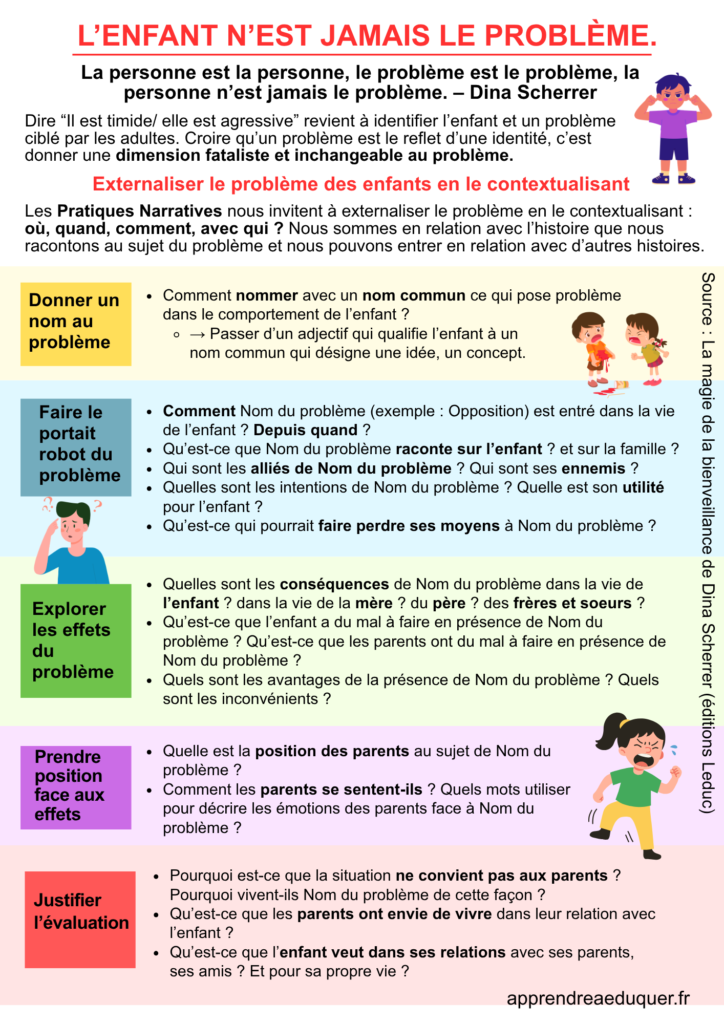
Name the Problem, Not the Child
The first move is to give the problem a common noun instead of an adjective. "Opposition" rather than "oppositional"; "Mess" rather than "messy". A capital letter helps children see that the problem has its own name and is not who they are.
Next comes the portrait: how did Opposition enter your child's life, and when? In what circumstances does it thrive, who are its allies and its enemies, and what is it trying to achieve for the child? Ask what might make it lose its footing, and hunt for a time it stayed quiet — that exception says something real about the child's capacity to resist. This reframing pairs naturally with family after divorce, where children often carry unnamed loyalties.
Questions that open the conversation
Keep the tone curious rather than interrogative, and let the child answer if they are old enough. Younger children respond well to drawing the problem as a creature, which turns a tense subject into shared play, a bit like the structured play in tummy time toys for babies.
| Instead of saying | Try naming | Question to ask |
|---|---|---|
| He is aggressive | The Storm | When does the Storm arrive, and who calms it? |
| She is shy | The Wall | What makes the Wall thinner? |
| They are slow | The Fog | What does the Fog make harder for you? |
| He is insolent | The Echo | What does the Echo want for you? |
| She is too sensitive | The Antenna | When did the Antenna help you? |
Explore the Problem's Effects
Then map the damage honestly: what does the problem make harder for the child, for each parent, for siblings, for friends, at school? What happens in the parent-child relationship when it is present? What does it seem to want for the child, and what are its advantages as well as its costs?
Include the dreams. When the problem is steering, what happens to the hopes parents hold for their child's life and for their own? Naming this aloud is often the moment adults realise how much fear has been driving their reactions. Families rebuilding after a separation often find this step clarifying, as described in forming a happy family.
Grandparents can be drawn in gently, since inherited beliefs are part of the picture; the practical suggestions in grandparents parenting rules help keep those conversations warm rather than defensive.

Take a Position and Justify It
Once the effects are visible, parents can state where they stand: how do we feel about this problem, and does its influence suit us or not? Then justify the stance with a real family story that shows why this matters so much.
Finish by asking what parents want to live in the relationship, and what the child wants for themselves and with friends. This is where new stories become available. Parents who are also managing their own health, such as treating bronchitis during a difficult season, will recognise how exhaustion narrows the view.
Small environmental tweaks support the shift: a calmer evening routine, fewer transitions, and toys that invite focus rather than overstimulation, like the picks in Easter basket toys for toddlers.

Renegotiating the Relationship Over Time
Externalising is not a one-off exercise; it is a way of renegotiating the relationship with the stories we tell about our children. It is most useful precisely when a child's identity has been fused with a problem adults identified, because it reopens the field of possibilities.
Thinking differently lets us act differently. Parents can redefine the child's identity, enjoy richer family life and reach what matters to every member of the household. Expect setbacks, keep the questions light, and return to the name of the problem rather than the name of the child.
For families with a wide age range, the same curiosity works alongside the ideas in gross psychomotor skills and the everyday play choices in toys for 4 month old babies.
My hands-on take
I tried this after a stretch where every school morning ended in shouting, and I had quietly decided my son was "difficult". Instead of repeating that, I asked him what we should call the thing that turned breakfast into a battlefield. He chose "The Grey Cloud", and we spent a week noting when it appeared: rushed mornings, hungry mornings, mornings after late nights.
The most useful part was the exception hunt. We found two mornings when the cloud stayed away, and he explained them himself — he had laid his clothes out the night before. That small discovery did more than any lecture I had given. I still slip into labels when I am tired, but naming the cloud out loud has become our shorthand for resetting.
Frequently asked questions
Is this just positive discipline with new words?
No. Positive discipline mainly adjusts adult responses, while externalising changes the story itself. The child stops being the problem and becomes someone in relation to a problem.
What age does it suit?
The conversation works from early childhood upward, adapted to language level. With very young children, parents can do the naming and mapping themselves and share only the conclusions.
Does it mean ignoring behaviour?
Not at all. It means being firm about the problem while remaining respectful of the child. Boundaries stay; the label goes.
What if the problem comes back?
Expect it. Return to the questions, notice exceptions and keep the name stable. Consistency matters more than perfect execution.
Product Reviews
 Best Toys for Dogs With High Prey Drive |
Best Outdoor Toys for 3-4 Year Olds |
Best Outdoor Toys for 6 Year Olds |
Best Harness for Poodle |
Best LEGO Sets for Adults |
Best Travel Toys for 4 Year Olds on Airplane |
Best Toy Stores in Washington DC |
Best Potty Training Toys |
Best Toys for Tripod Dogs |
Maillot equipe de france







