


Letting boys cry is one of the simplest ways to let them be fully alive, in touch with the whole range of human emotion and with the basic security they need in order to grow. Comforting a boy who cries, and meeting him with empathy, gives him emotional strength rather than weakening him.
Too many boys grow up under spoken and unspoken rules that push them to repress what they feel from the earliest age. The result is not toughness but confusion: a boy who cannot name what he feels often cannot manage it either. We can push boys to express their emotions and to put them into words.

Quick takeaways
- Boys hear “stop crying” far more often than girls, and the message sticks.
- Comforting a crying boy builds emotional strength, not weakness.
- Reflective phrases help a child name what he feels.
- A rich emotional vocabulary prevents confusion and acting out.
- Emotional skills support school success and better relationships.
- Anger is information, not violence; welcome it and set limits on actions.
Why Boys Need Permission to Cry
Many boys hear far more than girls do the little phrases that shut emotion down: “Stop crying”, “It’s nothing”, or worse, “You’re not a little girl, are you?” and “You cry like a girl”. Each one teaches a boy that some feelings are not allowed. Yet comforting a crying boy and showing him empathy does not make him fragile; it gives him emotional strength.
One writer on feminism and boys reminds us how important it is to reconnect boys with their emotions, because so many are subjected to injunctions that lead them to repress feelings from early childhood. The consequences of that repression are real and lasting. Some men pay a heavy price for it, but as researcher Sylvie Ayral points out, they first make others pay it too.
The Wider Cost of Repressed Emotion
Family violence, sexual violence and road crime all have collateral victims, and society spends enormous sums and energy managing men and their masculine complexes. Discipline councils, classes against school dropout, educational centres, sports facilities and community centres meant to help young people channel their energy are almost exclusively occupied by boys.
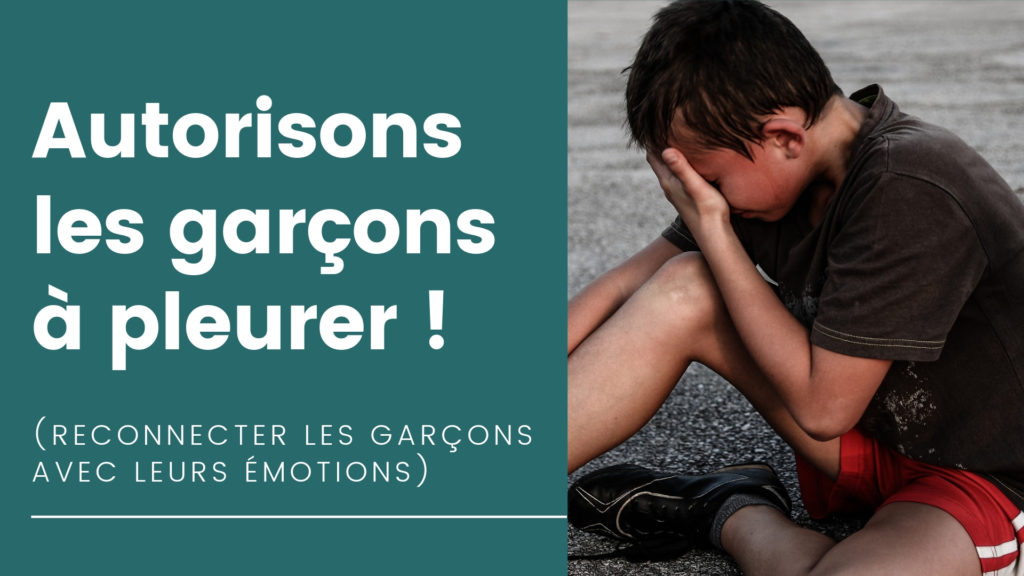
Welcoming Boys’ Emotions With Empathy
The more we verbalise things, the more a child feels allowed to share what he feels. Active, empathetic listening is very useful here, and it can be learned as a parent. You do not need perfect words, only genuine curiosity about what is going on inside him. A calm tone and a body turned toward him often matter more than the sentence you choose. After all, motherhood changes priorities, and that shift shapes how we listen.
Simple reflective phrases open the door: “You seem angry with…”, “You’re so angry that you want to…”, “You don’t like…”, “You’d rather…”, “You think that…”, “Something is making you sad, is that right?” Others help him go deeper: “You’re afraid of…”, “You’re disappointed about…”, “That must be painful”, “You felt ashamed?” Try one and then stay quiet, letting him correct you; being corrected is still him talking.
If talking feels too direct, side-by-side moments help, such as drawing together or building with foam block toys, where the conversation flows without pressure. Physical play works the same way: a game of team sports gives boys a natural outlet for frustration, and a calm walk or a bike ride with proper bicycle safety accessories offers space to talk. A little wooden house can also become a quiet corner for such conversations.

| Situation | What to say | What it does |
|---|---|---|
| He is angry | You seem really angry about… | Names the feeling |
| He is sad | Something made you sad, is that right? | Invites confirmation |
| He is scared | You’re afraid of… | Normalises fear |
| He is disappointed | That must be painful | Shows empathy |
| He shuts down | You’d rather not talk now | Respects his pace |
Building a Rich Vocabulary for Feelings
Games and tools can invite children to build an elaborate emotional vocabulary, moving beyond “fine” and “bad” to words like frustrated, embarrassed, jealous or relieved. This matters because, as psychiatrist Serge Hefez notes, we often avoid digging into boys’ emotions for fear they will become too emotional. As a result they are in the dark: they cannot identify what they feel.
Naming an emotion reduces its chaos and gives a child a handle to hold. Everyday moments are ideal for practice, such as naming your own feelings aloud or wondering together how a character in a story feels. Shared play keeps it light: a building session with a LEGO set or a quiet afternoon with toys for babies can become a natural occasion to talk about patience, pride or frustration.
Books, drawings and role play all help, and so does simply asking “What would that feel like for you?” rather than telling him what he should feel.
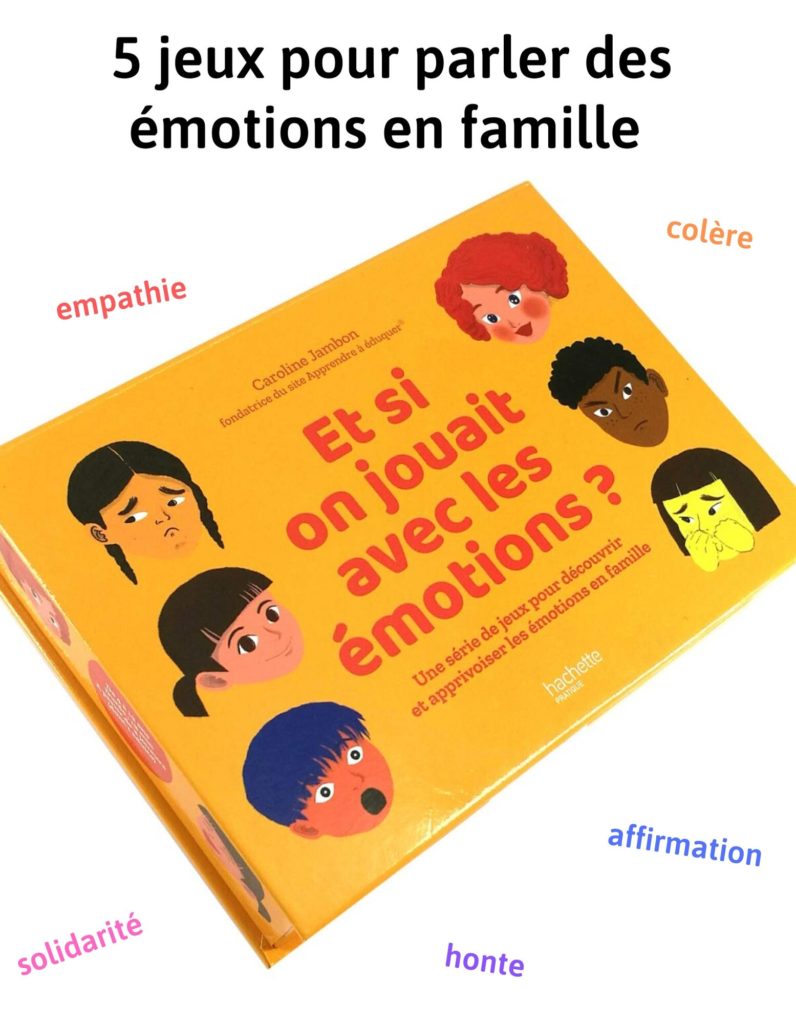
Providing Resources and Tools to Express Emotions
Emotional education is linked to better school success, better-quality relationships, and fewer aggressive behaviours and substance abuse. The more emotional skills a person has, the better they manage social relationships and personal achievement, with less risk of stress or psychological difficulties. These are reasons to treat emotional learning as seriously as reading or maths.
Practical resources help: emotion card games, a feelings chart on the fridge, drawing materials, or a family game box designed to discover and tame emotions together. Keep them visible and easy to reach so a boy can grab a tool when words fail him. A toy for a four month or a simple yoga pose may seem far from this, but even young children benefit from calm, naming and body awareness built early.
The goal is not to analyse every feeling but to make expression normal, ordinary and welcome at home.

Teaching Children Not to Fear Their Emotions
It is normal to be crossed by a range of emotions, some of them unpleasant. A boy is not wrong or shameful for feeling aggression; what matters is that he can point to it and then transform it into something more constructive. Shame about a feeling only hides it, while acknowledgement gives him a starting point.
Understanding that anger has a biological function helps us welcome it without repressing it or letting it slide into violence. Anger and violence are not synonyms: one is information, the other is a choice about what to do with it. Helping a boy notice the warning signs in his body, and offering him acceptable outlets such as movement, stomping, drawing or punching a cushion, teaches him that all feelings are allowed while actions have limits. Shared outings, like these must see attractions, can also offer healthy ways to release energy together.
Modelling this ourselves matters, too: a parent who names their own frustration and repairs it shows a boy what emotional honesty looks like in real life.


My hands-on take
In my own home, the phrase that changed the most was simply “You seem really upset about that.” I started saying it instead of “calm down”, and the difference was immediate: instead of escalating, my son usually paused and then corrected me, which was exactly the opening I wanted. I also began naming my own frustration out loud and repairing it afterwards, and that modelling did more than any lecture.
What helped practically was keeping tools within reach, such as paper and crayons on a low shelf, and using car journeys or building sessions for the harder conversations. Boys often talk more easily while their hands are busy. I learned to accept that some feelings are messy and that my job is not to fix them quickly but to stay present, keep limits on behaviour, and let the words come when they come.
Frequently asked questions
Does letting boys cry make them weaker?
No. Comforting a crying boy and meeting him with empathy gives him emotional strength and security. Repressing feelings is what tends to create difficulty later.
What if my son refuses to talk about his feelings?
Try side-by-side activities such as drawing, building or walking, and use short reflective phrases rather than questions. Silence and calm presence often open the door more than direct interrogation.
Is anger something to punish?
Anger itself is not wrong; it has a function and carries information. The task is to welcome it, help him name it, and set clear limits on violent actions.
How do I build emotional vocabulary?
Use games, emotion cards, stories and your own example, naming feelings aloud in daily life. The more words he has, the better he can identify and manage what he feels.
Product Reviews
 Best Toys for Dogs With High Prey Drive |
Best Outdoor Toys for 3-4 Year Olds |
Best Outdoor Toys for 6 Year Olds |
Best Harness for Poodle |
Best LEGO Sets for Adults |
Best Travel Toys for 4 Year Olds on Airplane |
Best Toy Stores in Washington DC |
Best Potty Training Toys |
Best Toys for Tripod Dogs |
Maillot equipe de france







