


Breaking the cycle of child abuse as a parent is possible, and it starts with understanding the conditions that make repetition less likely. The idea that maltreated children inevitably become maltreating parents is a myth worth dismantling, because knowing what protects families helps parents give their children what they themselves never received.
Certain ingredients recur: the ability to reflect on yourself, to understand other people's motives, a supportive partner, a network of friends, and a caring institutional framework around families. None of these is a guarantee on its own, but together they create room to choose differently.

Quick takeaways
- A history of abuse does not automatically make you an abusive parent
- Self-reflection and empathy for others are learnable protective skills
- A supportive partner and a network of friends reduce isolation
- Caring child protection, laws against violence, and public support all help
- A lucid witness who confirms a child's feelings can break the cycle at any age
- Recognising an injustice for what it was makes rejecting violence possible
Reflecting on yourself and understanding others
The first protective factor is a high capacity for reflection about yourself: being able to look at your own reactions, name what you feel, and ask where a sudden surge of anger or fear comes from. This kind of self-awareness is not self-indulgence; it is what allows a parent to pause between an impulse and an action.
The second is the ability to understand the motivations and reasons of others, including a child who is crying, testing limits, or pushing back. Reading behaviour as communication rather than as an attack changes the whole tone of a household. Parents who work on educate children often find that this shift matters more than any technique. Stories can help here too, and beautiful sea stories offer a gentle way to talk about feelings.
Why these two skills matter so much
Together, self-reflection and empathy interrupt the automatic quality of harsh reactions. They can be practised in small everyday moments, and they grow with use rather than arriving all at once.

The people around you as protection
A supportive partner or spouse is named as one of the essential elements that help break the cycle. Someone who shares the load, notices when you are overwhelmed, and offers to take over for an hour can make the difference on a difficult evening. Friendship matters too: a network of friends provides perspective, practical help, and the experience of being cared for.
Isolation is one of the heaviest weights a struggling parent carries, and connection is its opposite. Simple shared activities, from games to stimulate the senses with a toddler to a regular walk with another adult, keep those bonds alive. Even a modest circle of trusted people offers somewhere to put down what you are carrying. Shared home science experiments can be another easy way to spend time together.

| Factor | What it looks like day to day | How to strengthen it |
|---|---|---|
| Self-reflection | Pausing before reacting to a child's behaviour | Notice your triggers and name them |
| Understanding others | Reading crying or defiance as communication | Ask what the child might be feeling |
| Supportive partner | Sharing the load on hard evenings | Agree who steps in when tension rises |
| Friends network | Regular contact with trusted adults | Keep small rituals with friends |
| Caring institutions | Laws, protection services, parenting support | Ask schools and services what exists, as when a school sets clear expectations |
A caring institutional framework
The environment around a family counts as well. A caring institutional framework includes effective child protection services, legislation that prohibits violence against children, and a public network of parenting support. These are not abstractions: they are the structures that can step in, advise, or simply signal that hitting a child is not acceptable.
Knowing that help exists, and that asking for it is legitimate, changes what a parent feels able to do. Public support also reaches families through schools, libraries, and community groups, which is why everyday institutions matter. A local library card, for instance, opens the door to read child and to a calmer daily ritual.
Communities strengthen this further when they offer places to gather. Toy shops and play spaces, from toy stores in Chicago to small neighbourhood venues, can become part of a family's support map rather than just shopping stops.
What the Minnesota research suggests
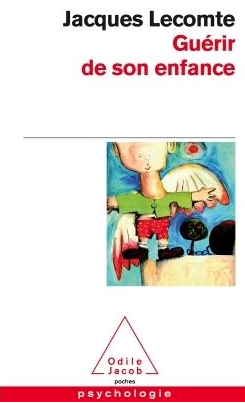
One long-running study of children and families at high risk, begun at the University of Minnesota in 1975 by Egeland and colleagues, followed 47 mothers who had all experienced various forms of abuse in their own childhoods. This mother-child project looked at what helped some of them parent differently from how they had been parented.
The findings support the broader message: a history of abuse does not dictate the future. What differs between families is the presence or absence of the protective factors described above, and those can be built, sometimes late. Parents who recognise this often find it easier to accept support without shame, whether that support comes through friends family or through formal services.

The witness who names the injustice
Alice Miller, a therapist who studied the consequences of childhood maltreatment, argued that mistreatment, whether physical or psychological, can be reproduced in adulthood. She also insisted that the circle can be broken. One key condition is encountering a lucid witness: someone who shows concern and confirms what the child felt, whether abandonment, anger toward the abusive parent, immense sadness, or fear.
That confirmation lets the victim understand that what happened was a profound injustice, outside the normal order of things, and then reject violence as a way of being in relationship. The meeting can happen in childhood, in adolescence, or at any point in adult life. As Miller put it, to combat cruelty we must first perceive it.
Everyday moments can carry that witnessing role. Reading books for children with flaps and pop-ups, or sharing stories that turn numbers into a game, creates regular, low-pressure time together in which a child's feelings are noticed and named.
My hands-on take
I remember the first time I caught myself about to speak to my child in a tone I recognised from my own upbringing. I stopped, but only because I had already spent months noticing that particular flash of irritation and writing it down. Naming the trigger in advance gave me a fraction of a second to choose something else, and that fraction turned out to be everything.
What helped most was not a technique but people. A friend who let me vent without judging, a partner who took over when I was done for the day, and a nursery teacher who gently confirmed that yes, that had been unfair to me as a child. None of it was dramatic. It was small, repeated, and it slowly made a different kind of parent possible.
Frequently asked questions
Does being abused as a child mean I will abuse my own children?
No. The idea that maltreated children inevitably become maltreating parents is not supported. Certain protective conditions make repetition much less likely, and those conditions can be built over time.
What is a "lucid witness" in this context?
It is someone who shows concern and confirms what a child felt during mistreatment, such as fear, sadness, or anger. That confirmation helps the person recognise the injustice and reject violence as a way of relating.
Can the cycle be broken in adulthood?
Yes. The encounter with a lucid witness can happen in childhood, adolescence, or at any moment of adult life. Self-reflection, supportive relationships, and outside help remain available at every stage.
Product Reviews
 Best Toys for Dogs With High Prey Drive |
Best Outdoor Toys for 3-4 Year Olds |
Best Outdoor Toys for 6 Year Olds |
Best Harness for Poodle |
Best LEGO Sets for Adults |
Best Travel Toys for 4 Year Olds on Airplane |
Best Toy Stores in Washington DC |
Best Potty Training Toys |
Best Toys for Tripod Dogs |
Maillot equipe de france







