


Helping children cope with medical care starts long before the appointment, with simple words and a calm tone. A child who knows roughly what will happen feels less ambushed than one who is surprised.
This guide gathers gentle, practical suggestions for preparing a consultation, adapting the conditions of an exam, and respecting a child's consent and physical integrity. None of it requires special equipment, only a little preparation and honesty.

Quick takeaways
- Prepare the visit in simple, honest words and say you will stay.
- Use affirmative phrases ("it may hurt") rather than negations ("don't be afraid").
- Keep your own attitude calm; hand over if a procedure stresses you.
- Ask permission before any gesture and respect the child's body.
- Never use medical acts or police as a threat.
- Welcome tears as a normal emotion, not a failure.
Preparing children so they fear medical care less
To reduce apprehension before a feared procedure, prepare the visit in simple words: "We're going to see the doctor. He'll ask you to do this, and maybe that. I'll be with you the whole time." Some doctors explain things themselves, but you can also ask yours to describe what he will do, or say it for him, adapting the level of detail to your child's age.
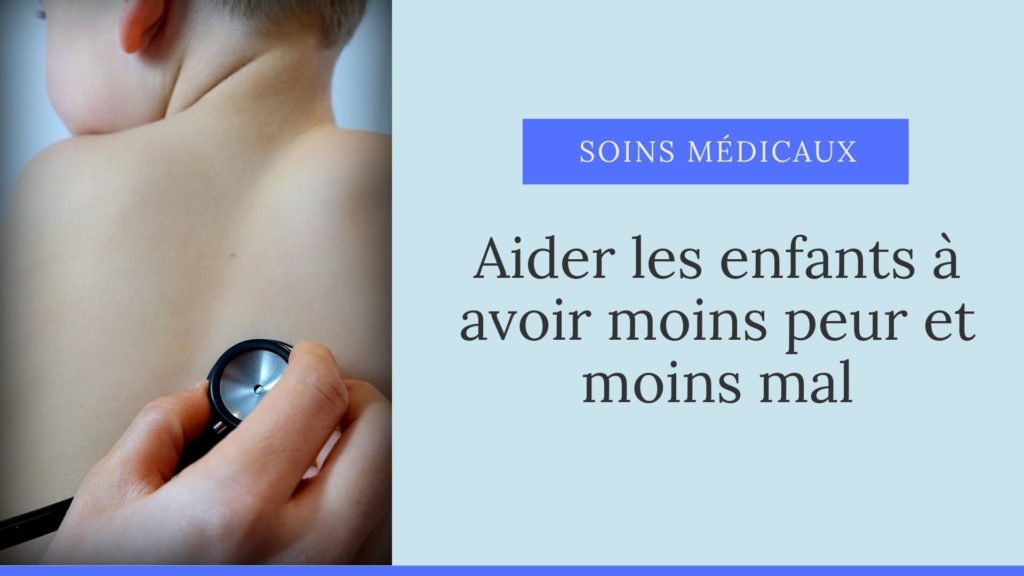
For example: "The doctor needs to understand what's giving you a fever, so he'll listen to your heart and lungs, look at your throat and ears." You can add that the stethoscope may feel a little cold, or that the tongue depressor goes on the tongue to examine the mouth and throat.
Positive, affirmative sentences create less apprehension than negations. Saying "it's true that it's a bit scary when you don't know" or "it can hurt, and you're right, it's a little cold" works better than "don't be afraid" or "it doesn't hurt." A child who has been told the truth trusts you more than one who was surprised by a lie, such as promising there will be no injection when there will be one. You can say: "It might hurt, and I'll stay with you."
Keeping your own attitude calm
Your own attitude toward the consultation matters enormously. If injections, for instance, trigger anxiety in one parent, it may be better to let the other parent take over for that visit. Children read our faces and our tension long before they understand the procedure itself.
If a painful procedure is planned, you can bring a small game your child enjoys to create a diversion. Playful phrasing helps too: "The doctor is going to say hello to your ear, your heart, your teeth." Some doctors use this approach systematically with children, others do not, so you can model it yourself.
Toys and comfort objects can act as mediators for an exam or help prepare for it: "So, your teddy is sick? Shall we look at his ears? And your ears, are they sick too?" For the youngest, breastfeeding has soothing virtues, and some health professionals invite nursing mothers to feed during an injection or a blood draw. When a child is frightened or reluctant, you can also adapt the conditions of the exam where possible: on a parent's lap, at the desk rather than on the examination table, without undressing the child completely right away. If you are planning baby first outings with a newborn, the same calm preparation applies to those early appointments. As Julia Donaldson reminds us, children respond best when we respect their perspective.
| Situation | Helpful approach | Avoid |
|---|---|---|
| Before the visit | Explain what will happen in simple words | Promising there will be no injection |
| Cold stethoscope | "It may feel a little cold" | "It's not cold at all" |
| Frightened child | Offer a lap or a favourite toy | Undressing the child right away |
| Painful procedure | Bring a small game as diversion | Saying it will not hurt |
| Weighing | Weigh in underwear or dressed | Full undressing |
| Child's consent | "I'm going to examine your tummy, okay?" | Doing it without warning |
Never using medical acts as a threat
Medical acts should never represent a threat or a punishment. A child threatened with an injection to make him obey risks developing a phobia of care. The same holds for other threats: children who hear adults threaten to call the police, or say officers will come and get them, will associate law enforcement with danger rather than protection.
Emotional expression is essential, as always. Leaving room for emotions without denying their intensity helps a child overcome apprehension: "You look sad or scared, I understand this can feel hard, and I'm here to help you." Tears should not be treated as a failed consultation. Welcome them simply, as a normal emotion in a situation that can be stressful, especially for a small child.
If your child is going through a phase of resistance, some of the same patience used when children are stubborn applies here too. A calm, steady adult is the best regulator a frightened child can borrow from.
Consent and physical integrity during health care
Respecting a child's physical integrity and consent has its full place in health care. No gesture should be made without informing and warning the child, even a small one, and asking permission: "I'm going to examine your tummy, are you okay with that?"
As parents, we have the right to refuse a gesture when it seems inappropriate, because we are the guarantors of our children's physical integrity. For example, undressing a child completely to weigh him is not necessary: a child can be weighed in underwear, or even dressed with shoes off. Some still-common gestures have no medical reason, such as forcibly retracting the foreskin of little boys; if you have questions about undescended testicle treatment or similar concerns, ask your doctor to explain rather than accept a gesture you do not understand.
A child's awareness of "owning" his body, including in a medical context, becomes the basis of his relationship with health professionals. By offering him the chance to be heard and respected, you help him build confidence in himself, his judgment and his worth, and he will likely be more active in managing his own health as an adult.
The presence of parents during an exam or procedure, such as a blood draw, cannot be refused except for particular health constraints, such as a sterile room. When a child needs a procedure and is anxious, the reassurance of a familiar adult and a familiar object makes a real difference, much like the comfort of open ended toys at home. For busy days, time saving parenting apps can help you prepare, and choosing toys for language development lets a familiar object also support reassurance.

Talking about bodies and health without fear
Children pick up on how the adults around them talk about bodies, illness and care. Keeping explanations factual and calm, and answering questions as they come, builds a base of trust that lasts. If a topic feels awkward, it is fine to say you will find out together rather than invent an answer.
Some health topics deserve the same honest, age-appropriate language, whether it is a routine check-up or something like anemia during puberty that may come up as children grow. The habit of explaining rather than hiding prepares them to speak up about their own symptoms later.
Books, play and everyday conversation all help. A child who has practiced "doctor" with a teddy, or who has heard a simple explanation of what a test is for, arrives at the clinic with less to fear. For broader questions about development, resources such as myths about intelligence can help parents separate fact from folklore. Learning about Down Syndrome can also make these conversations more informed.

My hands-on take
I remember the first time I had to hold my daughter for a blood draw. I had prepared her with simple words, told her it might pinch, and promised I would stay. She cried, and I let her. What struck me was how quickly she calmed once it was over, simply because nothing had been hidden from her. Since then, I ask permission before any gesture, even at home, and I explain what I am doing. It takes a few extra seconds and sometimes feels silly, but it has changed the way she talks about her body and about doctors. She now asks questions instead of tensing up, and that alone feels worth the effort.Frequently asked questions
Should I tell my child that a procedure might hurt?
Yes. Honest preparation builds more trust than a surprise. Saying "it might hurt, and I'll stay with you" prepares the child without alarming him.
What if my child cries during a visit?
Tears are a normal reaction to a stressful situation, not a failed consultation. Welcome them calmly and reassure your child rather than telling him to stop.
Can I refuse a gesture I find inappropriate?
As the guarantor of your child's physical integrity, you can ask questions and refuse a gesture that seems unnecessary. Ask the professional to explain the reason first.
Can I stay with my child during a blood draw?
Parental presence during an exam or procedure is generally allowed, except for specific health constraints such as a sterile room.
Product Reviews
 Best Toys for Dogs With High Prey Drive |
Best Outdoor Toys for 3-4 Year Olds |
Best Outdoor Toys for 6 Year Olds |
Best Harness for Poodle |
Best LEGO Sets for Adults |
Best Travel Toys for 4 Year Olds on Airplane |
Best Toy Stores in Washington DC |
Best Potty Training Toys |
Best Toys for Tripod Dogs |
Maillot equipe de france







