


The parent booklet is a free downloadable guide created by the national family allowances fund and the agricultural social mutual fund, together with the ministry for families, childhood and women's rights. It is designed to give parents clear reference points, but also concrete help and advice that make daily family life easier.
What makes it stand out is the balance it strikes: it acknowledges the real challenges of parenting, such as how differently each woman experiences pregnancy, the developmental stages that can leave parents puzzled, and the strain on the couple relationship, while also pointing to the resources available to cope with them.

It reminds readers of children's rights and firmly rules out ordinary educational violence, including smacking, corporal punishment and humiliation.
Quick takeaways
- Free official booklet covering pregnancy, development and couple life
- Emphasises building a support network and using public services
- Restates children's rights and rules out corporal punishment
- Offers alternatives to smacking and everyday punishment
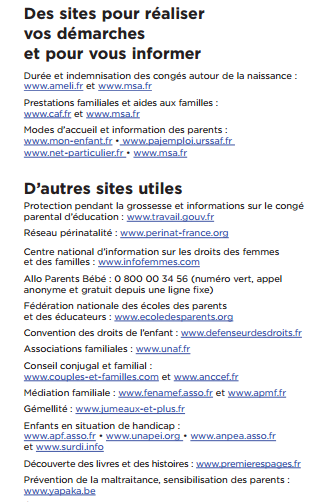
- Includes practical resources on childcare and administrative steps
- Aimed mainly at young parents, useful for all caregivers
What the Parent Booklet Covers
The booklet is built around the idea that parenting is not a skill you either have or lack, but a role you learn while living it. It looks honestly at the parts that surprise new parents: pregnancy experienced differently from one woman to the next, developmental leaps that can be disconcerting, and the way a baby reshapes the couple's relationship. Rather than offering a single model, it gives reference points so each family can find its own balance.
It also stresses how important it is to build a good support network and not hesitate to use the schemes public services provide. For readers thinking about how environment shapes a child, the Waldorf method offers a useful contrast in how settings are organised, while families curious about unstructured play will find ideas in this guide to encouraging creativity at every age.
A reassuring, practical tone
The tone stays supportive throughout: parents are treated as capable adults who need information, not lectures.

Children's Rights and a Ban on Corporal Punishment
A significant part of the booklet restates children's rights and clearly prohibits ordinary educational violence, meaning smacking, physical punishment and humiliation. This is framed not as a judgement on parents but as a public health and child protection position, and the guide pairs the prohibition with alternatives so families are not left without tools.
For parents looking for concrete replacements, a full free document on what to do without smacking is a helpful companion, and a dedicated file explains how and why to apply positive discipline day to day. The underlying message is that limits can be firm without being violent, and that consistency matters more than severity.
| Theme | What it provides | Best used when |
|---|---|---|
| Pregnancy and early months | Reference points on varied experiences | Expecting or new parents |
| Child development | Explanations of disconcerting stages | Behaviour suddenly changes |
| Couple relationship | Honest look at strain and adjustment | After a first baby |
| Children's rights | Clear reminders and limits | Discipline questions arise |
| Childcare and paperwork | Practical steps and options | Planning a return to work |
Childcare Options and Practical Steps
The booklet rounds off with practical resources on childcare arrangements and the administrative steps that come with them. This is often where young parents feel most lost: knowing which options exist, what each one involves, and what paperwork to prepare. Having it gathered in one place saves hours of searching and reduces the anxiety of not knowing whether you are doing things in the right order.
Parents planning ahead may also appreciate practical checklists such as what to pack in baby luggage for a first trip, or advice on protecting children's backs once a child starts carrying a school bag. These small practicalities sit alongside the bigger questions, and that combination is what makes the booklet genuinely useful rather than purely theoretical.

Who the Booklet Is For and How to Use It
The guide is aimed mainly at young parents, but its content works for anyone raising or caring for a child. Because it is short and organised by theme, it can be read straight through during pregnancy or dipped into later when a specific question comes up. Keeping a copy on a phone or printing it for the fridge door both work well.
It is also a good conversation starter between partners, or between parents and grandparents who may hold different views on discipline. If your child is at the stage of testing limits, pairing the booklet with reading on how making towers and similar play supports persistence can help you see behaviour in context rather than as defiance.

Building Your Own Parenting Reference Shelf
No single guide answers everything, and the booklet is best treated as a starting point. Alongside it, it helps to gather a few trusted resources on the topics that matter to your family, whether that is sleep, screens, play or school. Choosing carefully matters more than collecting a long list.
For families who want to go further, thoughtful material on movies for children that carry a real lesson, or stories offering alternatives to the usual princess stories, can support the values the booklet describes. Parents of teenagers facing new steps may find guidance on exchange abroad useful when the time comes.
My hands-on take
I downloaded the booklet on a whim one evening when our eldest was about eighteen months old and I was convinced I was doing everything wrong. What struck me was how calm it was. It did not tell me my child was going through a phase and leave it there; it explained why the phase happens and what usually helps. I printed the pages on children's rights and stuck them inside a kitchen cupboard, mostly as a reminder for me rather than for the children.
The childcare section saved me a phone call or two as well, simply by listing what to prepare before asking about a place. My advice: read it once early, then keep it nearby. You will come back to different pages at different ages, and it reads very differently the second time.
Frequently asked questions
Is the parent booklet really free?
Yes, it is published as a free PDF download on the official health website, with no registration required.
Who produced it?
It was created by the national family allowances fund and the agricultural social mutual fund, in partnership with the ministry for families, childhood and women's rights.
Does it tell parents how to punish children?
No. It rules out corporal punishment and humiliation, and instead points to non-violent alternatives and support resources.
Is it only for first-time parents?
It is aimed mainly at young parents, but the content on development, rights and childcare is relevant to any caregiver.
Product Reviews
 Best Toys for Dogs With High Prey Drive |
Best Outdoor Toys for 3-4 Year Olds |
Best Outdoor Toys for 6 Year Olds |
Best Harness for Poodle |
Best LEGO Sets for Adults |
Best Travel Toys for 4 Year Olds on Airplane |
Best Toy Stores in Washington DC |
Best Potty Training Toys |
Best Toys for Tripod Dogs |
Maillot equipe de france







