


Family cooking is one of the easiest ways to spend real time together, and it does not need a free afternoon to work. Weekdays can feel rushed, but weekends leave room to slow down and let children join in.
Children genuinely enjoy cooking beside mum and dad, and they are perfectly capable of helping prepare a meal. Let them sneak a slice of cheese, a knob of butter or lick the last of the cake batter from the bowl.

Give them their own gear too: a child-sized apron, a chef's hat, a knife with a rounded tip. Small chef sets with apron, hat and oven mitts sized for children are easy to find in shops.
Quick takeaways
- Let children taste, touch and lick the bowl; it keeps cooking playful.
- Give them their own apron, chef's hat and rounded knife.
- Stay calm about spills; cleanup is part of the learning.
- Explain safety around heat, knives and the oven in short, clear rules.
- Match tasks to age: pouring at four, measuring and counting later.
- Use cookbooks or a child's recipe choice when inspiration runs low.
Keep the mood kind and positive
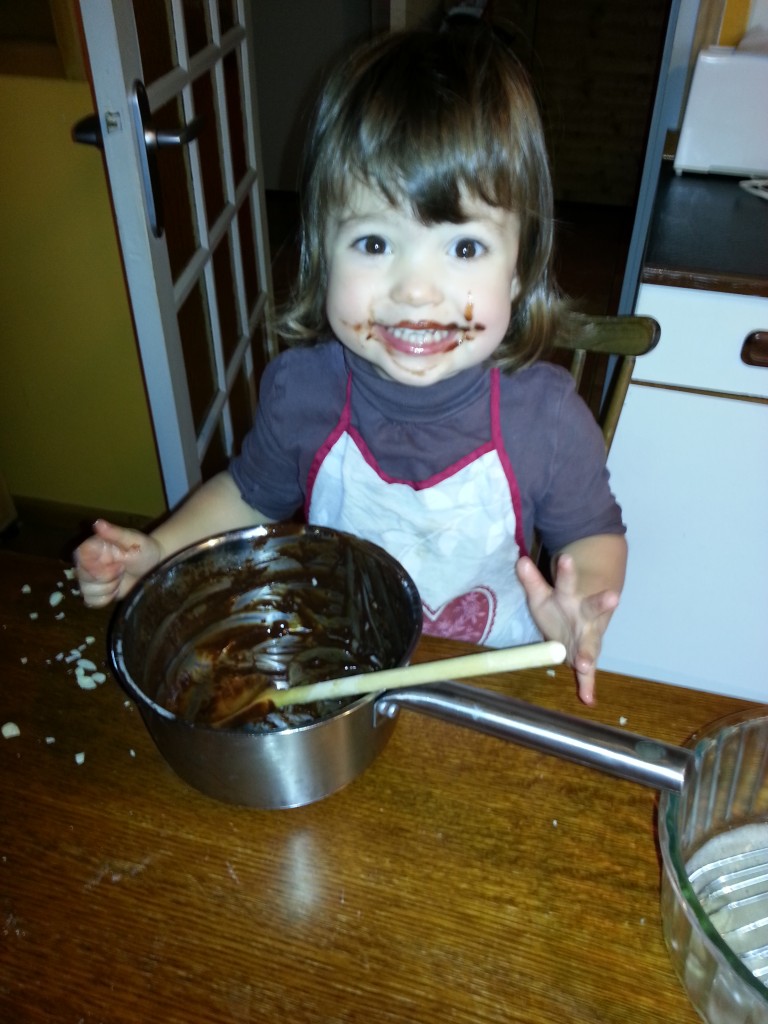
The most important ingredient is a patient, encouraging attitude. It truly does not matter if your child stains their clothes, knocks over the milk or the flour, or gets chocolate all over their face.
These little mishaps are learning moments. A spilled glass of water or a dusting of flour on the counter is a chance to practise wiping up, putting on an apron before cooking, dropping dirty things in the laundry basket and washing their own face. A small mess can always be fixed, and we can trust children to experiment and learn from their errors. If sibling squabbles flare up over whose turn it is to stir, some of the calm parenting phrases that work elsewhere in the day help here too.
Keeping the atmosphere light also makes the kitchen a place children want to return to. Praise effort rather than perfection, and let them see you laugh at your own spills.
What are the benefits of cooking together?
Cooking draws children into household tasks without making them feel like chores. Your child gets to touch and taste ingredients and see how carrots from the market become grated carrots on the plate, which lowers the risk of food rejection.
Because they have seen exactly what goes into a dish, there is no surprise waiting on the plate, so they are more willing to taste it. They also feel proud to have helped and to have mattered in preparing the meal, and you can praise their contribution in front of guests.
The kitchen is a natural classroom for hygiene and safety around gas, flame and oven, which supports accident prevention at home. It is intellectual work too: naming ingredients and utensils, announcing actions, measuring flour or liquids, handling grams and centilitres, converting quantities and counting spoonfuls of salt. For more on how hands-on play builds these skills, see these psychomotor skill toys. Much like young children's motion sensitivity, these early experiences shape how they respond to new sensations, and even topics like newborn bilirubin levels remind us how closely a child's body and daily routines are connected.
| Age | Helpful tasks | Safety reminder |
|---|---|---|
| Around 4 | Pouring flour and milk for béchamel | Never touch a pan on or near the heat |
| Around 4 | Handing over the whisk or scales | Learn the name of each utensil |
| Young child | Snacking on raw carrot slices | Hands stay off the cutting board |
| Young child | Watching the cake test | Never touch the oven door while it is on |
| Any age | Wiping spills, washing face | Apron on, dirty clothes in the laundry basket |
Adapt each task to your child's age
At around four, a child can help make a béchamel: they pour the flour and milk while you stir. Use the moment to explain that a pan on the heat or just off it is never to be touched, and ask them to hand you the whisk or the scales so they learn each utensil's name.
Knives, boards and the oven
If your child loves sneaking raw carrot slices while you cook, that is the moment to say hands never go on the cutting board, and to explain why it is dangerous. When they watch you test a cake with a knife blade, remind them not to come close and never to touch the oven door while it is on, and explain what oven mitts are for.
Short, clear rules repeated calmly stick better than long lectures. Children absorb safety habits through routine, much as they pick up language, as described in this guide on how children learn to speak step by step.
Make the kitchen child-friendly
A few small preparations make everything smoother. Keep a stool or sturdy chair near the counter so your child can reach safely, and store their apron and hat at their height so they can dress themselves.
Set aside a low drawer or basket with child-safe tools: wooden spoons, plastic bowls, a small whisk, cookie cutters. Having their own equipment builds ownership, and labelling it with their name adds a sense of pride; these clothing name labels work just as well on aprons and tea towels.
Choose simple recipes with few steps and let your child own one job from start to finish, such as washing vegetables or stirring. For families who like a challenge, a rainy-day family escape room at home can even be themed around a recipe.

Stuck for inspiration? Try cookbooks
Every occasion to spend pleasant time together counts, so get into the kitchen. If inspiration runs dry, there are books dedicated to family cooking with easy recipes.
For keen young cooks, J'apprends à cuisiner (Usborne) is a solid pick; for organic-minded families, Je cuisine bio avec les enfants (Terre Vivante); and for those who prefer cakes, La pâtisserie des petits (Larousse).
Beyond books, let your child choose a recipe from a picture, or revisit a dish they loved. If you also want to explore other books on big topics, there are plenty of options. Cooking together also pairs well with outings: a picnic or a family meal out can be planned together, and these tips for eating out with a baby help when the youngest comes along. For quieter kitchen moments, a stack of foam block toys keeps toddlers busy nearby.

My hands-on take
In our house, the rule is that whoever cooks picks the music, and that alone got my youngest to the counter. I stopped worrying about flour on the floor and started keeping a cloth within reach so spills became a quick game rather than a scolding. The turning point was giving my child a job that was entirely theirs, washing the vegetables, and then praising that job in front of visitors.
What I would say to any parent: start small, pick one recipe you know by heart, and let the child do the messy part. The kitchen will survive, and the pride on their face when the dish reaches the table is worth every wiped counter.
Frequently asked questions
What if my child makes a mess while cooking?
Expect it and stay positive. A spilled glass of milk or scattered flour is a chance to teach wiping up, wearing an apron and putting dirty clothes in the laundry basket.
At what age can children start helping in the kitchen?
Around four, a child can pour ingredients for a béchamel while you stir. Adjust each task to their age and keep safety rules short and clear.
How do I stop my child touching hot pans or the oven?
Explain simply that pans on the heat and the oven door are never to be touched, and repeat the rule calmly each time you cook together.
Will cooking together help with picky eating?
It can help. Children who handle and taste ingredients and see what goes into a dish are often more willing to try it, with fewer surprises on the plate.
Product Reviews
 Best Toys for Dogs With High Prey Drive |
Best Outdoor Toys for 3-4 Year Olds |
Best Outdoor Toys for 6 Year Olds |
Best Harness for Poodle |
Best LEGO Sets for Adults |
Best Travel Toys for 4 Year Olds on Airplane |
Best Toy Stores in Washington DC |
Best Potty Training Toys |
Best Toys for Tripod Dogs |
Maillot equipe de france







