


A good children's book on emotions can do something a lecture never will: it lets a child see their own anger from the outside. This picture book about a boy named Mathéo does exactly that, following a young character who feels a lot of anger and struggles to manage it.
Through the story, the author shows children that big feelings are completely normal, and that there are simple strategies that help them feel better and happier. The book is aimed at children from age five and up, and it is designed to be read together, not handed over silently.

Quick takeaways
- The book uses a black cloud as a concrete image children can name and discuss.
- Anger is presented as normal, with strategies rather than shame.
- Mathéo's triggers mirror real daily life: tiredness, unfairness, looping thoughts.
- Draught breathing is taught at the end and modelled inside the story.
- Page-by-page questions turn reading into a conversation.
- Best suited to children aged five and up, read during a calm moment.
The Black Cloud as a Shared Image for Anger
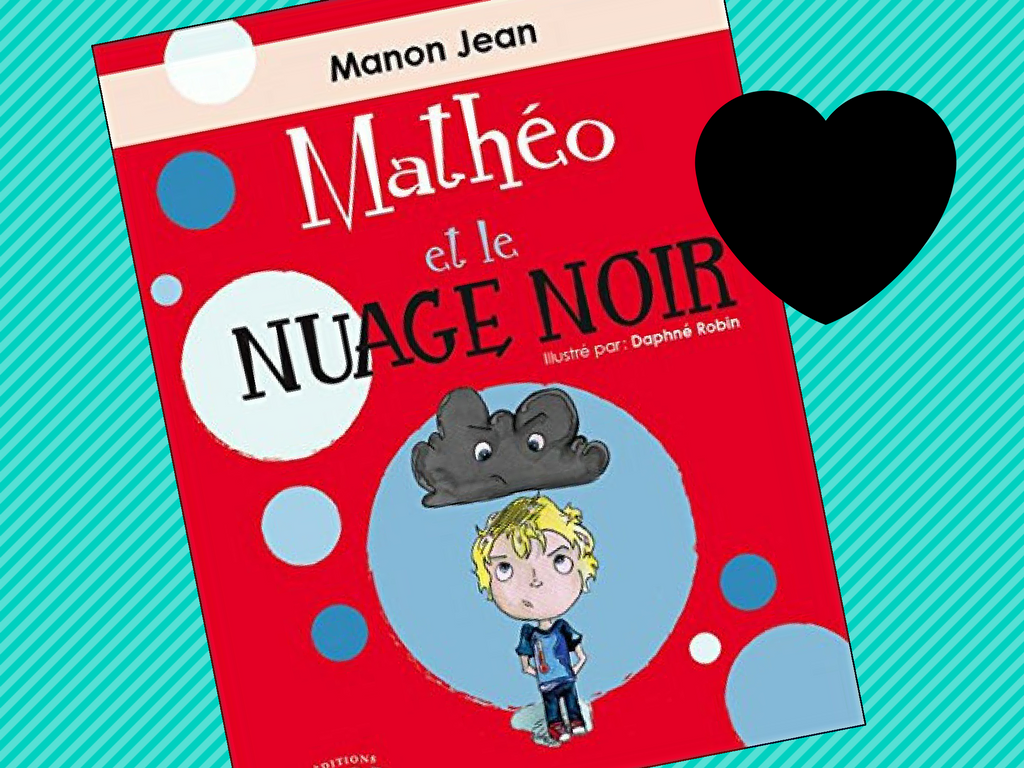
Mathéo and the Black Cloud is a picture book written to open conversations about emotions and to help children channel anger. The story follows Mathéo, a boy who experiences a great deal of anger and finds it hard to manage what he feels.
The author's goal is straightforward: to show children that living with these emotions is entirely normal, and that strategies exist to help them feel better and happier. The black cloud becomes a picture children can hold in their mind, an image they can use to identify their own feelings and talk about them. For more titles that open big conversations, see these books about democracy.
Why a Metaphor Works Better Than a Rule
Young children often cannot explain what is happening inside them, but they can point at a cloud. If you are also working on everyday routines that build a child's sense of security, such as teeth brushing routine, the same principle applies: repetition and clear images do more than instructions. The right toys for toddlers can support this kind of play-based learning too.
Naming Anger, Fear and Sadness Without Shame
The book makes clear that feeling angry, afraid or sad is normal, and that returning to the body, through physical sensations, the five senses and breathing, helps children tame unpleasant emotions. The aim is to catch anger before it spreads through everything and turns into violence.
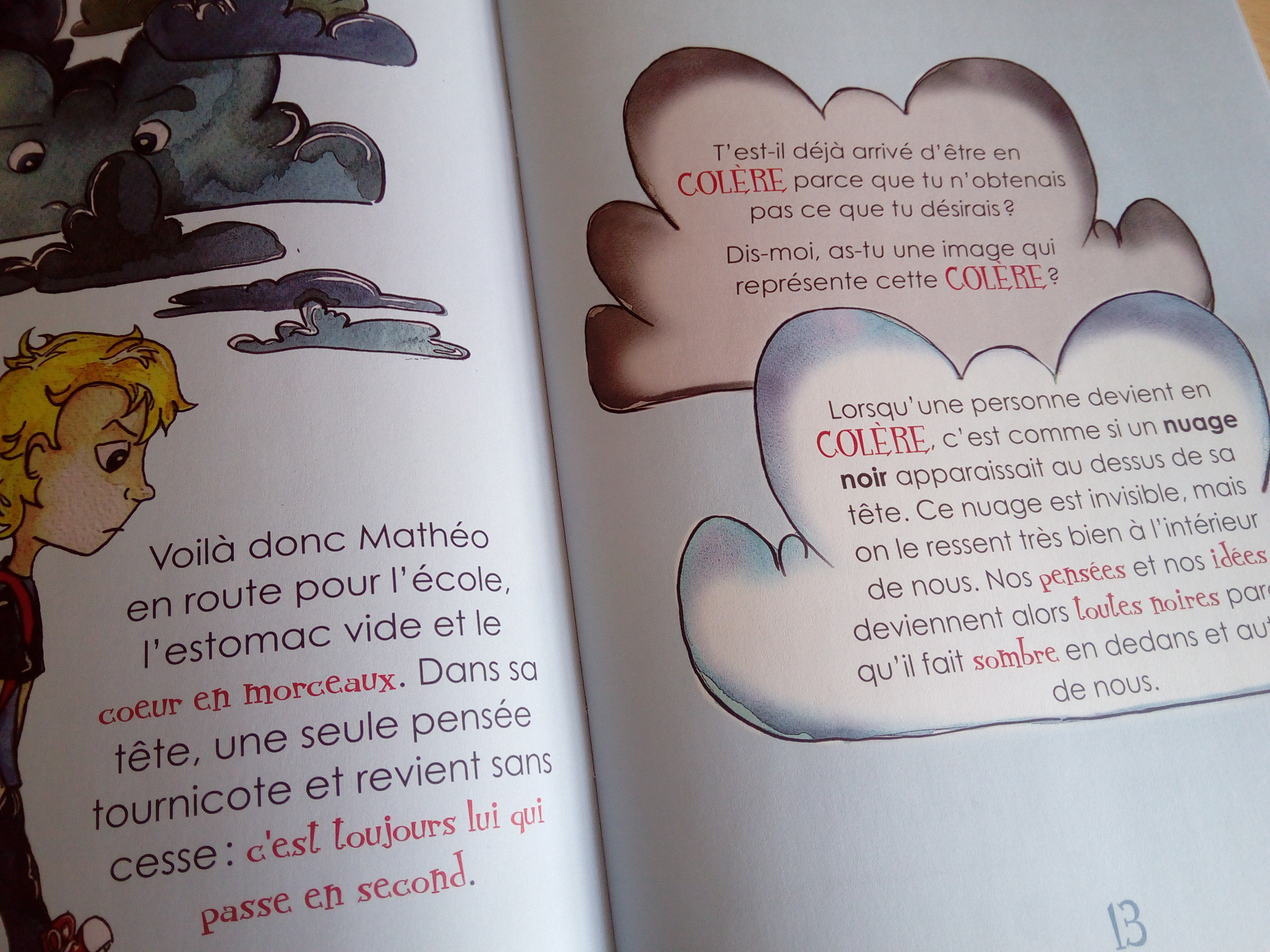
Mathéo is easy to identify with. He wakes up in a bad mood, his little sister eats the last waffle, he broods over the idea that his parents prefer her, he decides his school marks are terrible, and he accuses his friend of not knowing how to play ball because she is a girl. Like the characters in these children's stories, he gives young readers a familiar face for big feelings.
The author describes the mechanisms that trigger and feed anger with real skill: tiredness, an event perceived as unfair, thoughts that loop, an emotion that colours everything else, and anger passing from one person to the next. She does this through accessible metaphors such as clouds, storms, cacti, draughts and inner weather.
| Moment | What to do | Why it helps |
|---|---|---|
| Calm moment | Read the story slowly | Children absorb the metaphors without pressure |
| During reading | Ask one question per page | Keeps the child connected to Mathéo's experience |
| End of story | Try draught breathing together | Practise the tool before it is needed |
| After a hard day | Name the black cloud | Gives the child shared language for anger |
| Repeated readings | Return to favourite pages | Familiarity makes the strategy automatic |
For calmer moments away from the page, screen free toys can help children practise settling their inner weather through play.
Reading Slowly and Talking on Every Page
Each page of the story comes with a few explanations and questions, creating natural moments of exchange with children. The idea is to read Mathéo's story during a calm moment, with a slow pace, and to invite children to connect with what the boy is experiencing.
Ask about their own experiences as you go: when did they last feel like Mathéo? What did their cloud look like? These questions work best when nobody is in trouble and no clock is running. If your child is going through a phase of poor sleep or difficult meals, pick an especially quiet moment, since sleep and appetite struggles already drain a child's patience.
Children who need movement to stay engaged can hold a cushion, draw the cloud, or act out the storm with their hands while you read.
The Draught Breathing Exercise at the End
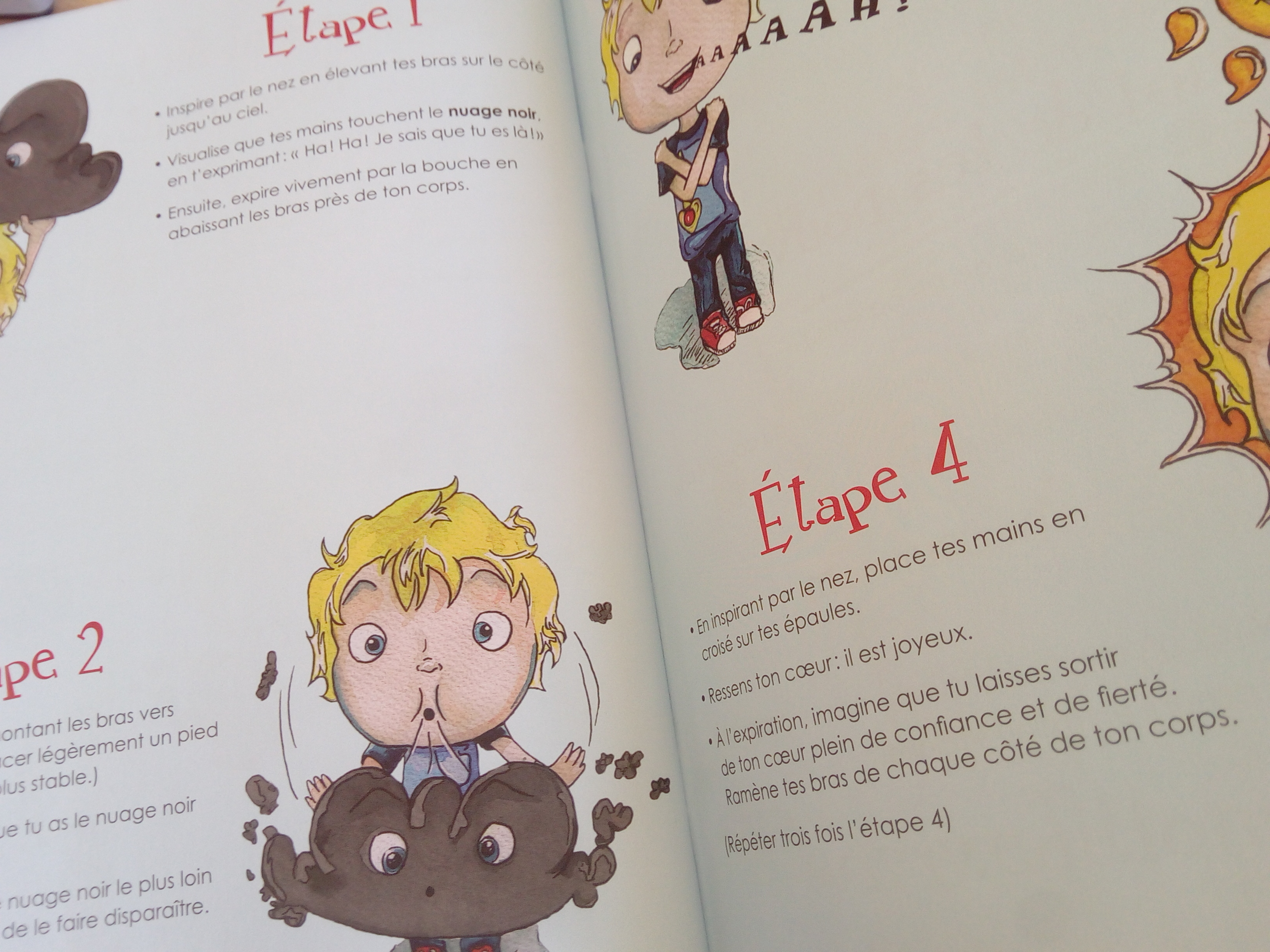
After the story, the author offers a complete breathing technique tied to Mathéo's experience: draught breathing. This mindful breathing exercise belongs naturally in emotional education, because children can use it when they feel unsettled, thrown off balance or overwhelmed by their emotions.
The exercise works as a conclusion to the shared reading moment. Read the story first, talk about it, then try the breathing together while everyone is still calm, so the technique is familiar before it is needed. Pairing it with stories about the sea can make the moment even more memorable.
Practising Before the Storm
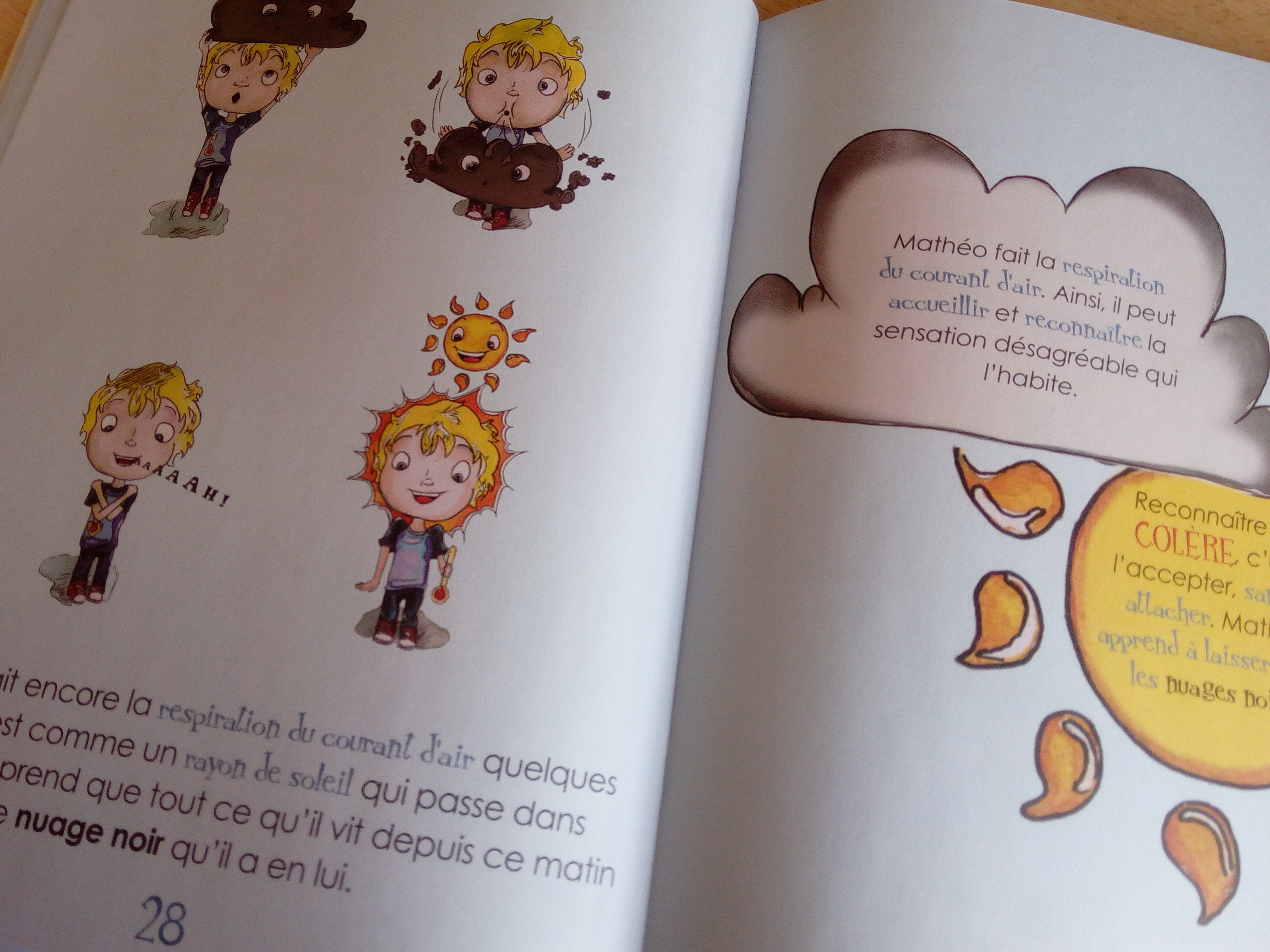
Mathéo is shown using draught breathing within the story itself, which means children meet the technique before they are asked to try it. That order matters: a child who has never practised a calming tool will not reach for it mid-tantrum. The same logic sits behind learning toys for toddlers, where skills are built through play long before they are tested.
Illustrations That Carry the Message
The many illustrations help children take ownership of the different metaphors and understand what is at stake in breathing and in taming emotions. Pictures give a child something to return to when words are too abstract, and they let a parent point rather than lecture.
This makes the book a useful addition to a home shelf alongside other calm-time activities. Families who like hands-on projects can pair a reading session with a simple craft, much like the ideas in Christmas centerpiece craft, where children process ideas by making something with their hands.
The book is suggested for children aged five and up, and it is available in libraries, bookshops and online.

Building a Small Emotional Routine at Home
A single reading will not change a child's relationship with anger, but a small routine can. Keep the book visible, return to it after a hard day, and name the cloud out loud when you see it forming in your child, or in yourself.
Parents who want to widen the conversation can look at how other families handle sensitive topics, such as swimming and autism, where patience and adaptation matter more than technique. The same holds here: adapt the breathing to your child, shorten it, or simply breathe together without counting.
Some children respond better to a physical outlet first and a breathing exercise second. Others need the story and nothing else that day. Both are fine.

My hands-on take
I have used picture books like this one as a bridge more than once, and the lesson I keep relearning is that timing beats technique. Reading about a boy and his black cloud in the middle of an actual meltdown does nothing. Reading it on a quiet afternoon, with my child sprawled on the floor and free to interrupt, opens far more than any conversation I could start on purpose.
What I appreciate most is the page-by-page questions, because they give me something to say when I would otherwise fall back on "calm down". I also like that the breathing exercise comes at the end, after the story has done its work. In our house, we shortened it to a few breaths and skipped the counting. It still gets used, mostly at bedtime, which is exactly when a small cloud tends to appear.
Frequently asked questions
What age is this book suitable for?
It is recommended for children aged five and up. Younger children can still enjoy the story and pictures, but the questions and breathing exercise work best with a little more maturity.
Does the book ask children to suppress their anger?
No. It states clearly that anger, fear and sadness are normal, and it offers ways to tame and channel them before they turn into violence.
Can the breathing exercise be used outside reading time?
Yes, that is the point. Once a child knows draught breathing, it can be used whenever they feel overwhelmed, unsettled or upset.
Do we need to read the whole book in one sitting?
Not necessarily. Reading a few pages with the accompanying questions and stopping there is often more effective than rushing to the end.
Product Reviews
 Best Toys for Dogs With High Prey Drive |
Best Outdoor Toys for 3-4 Year Olds |
Best Outdoor Toys for 6 Year Olds |
Best Harness for Poodle |
Best LEGO Sets for Adults |
Best Travel Toys for 4 Year Olds on Airplane |
Best Toy Stores in Washington DC |
Best Potty Training Toys |
Best Toys for Tripod Dogs |
Maillot equipe de france







