


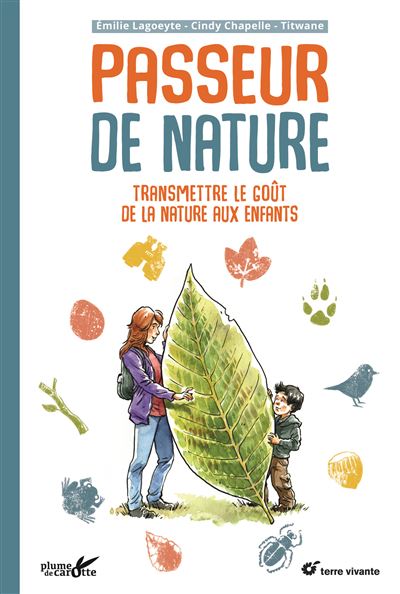
Protecting biodiversity with kids does not require a big garden or a field trip: a small corner left alone, a dead tree and a few well-chosen plants are enough to turn an ordinary outdoor space into a living refuge. The ideas below come from the book Passeur de nature, in which Emilie Lagoeyte and Cindy Chapelle share five proposals for helping children discover nature while doing something useful for it.
Each proposal is cheap, concrete and easy to observe over the seasons. Children can visit the same spot again and again, notice what has changed and slowly build a real relationship with the living world around them.

Quick takeaways
- Leave a marked square of grass unmown to create a mini biodiversity island.
- Adopt a dead tree, add an information sign and visit it regularly.
- Fit cats with bright collars and sterilise them to protect birds.
- Open small passages between gardens so hedgehogs and lizards can move.
- Plant berry shrubs, nectar plants and piles of branches or stones.
- Extend the same thinking to school playgrounds and shared spaces.
1. Set aside a square of wild grass
Mark out a patch of lawn that will be left completely alone: no mowing, no new planting, no treatment. Without human intervention, this space gradually becomes a small biodiversity island. Different grasses grow, wild flowers bloom, insects come to forage and lizards stop to rest.
Season after season, the square becomes richer in both flora and fauna. Children can keep a simple notebook of what they spot, or compare their patch with the mown lawn beside it to see the difference for themselves.
Why doing nothing works
This is a project where the adult's main job is restraint. Resist the urge to tidy up, and explain to neighbours or family why the grass is tall. If you are also thinking about how children learn through play, our ideas on child self-improvement show how small, repeated experiences build confidence.
2. Adopt a dead tree
A dead tree is a remarkable natural reserve. Insect larvae hide under the bark, hollow wood shelters habitats such as ant nests, and birds come to feed and build nests in the cavities. The authors describe it as a “forest apartment block” and argue that a dead tree has its full place, even in a garden.
Adopting one means putting up a small sign in front of it to explain its benefits and to make clear that it must not be moved. Children can then visit this refuge regularly, observe its inhabitants with a magnifying glass, or look for clues of presence and work out which animals and insects live there.
Turn visits into a routine
Regular short visits work better than one long session. A weekly five-minute check with a magnifier is enough to keep curiosity alive, and it pairs well with quieter indoor moments, such as the maths stories you can read together afterwards. Outdoor exploring also builds practical skills, much like children's knives teach safe hands-on learning.

| Project | What you need | What children can observe |
|---|---|---|
| Wild grass square | A marked patch, no mowing | Wild flowers, insects, lizards |
| Adopted dead tree | A sign, a magnifier | Larvae, ants, nesting birds |
| Cat-friendly garden | Bright collar, sterilisation | Birds with time to escape |
| Wildlife corridor | Gap in fence, scrub strip | Hedgehogs, lizards, insects |
| Beneficial planting | Berry shrubs, lavender, piles | Foraging birds, sheltering insects |
3. Stop cats from attacking birds
Emilie Lagoeyte and Cindy Chapelle remind us that domestic animals, cats in particular, are responsible for the death of a number of animals, birds above all. The ideal is to fit cats with a brightly coloured collar so that birds have time to fly away before being hunted. Sterilising cats, both males and females, also helps limit their proliferation.
This is a delicate topic in a neighbourhood, so keep the conversation friendly. Explain to children that a well-fed cat still hunts, and that the collar is about giving birds a warning rather than punishing the cat.
Make it a family observation project
Children can note which birds visit the garden and at what times. Watching a bird table closely is a calm, absorbing activity, and it can sit alongside other gentle routines, such as the tips in our guide to prevent lice before everyone heads back outside.
4. Create spaces for wild animals
Ecological corridors are passages that animals use to move from one place to another without the stress of human proximity, such as roads and paved areas. They are often seen near motorways, but the same idea can be applied locally, between two gardens.
Trees and hedges offer refuge to birds, a hole in a fence lets hedgehogs through, and a strip of scrub along a wall lets lizards and insects move under cover. Look at your own boundaries and ask children to spot where a small opening or a planted edge would help.
Small openings, big difference
A single gap in a fence can connect two habitats. Talk to neighbours before cutting anything, and let children draw the route they think a hedgehog would take. If you enjoy planning together, our selection of feminist board games is a good way to keep the conversation about fairness and shared spaces going indoors. For more ways to keep children active while exploring the outdoors, try these outdoor toys.
5. Plant vegetation that helps animals survive
You can encourage the establishment of shrubs with small berries, such as elderberry and dogwood, and nectar-rich plants such as lavender. Bushes and piles of leaves, branches or stones also help: animals and insects find food there and settle in sheltered spots.
Choose a few species suited to your soil and climate rather than trying everything at once. Children can take charge of a small pile of branches or a single shrub, which gives them a real sense of ownership over the project.
Think beyond the garden
When we talk about contact with nature and raising children's awareness of biodiversity, it is important to consider all the places and people children spend time with, including schools and playgrounds. Some schools have removed tarmac from their courtyards and replaced it with grass, bushes, trees, soil or water. Our article on phones in schools looks at another way school environments shape children's daily lives.
Making the projects last through the year
The strength of these five proposals is that they are slow. A wild patch, a dead tree and a berry shrub change from month to month, so children always have something new to notice. Keep a simple calendar on the wall and mark the first flower, the first insect or the first bird nest.
Involve the whole family in small ways: a sign to paint, a magnifier to share, a gap in the fence to discuss with a neighbour. These are modest gestures, but they teach children that caring for living things is part of ordinary life rather than a special occasion.
If you are looking for more ways to keep children engaged, from outdoor play to quiet indoor activities, our article on toys for one year old and our guide to pool games offer plenty of ideas for the next sunny afternoon.

My hands-on take
In our own small garden, the wild grass square was the easiest project to start and the one my children returned to most. We marked it with four sticks and a bit of string, and for the first few weeks it looked like nothing was happening. Then the flowers appeared, and with them the bees, and suddenly the patch became the most visited corner of the garden.
The dead tree took more explaining, especially to grandparents who wanted to cut it down. A hand-painted sign helped, and so did a magnifying glass kept by the back door. My advice is to start with one project, keep it small, and let the children lead the observations rather than turning it into a lesson.
Frequently asked questions
Do we need a large garden to try these ideas?
No. A small marked patch of grass, a single shrub or a gap in a fence is enough to start. The point is to observe what happens over time rather than to create a large space.
Is it safe to keep a dead tree in a garden?
A dead tree should be checked for stability and kept away from paths or play areas where it could fall. Once it is safe, it becomes a valuable refuge for insects, birds and other wildlife.
Why does a bright collar on a cat help birds?
The colour makes the cat more visible, so birds have time to fly away before being hunted. Sterilising cats also helps limit their numbers.
How do we keep children interested over the seasons?
Regular short visits work better than one long session. A simple notebook or wall calendar of first flowers, insects and nests gives children something concrete to look forward to.
Product Reviews
 Best Toys for Dogs With High Prey Drive |
Best Outdoor Toys for 3-4 Year Olds |
Best Outdoor Toys for 6 Year Olds |
Best Harness for Poodle |
Best LEGO Sets for Adults |
Best Travel Toys for 4 Year Olds on Airplane |
Best Toy Stores in Washington DC |
Best Potty Training Toys |
Best Toys for Tripod Dogs |
Maillot equipe de france







