


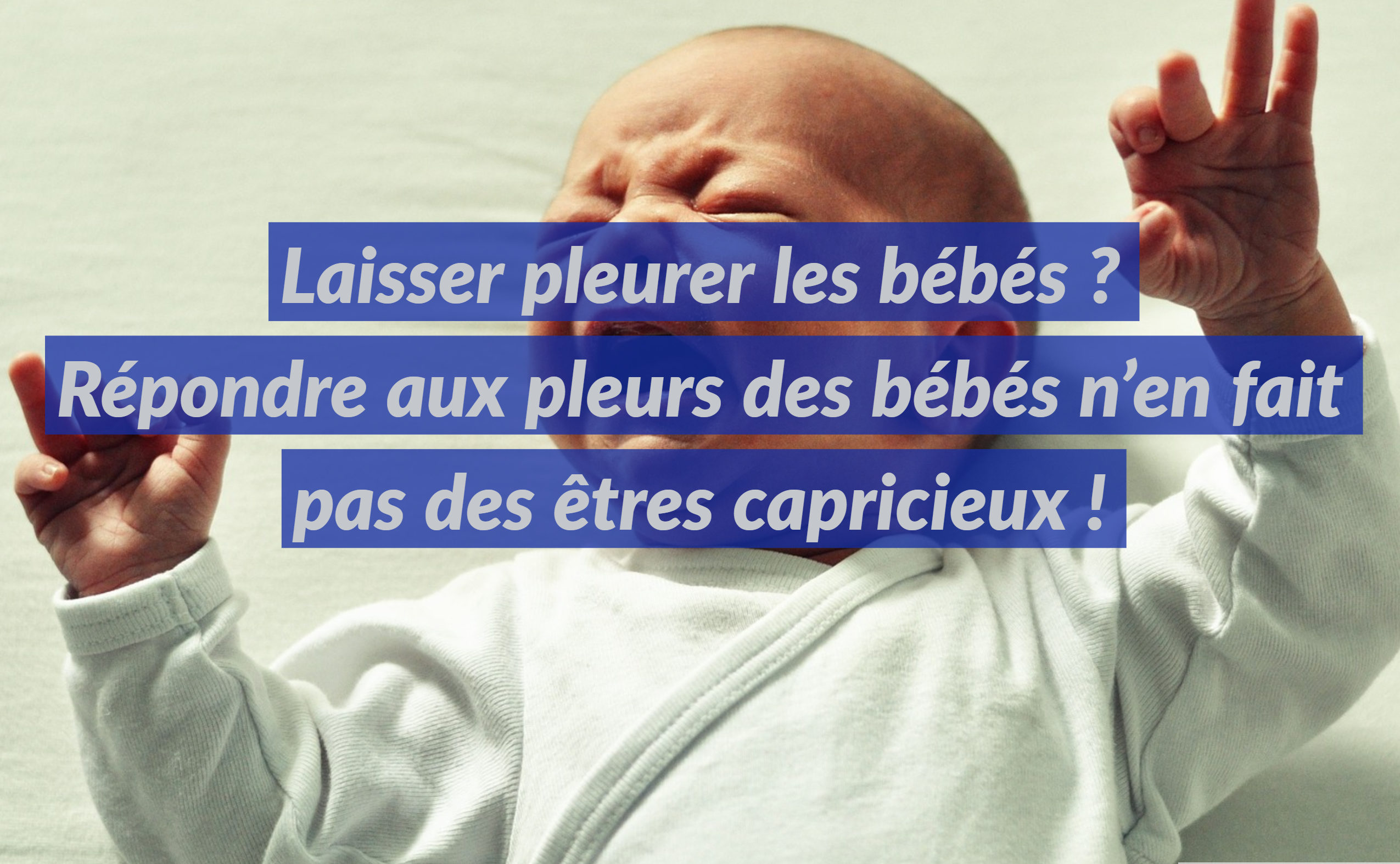
Responding to baby cries is one of the most debated topics in early parenting, and a stubborn set of beliefs still pushes some adults to let a newborn cry alone. Many parents and even childcare professionals still think that picking up a crying infant in the first months will "spoil" them, that answering every request will make them cry more, demand more, and turn their parents into slaves.
In this view, tears are either caprices or manipulation attempts, even power games initiated by the baby. Losing that game, the reasoning goes, means being devoured by children who become little kings or tyrants. This article looks at what the cries actually mean and why answering them builds health rather than bad habits.

Quick takeaways
- Newborn cries signal needs, discomfort, or pain, not manipulation.
- Babies cannot yet project into time or understand that you are busy.
- Adults are biologically wired to respond to infant crying.
- Responsive comforting supports stable temperature, breathing, and heart rate.
- Meeting needs early builds secure attachment, not capricious children.
- Comfort first, structure second, keeps routines humane and sustainable.
Why the "let them cry" belief still lingers
The idea that a baby should not be carried when crying rests on fear rather than observation. It assumes that a newborn is capable of plotting, calculating, and testing limits, which is far beyond what an infant's brain can do. Treated as a power struggle, every tear becomes a battle the parent must win to avoid lifelong manipulation.
Interestingly, many people who advise letting a baby cry are the same ones who rush to comfort a whimpering dog tied to a lamppost. As Dr Jack Newman points out, they read the animal's whining as a clear signal of need, yet refuse that same reading for a human baby. That contradiction is worth sitting with before deciding whether to walk away from a crying infant.
Baby cries carry a positive, vital motivation
Imagine lying alone on a bed, unable to get up, hungry, soiled, calling for food, for washing, for touch, and hearing no one come. As an adult you would feel distress, helplessness, and fear. A baby feels this multiplied, because he cannot yet project into time or into other people's minds to tell himself they are busy, tired, or asleep. For him, only the present exists, and it is an unhappy one.
Cries are designed to signal a need such as hunger, cold, or heat, a discomfort such as fear or a sense of abandonment, or a pain such as colic. A tiny baby has no words and cannot even point, so the cry is his main way to draw adult attention. When you meet a fundamental need, you restore his harmony; he feels no victory, only a kind of flourishing, like filling a car's tank so it can keep going.
The adult is wired to answer
Adults are, in a sense, programmed to respond to these cries. The stress they trigger raises blood pressure, sweating, and heart rate, contracts muscles, and creates an urge to solve the problem. A breastfeeding mother who hears her baby cry even experiences increased blood flow to her breasts, with a biological impulse to hold and feed.
| Belief | What it assumes | What actually happens |
|---|---|---|
| Letting baby cry builds character | Crying is a test or caprice | Baby experiences distress and helplessness |
| Picking up spoils the child | Baby learns to manipulate | Baby learns the world is reliable |
| Answering every cry creates demands | Baby keeps escalating on purpose | Needs are met, so the baby settles |
| Comfort creates dependence | Independence is lost | Security supports later exploration |
| Crying is a power game | Baby initiates control | Baby has no words, only signals |
Does answering cries make babies capricious?
No. A baby who is comforted learns that the world is reliable and that his signals matter, which is the foundation of secure attachment rather than manipulation. The newborn is not keeping score of who gave in; he is simply regulating himself through your presence. This is also why gentle daily routines help, from sleep on Twelfth Night to calm feeding and winding-down rituals.
Comfort is not the enemy of independence. Meeting needs generously in the early months gives a child a full tank from which to explore later, and it pairs well with practical care basics such as understanding bilirubin and newborns or choosing soft newborn clothes that keep a baby comfortable between feeds.
Health benefits of responsive comforting
According to the July 1996 Dossiers de l'allaitement, newborns who are mothered, meaning breastfed, carried, and comforted when they cry, show better and more stable temperature, oxygenation, heart rate, and breathing than babies left to cry in their crib. Their metabolic adaptation is faster, and they conserve energy that crying would otherwise burn.
This is why skin-to-skin contact and responsive holding are so often recommended in the first weeks. Parents who want to prepare a calm, responsive environment can look at tummy time toys for supervised awake play and toys for 9 month old babies as their little one grows, always keeping comfort as the priority over any schedule.

Building a responsive routine without fear
Responding to cries does not mean abandoning all structure. It means reading the signal first and the clock second. A simple rhythm of feed, hold, rest, and play helps parents feel organized while still answering needs promptly, and it prevents the exhaustion that makes tears harder to tolerate.
As babies grow, the same principle applies to screen time and stimulation; if you wonder when to step in, these tips on son hooked on TV offer a gentle framework. For families preparing a nursery, toys they no longer use can be rotated or passed on to keep the space calm, and prevent and eliminate lice becomes useful once older siblings bring friends home from school.
What parents can take away
Comforting a crying baby is not a concession in a power game; it is the answer to a vital signal. The fear of spoiling rests on beliefs about infant manipulation that do not match how a newborn's mind works. Respond with warmth, trust your instincts, and let the science of attachment, not the fear of caprices, guide your hands.
When you need a break, ask for help rather than leaving a distressed baby alone for long stretches, and remember that a parent who is supported can respond more patiently. Small, consistent acts of comfort build the trust a child carries for years.

My hands-on take
I remember the first weeks with my own baby, when every cry felt like a verdict on my parenting. A relative told me I would spoil him if I picked him up each time, and for a few nights I tried to wait it out. What I noticed was simple: he did not calm down, he escalated, and I felt worse. When I went back to holding him without hesitation, the evenings became shorter and calmer.
What helped most was dropping the scorekeeping. I stopped asking whether I was "giving in" and started asking what he might need: a feed, a change, warmth, or simply my chest. That shift made me more patient, not less, and it taught me that comfort is not a reward to be earned but a basic form of care.
Frequently asked questions
Will picking up my baby every time he cries spoil him?
No. In the first months, a baby cannot manipulate or plot; he cries because he has a need. Responding consistently builds trust and secure attachment rather than bad habits.
Why do people say letting babies cry makes them independent?
This belief assumes that comfort creates dependence, but early security actually gives children confidence to explore. A baby whose needs are met learns the world is safe.
How can I tell what my baby's cry means?
Cries can signal hunger, temperature, discomfort, fear, or pain. Over time you learn your baby's patterns, and responding promptly helps you read them faster.
Is it normal to feel stressed when my baby cries?
Yes. Adults are biologically wired to react to infant crying with rising heart rate and tension. That stress is a signal to act, not a sign of weakness.
Product Reviews
 Best Toys for Dogs With High Prey Drive |
Best Outdoor Toys for 3-4 Year Olds |
Best Outdoor Toys for 6 Year Olds |
Best Harness for Poodle |
Best LEGO Sets for Adults |
Best Travel Toys for 4 Year Olds on Airplane |
Best Toy Stores in Washington DC |
Best Potty Training Toys |
Best Toys for Tripod Dogs |
Maillot equipe de france







