


Raising children beyond good grades starts with one simple truth: kids need to feel accepted and, frankly, loved exactly as they are, seen for all their gifts rather than measured against a report card.
Those gifts can be drawing, climbing trees or caring for animals just as easily as solving maths problems or writing essays. When adults widen the lens, children stop performing for approval and start growing from a place of genuine curiosity.

Quick takeaways
- Accept children as they are, including gifts that never appear on a report card.
- Offer a rich, open environment paired with unconditional warmth.
- Let children take real initiative instead of following constant instructions.
- Skip punishment-and-reward systems that turn children into objects.
- Treat "difficult" children as the curious rebels a community needs.
- Remember that living is more than chasing good grades.
Open Environments and Warm Adults
In their book Tous les enfants sont doués (All Children Are Gifted), Gérald Hüther and Uli Hauser argue that it is not a natural law for children's curiosity and enthusiasm to decline throughout their schooling. Every child begins life equipped with a multitude of possibilities, and the role of education is to offer a rich, open environment in which children take pleasure in exploring and discovering.
That environment goes hand in hand with an attitude of unconditional acceptance from the adults around them. Warmth is not a reward for achievement; it is the ground children stand on while they grow. Parents who want to understand how differently children experience the world can reflect on how rich and poor child lives shape opportunity from the very start.
Some children arrive with an intensity that adults find hard to channel. If you are raising a child who seems to run on a different engine, these tips for gifted children can help you respond to their energy with curiosity instead of correction.
Room for Personal Initiative
Children need tasks and challenges that let them build their own skills. They do not learn to make decisions by following directives; they learn by taking personal initiative and by sensing what feels like a genuine "yes" inside them.
It is in children's nature to want responsibility, to contribute, to invest themselves and to live authentic experiences in which they make real decisions. That means experiences they choose, not prefabricated activities designed by adults to teach something considered important from the outside.
This requires freedom of movement, the chance to play freely without adult direction, and rich social interaction with children of the same age, younger ones, older ones and caring adults who serve as models to imitate. A generous collection of toy cars or a box of building blocks can support that free play far better than a scripted lesson, because the child decides what happens next. As this story reminds us, children also learn by imitating the adults around them. And when initiative leads outdoors, natural places can offer children room to explore and decide for themselves.
| Adult habit | What it teaches | What to try instead |
|---|---|---|
| Grading every discovery | Only marked things matter | Ask what excited them most |
| Constant instructions | Wait to be told what to do | Offer open-ended play |
| Reward and punishment | Act for prizes or out of fear | Invite real contribution |
| Irritation at questions | Curiosity is a nuisance | Explore the question together |
| Comparing with others | Your gift is not enough | Name their specific strength |
Beyond Punishment and Rewards
Hüther and Hauser challenge parents and teachers with a striking claim: children and teenagers flourish when they see that others genuinely need them in real life, not in artificial school situations, not in exchange for a reward, and certainly not out of fear of punishment.
Young people need to feel that their creativity is counted on to find new solutions, their commitment is counted on to put good ideas into practice, and their free collaboration matters day to day. This is the kind of experience that lets them recognise their own importance, their personal effectiveness and their contribution to the group.
By contrast, systems of punishment and reward, marks and rankings teach children from an early age that what they do is not a personal work. Children then come to experience themselves as objects rather than as beings capable of self-determination, with gifts, emotions, desires and personal impulses. When a child's need for warmth, a rich environment and initiative goes unmet, they suffer and look for ways to soothe that pain. This is the compensation phenomenon: video games, for instance, can become a substitute for human warmth and quality time with available, encouraging adults. If you are looking for alternatives to screens, a plan for teenagers can help you reconnect without a fight. Simple protecting children's backs habits can also support their wellbeing.
The Children We Call Difficult
Children's flourishing imagination fades when adults constantly issue instructions about what to do and, above all, what not to do, grow irritated by off-topic questions and become dream-breakers. It happens when a child's discoveries, real feats worthy of pride in their eyes, are minimised, relativised, compared, graded or even punished for disrupting a lesson.
The more a child conforms to what adults expect at school, the less they delight in what they can discover for themselves and, worse, the less they seek to discover anything at all. They stop trusting their own surges of enthusiasm, and therefore their emotions. Instead of following what brings them joy, they settle for learning what is on the syllabus.
Hüther and Hauser regret that few children and teenagers, those often labelled rebels, keep their original openness of mind. Some become "difficult", "impossible to educate", "insolent" and "stubborn", the ones others later say get on their nerves with their unbridled enthusiasm for everything still to be discovered about themselves and the world. Yet it is precisely these stubborn characters that every community needs if it does not want to sink into habits of thought worn smooth by routine. A child who asks endless questions may simply be showing the kind of early love of books that deserves feeding rather than shushing. Likewise, when relatives interfere or a child is troubled by thrush symptoms, patience matters more than correction.

Living Is More Than Chasing Marks
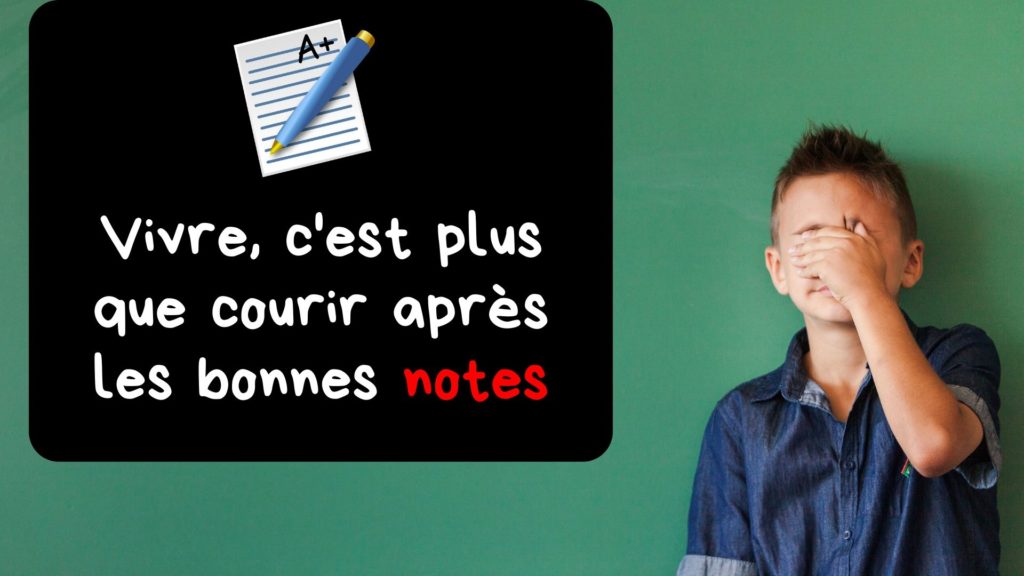
Living is more than chasing good grades. It is being seen, trusted and given something real to contribute. When a child's day is organised around warmth, freedom and meaningful responsibility, the marks tend to follow as a side effect rather than a purpose.
Practical steps help. Notice what lights a child up and protect time for it. Let them make decisions that carry small, real consequences. Invite their help with something that genuinely matters to the household. And resist the urge to grade every discovery.
None of this asks parents to abandon structure. It asks them to lead with relationship first, then expectations. A child who feels needed at home rarely needs to chase approval elsewhere, and a childhood spent exploring is one that keeps its curiosity intact for life.

My hands-on take
I remember the first time I stopped asking my child what they had scored and asked instead what had surprised them that day. The answer took a full minute, and it was about a snail on the playground wall, not a worksheet. That minute told me more about their mind than any mark ever had.
Since then I have tried to keep one rule: no grading the discovery. When my child builds something odd out of blocks or draws a creature nobody can name, I ask questions instead of offering a verdict. It is harder than it sounds, because the habit of evaluating runs deep in me. But the change in how freely they share ideas has been worth every awkward pause.
Frequently asked questions
Does this mean grades don't matter at all?
No. The point is that grades should not be the centre of a child's identity. When warmth, initiative and real responsibility come first, schoolwork usually finds its place without becoming the whole story.
How do I stop relying on rewards and punishments?
Start small by replacing prizes with genuine appreciation and consequences with conversation. Invite your child to help solve the problem rather than simply receiving a penalty.
Why do some children seem to lose curiosity at school?
Constant instructions, graded discoveries and irritation at questions can wear curiosity down. Children who keep asking and pushing back are often protecting something valuable.
What can I do at home this week?
Pick one activity your child loves and protect time for it without evaluating the result. Then ask them to help with something real, and thank them specifically.
Product Reviews
 Best Toys for Dogs With High Prey Drive |
Best Outdoor Toys for 3-4 Year Olds |
Best Outdoor Toys for 6 Year Olds |
Best Harness for Poodle |
Best LEGO Sets for Adults |
Best Travel Toys for 4 Year Olds on Airplane |
Best Toy Stores in Washington DC |
Best Potty Training Toys |
Best Toys for Tripod Dogs |
Maillot equipe de france







