


Resolving family conflicts peacefully starts with a simple idea: move from "battlefields" to cooperation. Two trainers in Nonviolent Communication, Sura Hart and Victoria Kindle Hodson, set out a step-by-step approach in their book on respectful parenting, and it works for adults and children alike.
The method asks everyone to slow down before solving anything. Instead of winning an argument, the goal is to understand what is really going on underneath the anger and to find ways to meet each person's needs. The six steps below follow their order exactly, with added practical guidance for using them at home.

Quick takeaways
- Pause before acting on anger, so you avoid words you would regret.
- Have a personal calm-down list ready: water, breathing, fresh air, a call.
- Name the emotion and the thoughts feeding it.
- Reframe the conflict as unmet needs rather than blame.
- Reconnect with your values and the example you want to set.
- Talk and seek solutions only once everyone is calm.
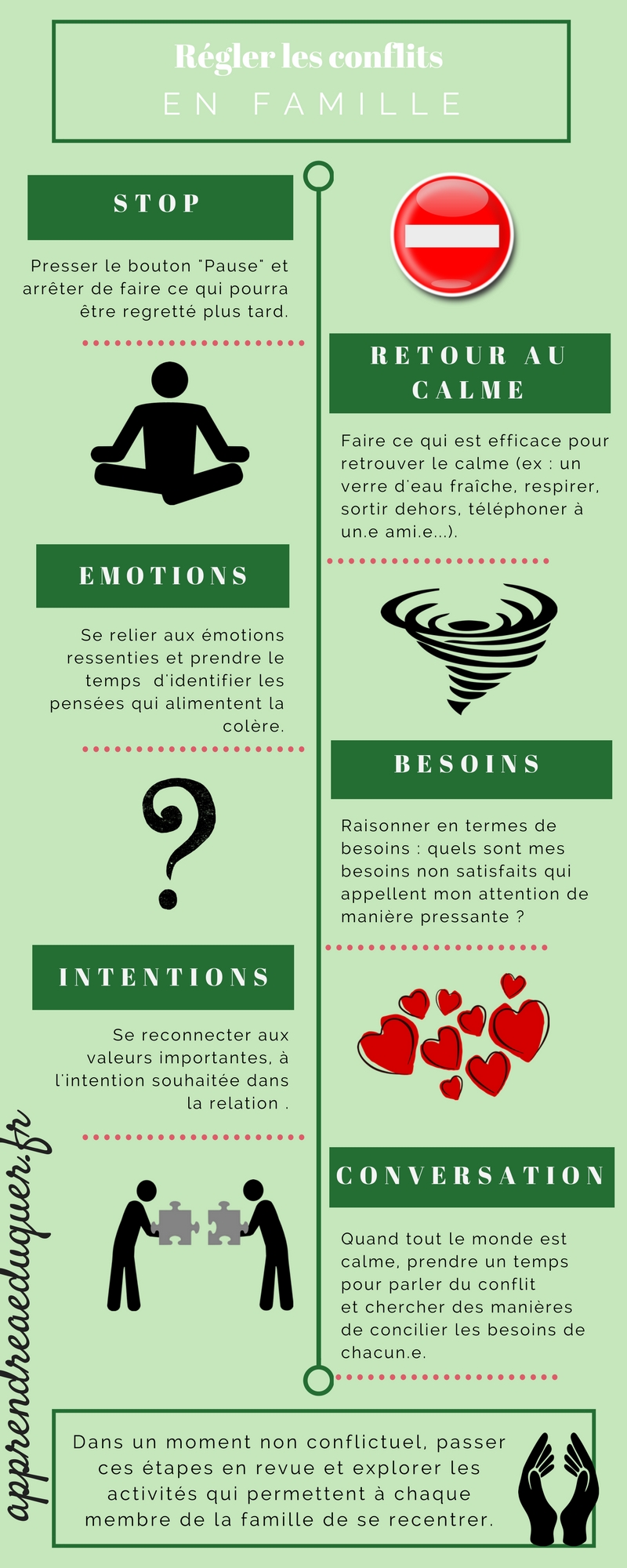
Step 1: Press the Pause Button
The first move is to stop doing whatever you might regret later. When a conflict heats up, words and gestures can escalate fast, and the pause interrupts that spiral before it causes damage. Pressing pause is not giving in or losing authority; it is choosing not to act from raw emotion.
In practice, this can be as simple as saying out loud, "I need a moment." Children learn a great deal from watching an adult name a limit and step back. If you want to understand why harsh reactions backfire, it helps to read about why slapping harms and the effects of normalized aggression, including the forms of aggression many adults overlook.
Step 2: Do What Helps You Find Calm
Once you have paused, the next task is to actually return to calm, using whatever works for you. The authors suggest concrete options: a glass of cold water, slow breathing, stepping outside, or calling a friend. The point is to have a short list ready before you need it.
Children need their own version of this list, and it is worth building it together during a peaceful moment. Some children settle with movement, others with quiet. A calming routine can sit alongside other everyday rituals, much like the shared preparation in a gingerbread recipe or the anticipation of Santa's visit around the world.
| Step | What you do | Why it helps |
|---|---|---|
| 1. Pause | Stop and say "I need a moment" | Prevents regretful words |
| 2. Calm | Water, breathing, going outside | Lowers emotional heat |
| 3. Emotions | Name feelings and thoughts | Reduces anger's grip |
| 4. Needs | Ask what need is unmet | Turns blame into a problem to solve |
| 5. Values | Recall your intention and example | Gives the conflict direction |
| 6. Talk | Discuss and reconcile needs | Builds cooperation, not victory |
Step 3: Connect to Emotions and the Thoughts Behind Them
Next, turn inward and notice what you actually feel, then take time to identify the thoughts feeding the anger. Anger rarely appears alone; underneath it there is often fear, disappointment or a sense of unfairness. Naming the emotion and the thought behind it already reduces its grip.
This is a skill children build gradually, and adults can model it by speaking their inner weather aloud. For families supporting a child with different communication needs, resources such as interacting with autism can help adapt the conversation. Reading together also opens the door to talking about feelings, and a collection of digital books can make that easier.
Step 4: Think in Terms of Needs
This step shifts the question from "who is wrong?" to "what need is asking for my attention so urgently?" Unmet needs, such as rest, respect, safety or autonomy, are what make a conflict feel so pressing. Reframing the problem as a need makes it far easier to solve.
When you identify your need, you can also guess at the other person's. A tired child and a tired parent are usually asking for the same thing. Practical routines, from a calm bath toys wind-down to predictable newborn care, reduce the pressure that turns small needs into big clashes.

Step 5: Reconnect With Your Values and Intentions
Before speaking, the authors invite parents to reconnect with what matters: the values they want to live by, the intention they hold for the relationship, what they hope to teach, and the example they want to set. This step gives the conflict a direction beyond winning.
Asking "what do I want my child to remember from this moment?" often changes the tone entirely. It is the same long view that guides choices about newborn clothes or a child's first baby shower gift: we are building something over time, not just handling today.
Step 6: Talk Together Once Everyone Is Calm
Only when everyone is calm does the actual conversation happen. Take time to discuss the conflict and look for ways to reconcile each person's needs, so the solution belongs to the whole family rather than being imposed. This is where cooperation replaces the battlefield.
The authors also recommend setting aside time outside of conflict to review these steps and to explore activities that help each family member recenter. Keep the method visible, for example on a fridge memo, so it is within reach in hard moments. Play can support this too, whether through fine motor toys or 10 Best Outdoor Toys that let energy settle.

My hands-on take
I started using the pause step during the most ordinary flashpoints, usually the ten minutes before dinner when everyone is tired. Saying "I need a moment" out loud felt awkward at first, but it stopped me from snapping more times than I can count. My children now sometimes say it themselves, which was never the plan but is a welcome surprise.
What helped most was writing our calm-down options on a small card and sticking it on the fridge. In the middle of a conflict nobody remembers the theory, but everyone can read a short list. I also review the steps with my children on quiet weekends, not during arguments, and that small habit has made the whole method feel less like a rule and more like something we do together.
Frequently asked questions
Does pausing mean I am letting my child win?
No. Pausing is about not acting from raw emotion; it protects the relationship and keeps your authority intact. You return to the conversation once everyone is calm.
What if my child refuses to calm down?
Start with yourself, since your calm often spreads. Offer a simple choice such as water, fresh air or a quiet corner, and wait rather than forcing the process.
When should we talk about the conflict?
Only once everyone is calm, which may be later the same day. A short, focused conversation is more useful than a long one held in the heat of the moment.
Can young children use these steps?
Yes, in simplified form. Children can learn to name a feeling and pick a calming activity, especially if adults model the steps regularly.
Product Reviews
 Best Toys for Dogs With High Prey Drive |
Best Outdoor Toys for 3-4 Year Olds |
Best Outdoor Toys for 6 Year Olds |
Best Harness for Poodle |
Best LEGO Sets for Adults |
Best Travel Toys for 4 Year Olds on Airplane |
Best Toy Stores in Washington DC |
Best Potty Training Toys |
Best Toys for Tripod Dogs |
Maillot equipe de france







