


Gentle parenting without spanking is a real skill, not a personality trait, and it can be learned step by step. Many parents know they want to stop shouting or smacking but feel lost about what to do instead when a toddler refuses to brush their teeth or a preschooler melts down at dinner. A free downloadable guide written by a conscious-parenting trainer offers exactly that: concrete, everyday alternatives rather than vague theory.
The document first dismantles the idea that educational violence is legitimate. It looks at the damage ordinary educational violence does to children, and it places those everyday reactions back inside a personal, family and social history. From there, it moves to practical tools: creative solutions for daily challenges and simple keys for taming parental anger before it turns into violence.

Quick takeaways
- Ordinary educational violence is common and often invisible; naming it is the first step to change.
- Creative, playful solutions work better than pressure for tooth brushing, meals and other routines.
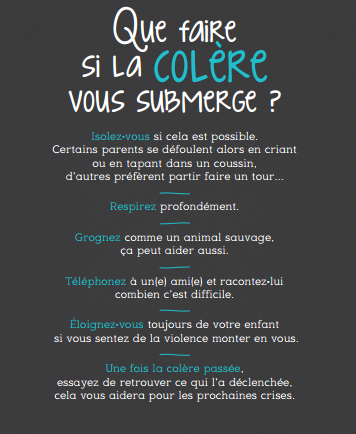
- Five anger keys: step away, breathe, imitate an animal, call for support, explore the trigger.
- A rich bibliography helps parents understand the mechanisms behind violent reactions.
- Small, repeated pauses matter more than one perfect response.
- Support from a partner or friend makes calm parenting far more achievable.
Why ordinary educational violence deserves a closer look
Most parents who smack or yell do not see themselves as violent. The guide names this gap: ordinary educational violence is so common that it slips under the radar, presented as a normal part of raising children. Naming it is the first step toward changing it.
The document does not stop at blaming parents. It recontextualises these reactions within a culture and a personal history, so the parent can understand where the impulse comes from instead of simply feeling guilty. That framing matters, because shame rarely produces lasting change, while understanding often does.
This is also why the guide pairs so naturally with broader reflections on how we communicate with children, such as parental support and the way child development myths shape our expectations of what a young child can actually do.
Creative solutions for everyday challenges
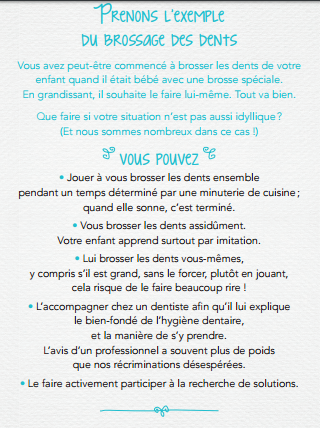
Beyond preventing spanking, the guide is packed with creative examples for handling daily friction with young children. Tooth brushing and mealtimes are the two examples it highlights, because these are the moments where power struggles most often escalate.
The underlying idea is to turn a demand into a game, a story or a shared task. A child who refuses a toothbrush may cooperate happily if the brush becomes a little character, or if the parent brushes alongside them. The same logic applies at the table, where pressure usually backfires and playful involvement often works.
Play is not a reward for good behaviour; it is the language young children use to process cooperation. Parents who want more ideas in this direction can explore recycled costume crafts for imaginative play sessions, or browse learning toys that keep little hands busy while routines happen around them.
Keeping the tone light
Humour defuses more standoffs than warnings do. If you feel yourself tightening, a silly voice or an unexpected joke can reset the whole scene.
| Key | What it looks like | Why it helps |
|---|---|---|
| Step away | Physically leave the room for a moment | Creates distance before you react |
| Breathe | Slow, deliberate breaths | Settles the nervous system |
| Imitate an animal | A silly sound or movement | Breaks tension and often makes children laugh |
| Phone a friend | Call someone for support | Anger shrinks when spoken aloud |
| Explore the trigger | Reflect afterwards on what set it off | Makes the pattern visible and easier to interrupt |
Keys for taming your own anger
The guide offers practical keys so that parental anger does not degenerate into violence. The first is to isolate and step away: putting physical distance between you and the trigger gives your nervous system a chance to settle before you act.
The second is to breathe, deliberately and slowly, which is simple but genuinely effective in the moment. The third is playful and surprisingly useful: imitate an animal, which breaks the tension in your own body and often makes a child laugh instead of freeze.
The fourth key is to phone someone for support, because anger thrives in isolation and shrinks when spoken aloud. The fifth is to explore, afterwards, what triggered the violence in the first place, so the pattern becomes visible and easier to interrupt next time.
These strategies echo the longer work of managing parental anger over a lifetime, and they sit well alongside everyday care decisions, from childhood ear infections to sunburn risk on cloudy days, that already ask parents to stay calm and observant.
Building a support network around gentle parenting
No parent manages this alone. The guide's generous bibliography is described as a precious support for going further into the mechanisms of ordinary educational violence and for embodying other ways of accompanying children.
Reading is one pillar; the people around you are another. Sharing the load with a partner, a friend or a grandparents' circle makes calm responses far more achievable on hard days. Practical preparation helps too: a well-stocked bag, a snack ready before hunger hits, or a simple healthy snack idea can prevent a meltdown before it starts.
It also helps to remember that children's needs shift constantly. Understanding early pregnancy symptoms or reading about newborn health research reminds us how much development happens before a child can even speak, and how much patience that development deserves.
Making the shift stick, day after day
Change rarely happens in one dramatic moment. It happens in small repetitions: one pause before reacting, one game instead of one threat, one phone call instead of one outburst. The guide's strength is that it treats these as learnable habits rather than moral tests.
Expect setbacks and treat them as information rather than failure. A parent who reflects on a difficult evening is already doing the work the document describes. Over time, the alternatives become the default rather than the exception.
Finally, keep the bigger picture in view. The goal is not perfect behaviour from your child, but a relationship in which they feel safe, respected and able to cooperate because they trust you, not because they fear you.

My hands-on take
I remember the first evening I tried the "step away" key. My daughter was refusing her toothbrush for the third night in a row, and I could feel my voice climbing. Instead of pushing, I walked to the kitchen, breathed slowly, and came back with the brush turned into a little character that "needed help". She laughed and opened her mouth. It felt almost absurdly simple, and that is exactly why it stuck with me.
What I have learned since is that the hard part is not knowing the tricks, it is remembering them in the moment. So I keep a short list on the fridge: step away, breathe, be silly, call someone. Some days I manage all four. Other days I manage none, and I try to treat those as information rather than failure. The shift is gradual, but it is real.
Frequently asked questions
What can I do instead of spanking when my child refuses to cooperate?
Turn the demand into a game, a story or a shared task. The guide highlights tooth brushing and mealtimes as moments where playful involvement works far better than pressure.
How do I stop myself from shouting when I feel anger rising?
Step away physically, breathe slowly, and if needed call someone for support. Afterwards, reflect on what triggered the reaction so the pattern becomes easier to recognise.
Is this approach about letting children do whatever they want?
No. It is about setting limits without violence, and about understanding what a young child is developmentally able to do. Respect and firm boundaries can coexist.
Where can I learn more about non-violent education?
The guide ends with a substantial bibliography on the mechanisms of ordinary educational violence. Reading it is a good starting point for embodying other ways of accompanying children.
Product Reviews
 Best Toys for Dogs With High Prey Drive |
Best Outdoor Toys for 3-4 Year Olds |
Best Outdoor Toys for 6 Year Olds |
Best Harness for Poodle |
Best LEGO Sets for Adults |
Best Travel Toys for 4 Year Olds on Airplane |
Best Toy Stores in Washington DC |
Best Potty Training Toys |
Best Toys for Tripod Dogs |
Maillot equipe de france







