


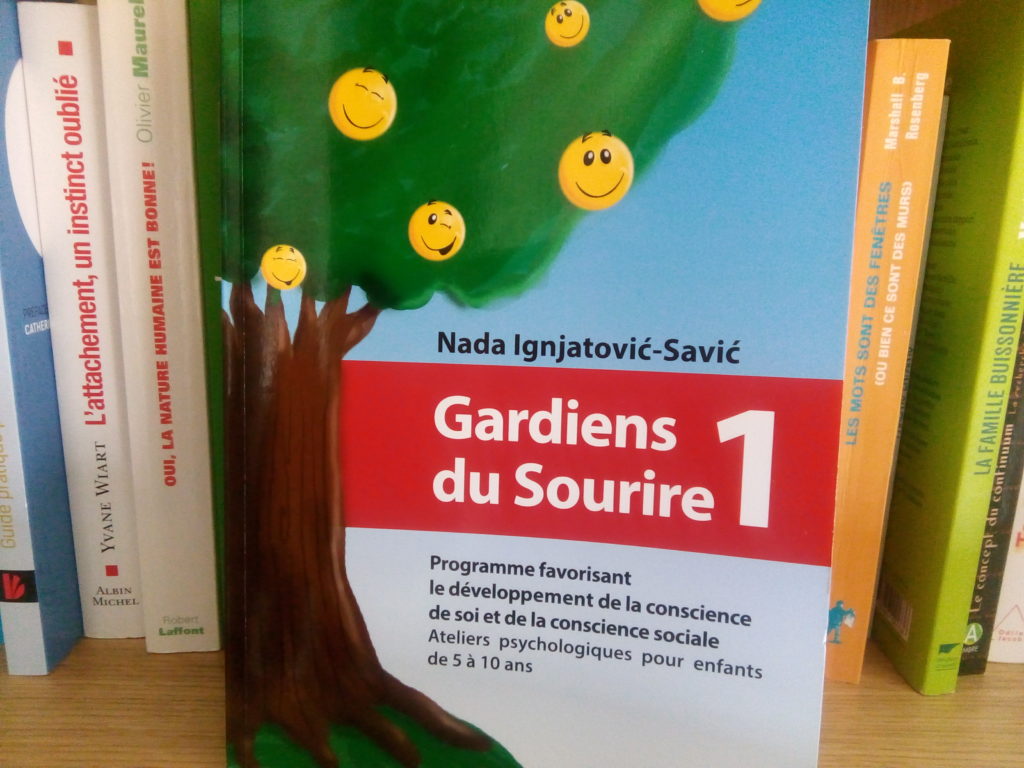
An emotional development program for children can feel abstract until you see it laid out as a real, ready-to-use sequence of activities. This guide presents exactly that: a structured set of 32 progressive workshops designed to help children aged roughly 5 to 10 build emotional intelligence, handle uncomfortable feelings, and move through conflict without violence.
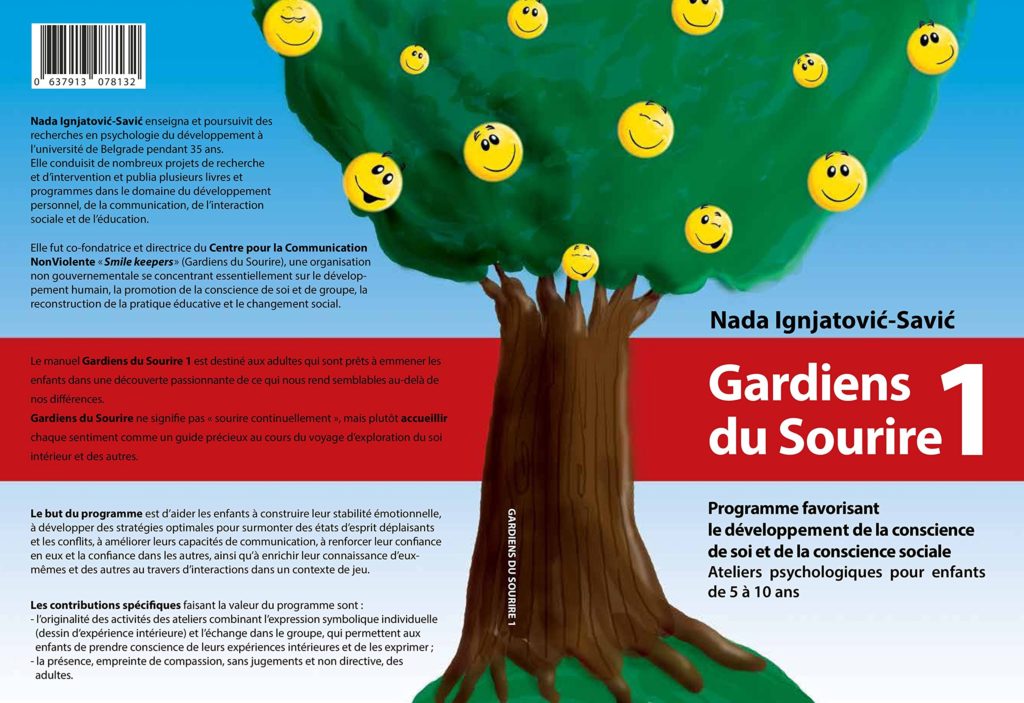
The approach is gentle and creative, relying on play, drawing, movement and conversation rather than lectures. Children are treated as active participants, while the adult's job is to hold a climate of trust and acceptance, free of judgement and criticism. It was developed by a psychologist with decades of teaching and research experience in developmental psychology.

Quick takeaways
- The program is a ready-to-use sequence of 32 progressive workshops for children roughly 5 to 10.
- It is grounded in Marshall Rosenberg's NonViolent Communication model.
- Goals include emotional intelligence, handling unpleasant emotions, nonviolent conflict and assertiveness.
- Each workshop lasts about an hour, for groups of 10 to 20 children, weekly.
- Activities use drawing, verbal exchange and movement; children are active participants.
- A second volume follows the same model for children aged 11 to 15.
What This Emotional Development Program Is Built On
The theoretical backbone of the program is the NonViolent Communication model as conceptualised by Marshall Rosenberg. Every activity is organised progressively, so each workshop rests on the skills practised before it and adds something new. The result is a genuine step-by-step curriculum rather than a loose collection of games.
The stated goals are practical. Through playful interaction, children work on building emotional intelligence, developing strategies to tame unpleasant emotions, crossing through conflicts without violence, and promoting assertiveness and communication skills. Underneath all of it sits the quieter aim of strengthening self-confidence and confidence in others.
The adult's role
Adults are not instructors delivering content but hosts creating conditions. Your responsibility is to build an atmosphere of trust and acceptance, without judgement or criticism, so children feel safe enough to speak honestly. That same respectful tone is worth carrying into daily family life, much like the reassuring language in these positive sleep phrases that help a child feel secure, or the shared calm of watching movies together.
How the 32 Progressive Workshops Are Organised
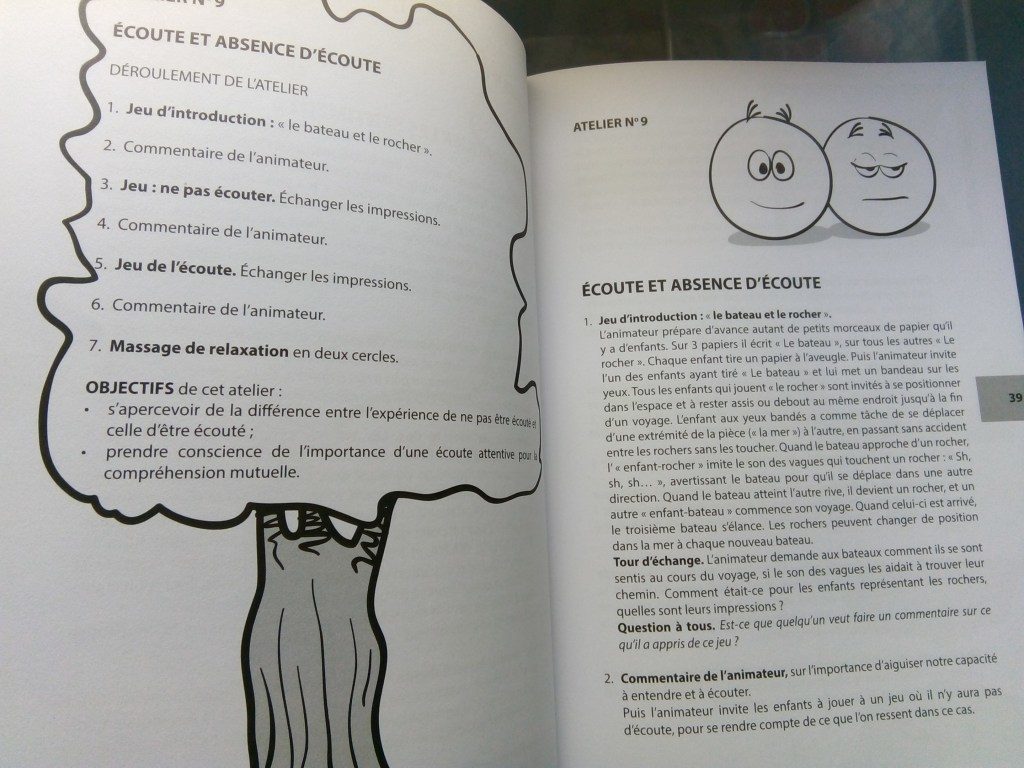
Activities take varied forms: drawing, verbal exchange, movement and group discussion. Each workshop lasts about one hour and works best with a group of 10 to 20 children maximum, on a weekly rhythm. That pacing gives children time to absorb a skill before the next layer is added.
Workshop one is an introductory meeting, purely about creating connection between participants and the facilitator, and among the children themselves. Workshop two moves into self-awareness through names. In the starting activity, the "circle of names", children stand in a ring; one child says their first name and something they like, and the next child repeats that and then introduces themselves, and so on around the circle.
Skills that follow
Later sessions introduce a personal relaxation place, expressing feelings with a focus on each emotion (sadness, anger, fear, love), communication and misunderstandings, cooperation, conflict and friendship. A second volume follows the same model for older children aged 11 to 15. Group games like these sit naturally alongside the kind of play you'll find in Montessori toys that reward focus and independence. Just as motherhood reshapes priorities, these sessions put the child at the centre, and like introducing cereals step by step, each workshop builds gradually.
| Element | Detail | Practical note |
|---|---|---|
| Age range | Roughly 5 to 10 years | Older volume covers 11 to 15 |
| Number of workshops | 32 progressive sessions | Each builds on the last |
| Session length | About one hour | Keep it consistent weekly |
| Group size | 10 to 20 children maximum | Smaller groups ease sharing |
| Core methods | Drawing, talk, movement | Vary the format each time |
| Adult role | Create trust, no judgement | Model acceptance, don't instruct |
A Closer Look at the Circle of Names Activity
The circle of names is worth understanding because it shows how the whole program works. One child begins: "My name is Caroline and I like chocolate." The child to her right repeats Caroline's name and taste, then presents herself in turn. Each child repeats the name and statement of the child before them before adding their own.
It looks simple, but it trains listening, memory and attention to others, and it does so while every child is named and acknowledged. Nobody is anonymous in the circle, which is precisely the point. For a group of children still getting to know each other, this kind of structured sharing removes pressure.
Why repetition matters
Repeating a classmate's words is an early, concrete form of empathy: I hold something of yours before I offer something of mine. If you want to extend that spirit of belonging beyond the group, these ideas on diversity in families help children see that different homes and different names are all normal and worth respecting.
Handling Emotions, Conflict and Friendship
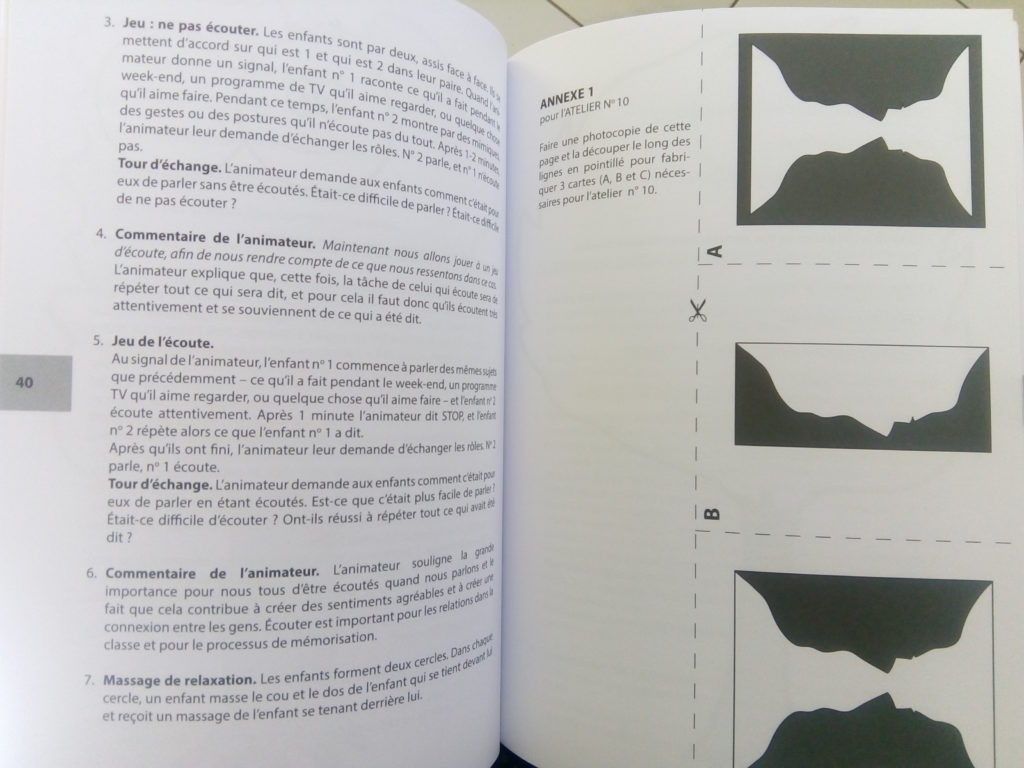
Once children can name themselves and listen, the program moves into feelings. Sessions focus on one emotion at a time, giving sadness, anger, fear and love room to be described rather than suppressed. Children also identify a personal relaxation place they can return to when things feel intense.
From there the work turns relational: communication and misunderstandings, cooperation, conflict and friendship. The aim is not to eliminate conflict but to cross through it without violence, using words and self-assertion instead. These are the same everyday skills parents model at home, whether during a difficult bedtime or a tense morning routine.
Keeping it playful
Because the format is drawing, movement and exchange, children stay engaged without feeling assessed. You can borrow the same principle at home: keep practice short, playful and regular rather than heavy. Even choosing a small party favor toy or a shared game can become a low-stakes excuse to practise taking turns, naming feelings and repairing small disagreements.
Adapting the Program at Home or in a Group
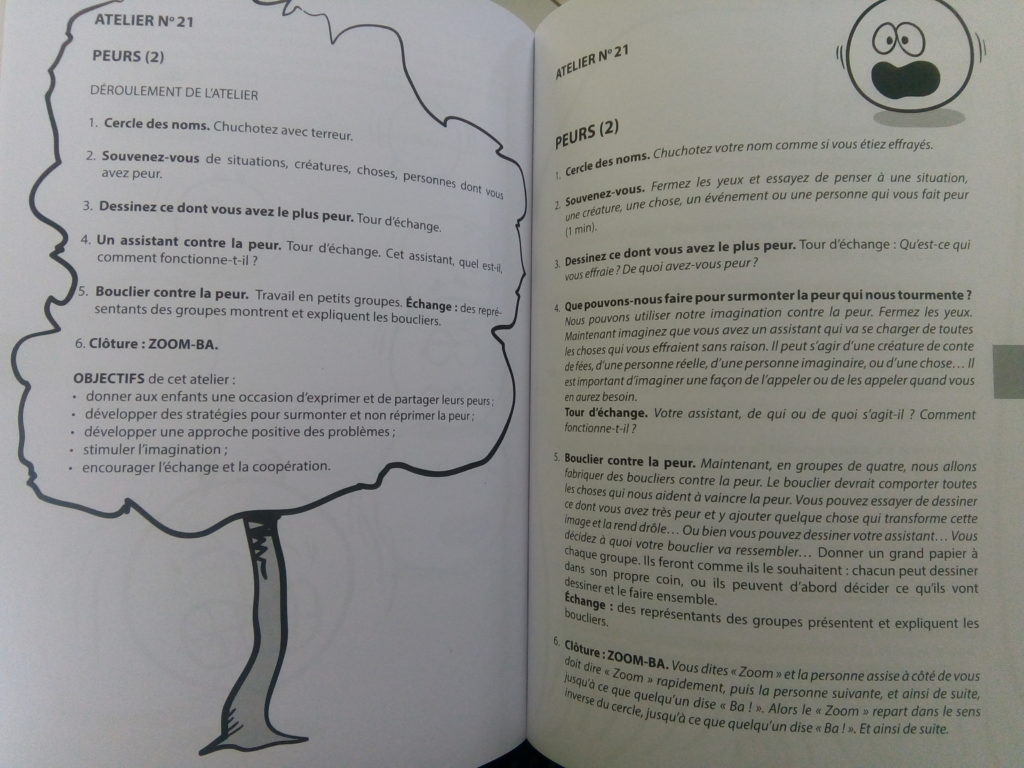
You don't need to be a trained facilitator to use these ideas. Start with connection before content: an introductory round where everyone says their name and one thing they enjoy sets the tone. Keep groups small, keep sessions to about an hour, and keep the weekly rhythm so skills have time to settle.
Prepare simple materials in advance, such as paper and crayons for drawing feelings, and a consistent space where the group meets. Predictability supports the sense of safety the program depends on. If you're running sessions in a community setting, organising supplies in labelled boxes works much like the tidy systems in these LEGO storage containers that keep small parts sorted and ready. When questions about bodies come up, it helps to know how to respond calmly.
What to watch for
Some children will open up quickly and others will stay quiet for several sessions. Both are fine. Your consistency, not their speed, is what builds trust. Resist the urge to correct a child's description of a feeling; accept it, then gently explore it together. Remember that listening to elders can model patience too.

My hands-on take
I tried the circle of names with a small group of children I look after, and I was surprised by how much it changed the mood. The first round was giggly and messy, with several children forgetting whose turn it was. By the third week, they were prompting each other kindly and waiting patiently, and one shy child who barely spoke at first was leading the circle.
What I took from it is that the structure matters more than the content. Keeping the session to about an hour, ending before anyone was tired, and never correcting a child's description of a feeling made the biggest difference. I also learned to prepare the drawing materials before the children arrived, because hunting for crayons mid-session breaks the atmosphere you've worked to build.
Frequently asked questions
Who is this program designed for?
It is written for teachers, educators and anyone who wants to support children's emotional and social development through play, drawing and conversation. Parents can borrow the activities too, even without formal training.
How long does each workshop take?
Each session runs for about one hour, with groups of 10 to 20 children maximum, ideally on a weekly rhythm. That spacing lets children practise a skill before the next one is introduced.
Do children need any prior skills?
No. The program starts with an introductory meeting to build connection, then moves gradually into self-awareness, feelings, communication and conflict. Each workshop relies only on what came before it.
Is there a version for older children?
Yes, a second volume follows the same model and is aimed at children aged 11 to 15. The structure and philosophy stay the same while the activities suit an older group.
Product Reviews
 Best Toys for Dogs With High Prey Drive |
Best Outdoor Toys for 3-4 Year Olds |
Best Outdoor Toys for 6 Year Olds |
Best Harness for Poodle |
Best LEGO Sets for Adults |
Best Travel Toys for 4 Year Olds on Airplane |
Best Toy Stores in Washington DC |
Best Potty Training Toys |
Best Toys for Tripod Dogs |
Maillot equipe de france







