


School bullying rarely starts with one cruel child; it grows out of group dynamics that any of us can fall into. Understanding how a group selects a scapegoat, and why bystanders join in, is the first step toward breaking the cycle.
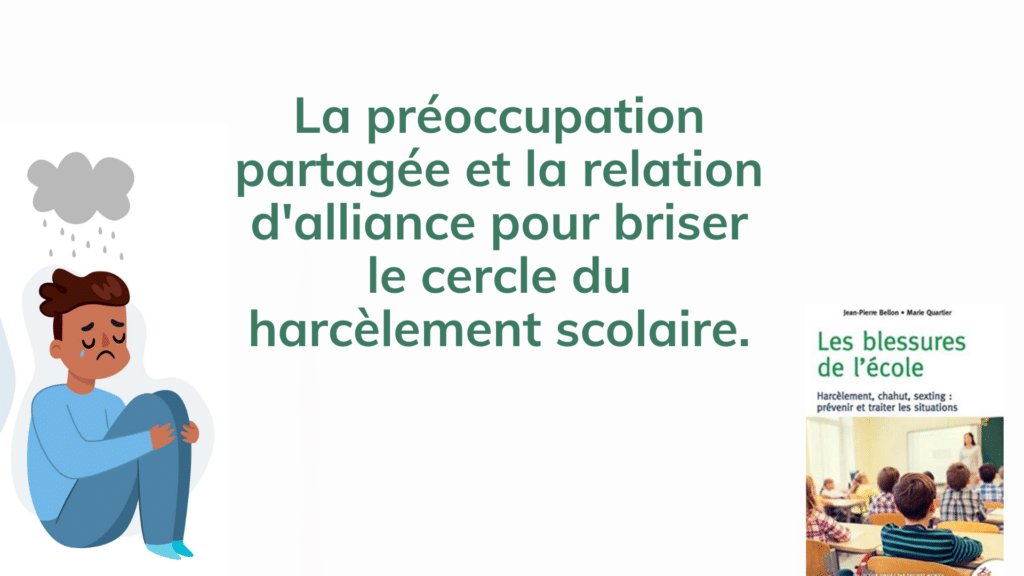
Two ideas from French educational practice help here: the shared concern method and the alliance relationship. Both shift the focus from punishing individuals to repairing the group, and both give parents and teachers practical handles.

Quick takeaways
- Bullying grows from group dynamics, not just individual cruelty
- Mimetic desire explains why followers join in without realising
- Crisis and weak authority make scapegoating more likely
- Targets are often the weakest or the most different
- Shared concern treats bullying as a group problem to solve
- The alliance relationship keeps children talking to adults
How groups create a scapegoat
Drawing on the work of René Girard, authors Jean-Pierre Bellon and Marie Quartier argue that school life itself can generate intimidation. Girard described mimetic desire: humans rarely want a specific object for its own sake, but instead want what others want. Desire is fundamentally imitative, and we copy what the group treats as desirable, much as children absorb the lessons of games about equality.
Girard also studied the scapegoat. Under certain conditions, a group designates an expiatory victim inside its own ranks, turning the threat of "all against all" into a coalition of "all against one." That designation has a social function: it protects the group from its own violence. This is the hidden engine behind much of what we see as creative development gone wrong in a playground, and it echoes the group dynamics found in stories about autumn.
Why crisis makes it worse
Scapegoating flourishes in situations of crisis, when institutions weaken and stop playing their role. In a school, weakened institutional authority tends to create waves of bullying. Humans are pushed by a "dark force" to merge with others' desires, and sometimes the group's desire is to exclude one member to protect itself.
Why followers join the bullying
Bellon and Quartier explain that follower students, who do not start the intimidation but fail to defend the target and sometimes laugh or join in occasionally, are obeying an archaic automatism they are not aware of: mimetic desire. It makes sense that children lack the strength to oppose or confront an entire group they belong to. Few adults manage that either.
Girard notes that the best way to make friends in an unfriendly world is to embrace the group's enmities, to adopt the enemies of others. The message never varies much: we are one clan, one group, because we share the same scapegoat. Any child can end up involved at some level, as target, bully, or silent witness, which is worth remembering when we talk about infant development and early social habits. The same group dynamics shape how children play together, which is why choosing suitable small mammals or party favor toys for shared activities can gently encourage cooperative rather than exclusionary behavior.
| Approach | Focus | Typical action |
|---|---|---|
| Punitive response | Identifying and sanctioning the bully | Investigation, punishment, exclusion |
| Shared concern | Repairing the group | Short individual talks, small commitments |
| Alliance relationship | Trust between adult and child | Listening, naming the problem, agreeing a step |
| Whole-school prevention | Clear rules and adult presence | Visible supervision, consistent expectations |
The target is not chosen at random
Bellon and Quartier stress that the weakest member of the group is often designated, but so is the one who differs most from the group norm: character, behaviour, habits. Girard puts it plainly: the further you move from the most common social status, in either direction, the higher the risk of persecution.
This matters for parents. A child who stands out, whether through shyness, unusual interests, or simply being new, may be more exposed. Building small, reliable friendships early, through shared play and quiet toys or group activities, gives a child a buffer before trouble starts.
Expecting intimidation is not pessimism
Anticipating that school will generate some intimidation is a healthy stance. It means adults watch the group, not just the individual, and intervene before a scapegoat is fixed in place.
What the shared concern method changes
The shared concern approach, developed in the same tradition, treats bullying as a group problem rather than a crime to be punished. Instead of interrogating and sanctioning the bully, a trained adult holds short individual conversations with each member of the group, including the target. Each student is invited to propose one small thing they could do to improve the situation.
The adult does not accuse. They express concern, share responsibility, and follow up in later meetings to check progress. This removes the audience bullies depend on and turns followers into potential allies. It is a quiet, patient method, closer to teaching routines than to a courtroom.

What the alliance relationship adds
The alliance relationship is the bond an adult builds with a child so the child feels heard rather than judged. In practice it means listening without immediate blame, naming the difficulty, and agreeing on a next step together. When a child trusts the adult, they are far more likely to report what is happening and to accept help.
For parents, this translates into daily habits: ask open questions about school life, stay calm when your child describes something uncomfortable, and avoid rushing to punish. A child who feels allied with you will tell you more. Pair that with relaxed time together, whether cooking, reading art books, or simply chatting, and the door stays open.
Rebuilding the group
Restoring institutional authority, clear rules, and visible adult presence does more than any single sanction. A school that regulates its own group life removes the conditions scapegoating needs.
Practical steps for parents and teachers
Start by watching the group, not just your child. Notice who sits alone, who is laughed at, and who leads the laughter. Raise it early with the school, before roles harden.
At home, build your child's confidence and social circle through simple shared activities, from fidget toys for anxious hands to board games that teach turn-taking. Encourage your child to be the one who speaks up kindly, and model that yourself.
Finally, remember that most followers are not cruel; they are scared. The shared concern method works because it gives them a face-saving way to change. That same patience, applied at home, helps a child recover after being targeted.

My hands-on take
When my own child came home quiet and withdrawn, my first instinct was to demand names and punishments. It took a calmer conversation, a few days later, to learn that the real problem was a group that had quietly decided who to laugh at. Once I stopped accusing and started listening, my child told me far more.
What helped most was small and ordinary: keeping the door open, asking about the group rather than the incident, and letting my child suggest one thing to try. That small sense of control did more than any lecture I could have given.
Frequently asked questions
What is the shared concern method?
It is an approach where a trained adult holds short, non-accusatory talks with each member of the bullying group, including the target. Each student suggests one small action to improve things, and follow-up meetings check progress.
Why do bystanders join in bullying?
According to mimetic desire theory, children copy what the group values, and belonging often means sharing the group's enemies. Followers may not be aware they are doing this, and few adults would resist a whole group either.
Who gets targeted?
Often the weakest member of the group, or the one who differs most from the group norm in character, habits, or status. Standing out in either direction raises the risk.
Can parents prevent bullying?
Parents can build their child's friendships and confidence early, stay calm and open when their child talks, and raise concerns with the school before roles harden.
Product Reviews
 Best Toys for Dogs With High Prey Drive |
Best Outdoor Toys for 3-4 Year Olds |
Best Outdoor Toys for 6 Year Olds |
Best Harness for Poodle |
Best LEGO Sets for Adults |
Best Travel Toys for 4 Year Olds on Airplane |
Best Toy Stores in Washington DC |
Best Potty Training Toys |
Best Toys for Tripod Dogs |
Maillot equipe de france







