


Transactional Analysis offers a clear lens on bad faith and manipulation, and one of its most useful ideas is the psychological stamp. A stamp is a metaphor for a feeling we did not manage, could not, or dared not express: a silent resentment, frustration, anger, disgust or sense of injustice stored up during a mind game.
In Transactional Analysis, a game rests on the roles of Persecutor, Saviour and Victim. It produces a moment of mental and emotional confusion, built from hidden, unconscious messages aimed at a weak point in the other person and ending in a hidden payoff for the players.

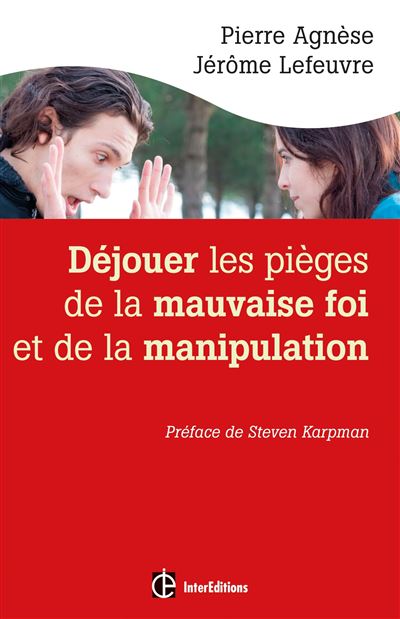
This article unpacks how stamps accumulate, why they make us prickly and reactive, and the five parades the authors Pierre Agnèse and Jérôme Lefeuvre recommend to stop biting the hook.
Quick takeaways
- Psychological stamps are unexpressed feelings stored during mind games
- Games rest on Persecutor, Saviour and Victim roles and end in a negative payoff
- Stored stamps make us reactive, moody and prone to more games
- Silence creates space and can disarm a Player before you respond
- Asking a neutral question beats defending yourself against an attack
- Saying the feeling to the right person at the right time empties the stamp book
What Are Psychological Stamps in Transactional Analysis?
Psychological stamps are the accumulated resentments, frustrations, anger, disgust and injustice we feel during a mind game but never voice. They are the unsaid things, the feelings we did not know how, were unable, or did not dare to express.
A game begins when one player takes on a role after being invited into it by another. Accepting the invitation, and answering as Persecutor, Saviour or Victim, means denying responsibility. Psychological dramas tighten when players switch roles mid-game, sliding from Persecutor to Victim, for example.
Everyone Loses, but the Game Still Pays
Everybody loses, yet the point of the game is not to win. It is to confirm a negative belief about oneself, life or other people, which Transactional Analysis calls the negative payoff. The first player to lose sticks a stamp in their stamp book, feeling entitled to play another game later, and the other player collects one too. Stored in those books, the stamps stay with us.
How Collected Stamps Shape Your Mood
Stamps keep us in a state of psychological or emotional discomfort and hold us in unpleasant moods and recurring games. Irritability follows unexpressed anger, anxiety follows unexpressed fear, melancholy follows unexpressed sadness, contempt follows unexpressed disgust, and frustration follows unexpressed joy, each when the feeling was not voiced to the right person at the right time.
The authors use the word mood for these disagreeable emotional states: a mood is not an emotion but the often unconscious expression of something unsaid. Take sulking. A sulky person is waiting for something they cannot ask for directly, and which sulking precisely does not get them. If the sulk drags on, it can turn into rage and explode.
The more stamps pile up, the more sensitive and reactive we become, raw like an exposed nerve. Ordinary difficulties then trigger disproportionate or misplaced reactions, and games grow more frequent, longer and more intense. As the authors put it, resentments we carry without expressing them make the pot of our emotions boil inside. The answer is to say things to the right person, at the right time, kindly, lucidly and constructively. Otherwise we risk becoming a Player, someone who invites another into a game instead of communicating with awareness and responsibility, and we slide into bad faith and manipulation.
| Parade | What you do | What it prevents |
|---|---|---|
| Silence | Pause, breathe, resist replying at once | Immediate counter-attack |
| Question | Ask instead of answering | Being pulled into the attack |
| Naming | Describe the game calmly | Hidden messages staying hidden |
| Refusing the role | Decline Victim or Saviour | Collecting a new stamp |
| Speaking clearly | Voice the feeling to the right person | Resentment piling up |
Parade One: The Silence That Disarms
You can mark a pause of silence in front of a remark that reflects a Persecutor, Saviour or Victim role. Silence suspends time and opens another possibility, and it is sometimes enough to disarm a Player who had not heard the violence in their own words.
Empty on the outside, with no edges for the attacker to grip, silence must be full on the inside: full of breath, of inhaling and exhaling, so it reads as a fresh footing and a posture of vigilance. This parade can come first and asks us to resist the urge to answer immediately by counter-attacking, complaining, mocking or denying. Another parade can follow.
In family life, this pause is often what keeps a tense exchange from escalating. A little breathing room lets everyone step back, much like the calm a parent brings when helping a baby pass gas settle rather than fussing harder.
Parade Two: Ask Instead of Answer
Asking "Why are you saying that?" tends to strengthen the other person's attack, drawing a reply like "You know very well why!" Instead of hunting for what to answer, we build the reflex of hunting for what to ask. The approach is radically different: more open, rounder and more curious.
A well-placed question invites the other to clarify rather than to fire again, and it keeps us out of the three roles. It works best when it is genuinely neutral, without sarcasm or a hidden accusation inside it, and when we actually listen to the answer.
The same instinct serves parents facing a child who is testing limits or chasing a place in the group. Before reacting, asking what is really going on helps, whether the topic is a child wanting popularity or a small daily friction, and it applies just as well to everyday matters like ice cream or the Three Kings traditions.
Parade Three: Name the Game Out Loud
Another parade consists of naming what is happening, calmly and without aggression, so the hidden message loses its power. Saying that you feel invited into a role, or that a remark sounds like an attack, brings the exchange back into conscious communication.
This works because games rely on the unsaid. Once the mechanism is on the table, the other person can no longer pretend the message was innocent, and you no longer have to defend yourself. It is a way of refusing the invitation without a fight.
Naming things also models honesty for children, who learn far more from what we do than from what we say. The same principle of showing rather than telling runs through many parenting choices, from imaginary friend conversations to everyday routines.
Parade Four: Refuse the Role, Keep the Boundary
You can also decline the role itself. When someone hands you the Victim part, or tries to cast you as the Saviour who must fix everything, you are free to say no without justifying yourself at length. A short, clear boundary is enough.
This does not mean being cold. It means staying responsible for your own emotions while letting the other person stay responsible for theirs. Refusing the role protects you from collecting a new stamp and from being drawn into the drama.
Boundaries matter at every age, and knowing how to hold one kindly is a skill worth practising early. It shows up in small decisions, whether it is controversial parenting issues or simply saying no to one more request. The same steady limit-setting helps when you are a mother after endometriosis, and it can even shape family outings such as choosing attractions.

Parade Five: Say It to the Right Person, at the Right Time
The deepest parade is the one that empties the stamp book: expressing the feeling to the right person, at the right moment, kindly, lucidly and constructively. Anger, fear, sadness, disgust and joy all deserve a direct voice rather than a stored stamp.
This is what keeps the pot from boiling over. When we speak early and clearly, we stay out of the game, and the other person is no longer invited to play. Communication with awareness and responsibility replaces manipulation and bad faith.
It is not always easy, and it rarely happens perfectly. But each honest sentence is a stamp not collected, and over time that changes the tone of a household. Even choosing a quiet metal fidget toy to occupy restless hands during a hard conversation can help keep the focus on words.
My hands-on take
I first tried the silence parade during an argument over something trivial, and it felt strange to say nothing at all. But breathing through those few seconds stopped me from firing back, and the conversation changed direction on its own.
Since then I use the question parade more, especially at home when a remark stings. Asking what the person meant, rather than defending myself, usually reveals that the sting was mostly in my head. I still collect stamps sometimes, but I notice them sooner now, and that alone has made our evenings calmer.
Frequently asked questions
What exactly is a psychological stamp?
It is a metaphor for a feeling you did not express, such as anger, fear, sadness, disgust or joy. Stored up, these unsaid feelings keep you in unpleasant moods and make games more likely.
Why does everyone lose in a mind game?
The goal is not to win but to confirm a negative belief about yourself, life or others. That confirmation is the negative payoff, and both players end up with a stamp in their book.
Is silence just avoidance?
No. The silence described here is full inside, with steady breathing, and reads as vigilance rather than withdrawal. It buys time so you can choose a better response.
Can these parades help with children?
Yes. Pausing, asking neutral questions and naming what is happening all work with children too, and they model honest communication rather than manipulation.
Product Reviews
 Best Toys for Dogs With High Prey Drive |
Best Outdoor Toys for 3-4 Year Olds |
Best Outdoor Toys for 6 Year Olds |
Best Harness for Poodle |
Best LEGO Sets for Adults |
Best Travel Toys for 4 Year Olds on Airplane |
Best Toy Stores in Washington DC |
Best Potty Training Toys |
Best Toys for Tripod Dogs |
Maillot equipe de france







