


Psychological violence is a repetitive form of harm that aims to cancel out another person, and although it is frequent, it remains poorly understood by most people. This guide walks through what it looks like, where it comes from, and how to protect yourself and your children.
Drawing on the work of a psychologist and psychotherapist specialized in trauma and resilience, it gathers real testimonies and concrete keys. The goal is simple: help you spot the signs early, understand the mechanisms at play, and build your own self-defense.

Quick takeaways
- Psychological violence is repetitive and aims to cancel out the other person.
- It disqualifies judgment and wounds self-esteem, often invisibly.
- Traditional education is a common breeding ground for these patterns.
- No negotiation is possible with violence: no excuse for harm.
- Only the aggressor can leave the violence behind, never the victim.
- Boundaries, distance, and self-care are core self-defense tools.
What Psychological Violence Really Is
Psychological violence is a repetitive form of violence that seeks to annul the other person. A single careless remark does not cause trauma, but repetition does: the constant climate of insecurity is what wears a person down over time. It disqualifies the victim's judgment, devalues them, and wounds their self-esteem.
It can appear as verbal attacks, threats, harassment, and constant criticism, but also through subtler tactics like intimidation, shaming, and manipulation. In every case, it is a hurtful relational pattern that submits one person's thoughts, will, actions, and decisions to another's. As the author puts it, when someone wishes you well, they actually do you good.
Why It Stays Invisible
Because it leaves no marks, psychological violence has a short memory in the eyes of others. Victims often end up devaluing themselves, which prevents them from seeing that the aggressor has no right to act that way. Naming it clearly is already a first act of protection.
Where It Comes From and How It Builds
Traditional education plays a significant role, because children are rarely taught to look critically at adults' "advice" while orders are mostly imposed. Children are also exposed to threats, blackmail, and the parent's bad mood or violence being blamed on them, with phrases like "he pushed me to it" or "she does it on purpose."
Victims of psychological violence live in a permanent climate of insecurity. The repetitive dimension is the key marker: it is the accumulation, not the isolated incident, that harms. Understanding this helps parents break the cycle early, much as they might rethink everyday habits, from baby care myths to the way they speak under stress. Parents who judge themselves harshly often pass on the same critical voice.
The Refusal of Identity
At its core, psychological violence contains a refusal of part or all of the victim's deep identity: physical traits, qualities, flaws, beliefs, personality, habits, reasoning, and desires. Recognizing this refusal is essential before you can respond to it, and books about democracy can help children learn to question imposed authority.
| Key | What it protects | How to start |
|---|---|---|
| Reread your story | Understanding why violence "took" | Write down recurring patterns |
| Take notes | Memory of invisible harm | Keep a dated private log |
| Emotional responsibility | Your needs and emotions | Name feelings daily |
| Set boundaries | Your safety and dignity | State one clear limit |
| Physical distance | Your immediate safety | Plan departure step by step |
| Self-care | Mental and physical health | Schedule restorative time |
The Mechanisms at Work
The book describes how violence installs itself gradually, through small concessions and growing control. Surveillance, paradoxical injunctions, and constant judgment create a trap where the victim doubts their own perceptions. This dynamic can exist in couples, in families, at work, and between parents and children.
Because the mechanism is progressive, it helps to compare notes with others and to notice when a relationship consistently leaves you feeling smaller. The same vigilance applies to the environments your children grow in, from nursery adaptation onward, where tone and respect matter as much as routine.
Spotting the Subtle Tactics
Intimidation, shaming, and manipulation are harder to name than open aggression, yet they wound just as deeply. Learning to describe them precisely, in your own words, is a practical way to stop normalizing them.
The Consequences on Health
Living under psychological violence affects mental health, self-confidence, and the ability to make decisions. Victims come to self-devalue, and that self-devaluation blocks them from seeing the aggressor's behavior for what it is. Over time, anxiety and a sense of permanent insecurity settle in.
Parents who carry these wounds often pass on the same patterns without meaning to. Working on your own history, including the pressures you felt before becoming a parent, such as how to mentally prepare for pregnancy, can help you interrupt the transmission. Choosing the right maternity bags is a small but practical way to feel prepared and supported.
Watching for Warning Signs
Pay attention to thoughts and sensations of imminent danger, and to suicidal urges, which the author explicitly flags as signals to take seriously. Saving your own skin sometimes means reaching out for professional support without delay.
Keys to Healing and Self-Defense
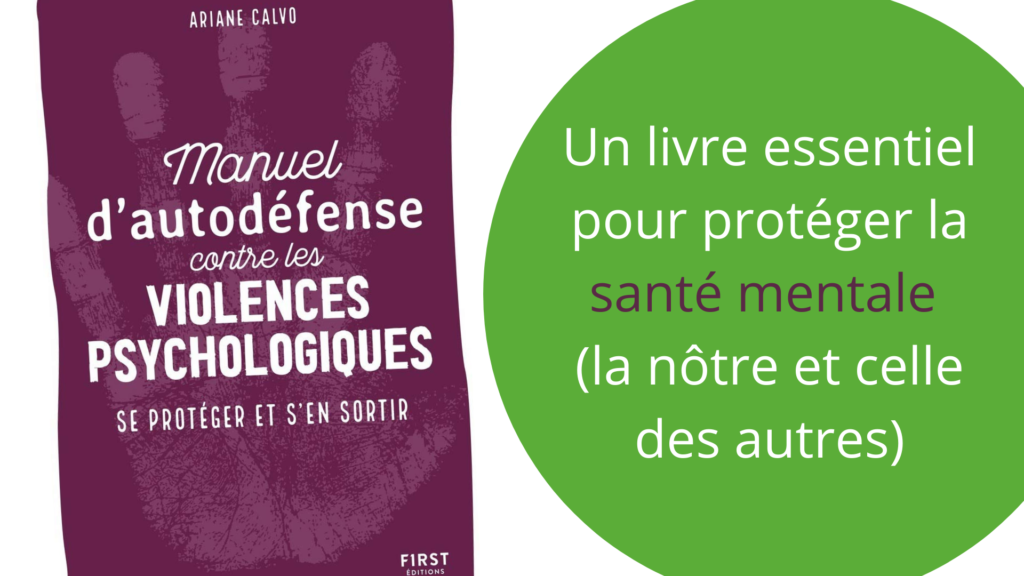
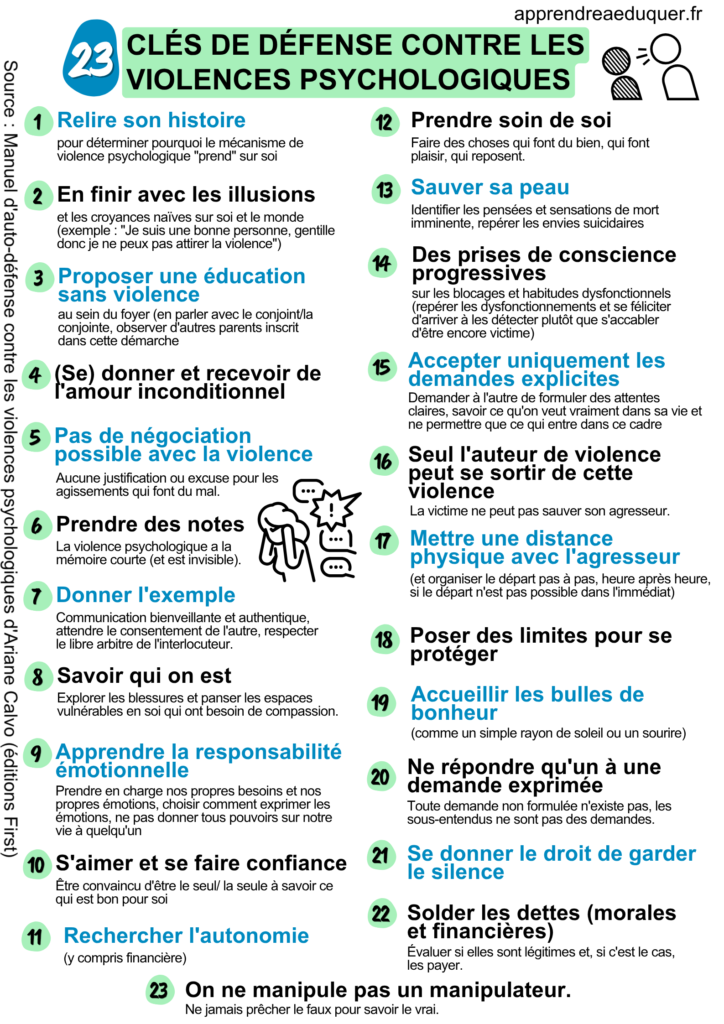
Healing is possible, and the book offers concrete self-defense keys. Reread your own story to understand why the mechanism "took" on you, and let go of naive beliefs such as "I am a good person, so I cannot attract violence." No negotiation is possible with violence: no justification or excuse for behavior that hurts.
Take notes, since psychological violence is invisible and forgetful. Learn emotional responsibility by caring for your own needs and emotions, and stop giving someone else all power over your life. Love yourself and trust yourself: you are the only one who truly knows what is good for you. Seek autonomy, including financial autonomy, and take care of yourself with things that soothe and rest you.
Boundaries and Distance
Set limits to protect yourself, and put physical distance between you and the aggressor, organizing the departure step by step if leaving is not possible right away. Accept only explicit requests, asking the other person to state clear expectations. Remember that only the author of the violence can pull themselves out of it: a victim can never save their aggressor.
Becoming an Ambassador of Peace
The final chapter invites readers to become ambassadors of psychological pacification. That starts at home, with a caring, non-violent education: talk about it with your partner, observe other parents who already practice this approach, and ask children to signal when they are being disrespected.
Give and receive unconditional love, and lead by example through kind, authentic communication, waiting for the other person's consent and respecting their free will. Progressive awareness of your own blocks matters more than self-blame: notice a dysfunctional habit and congratulate yourself for spotting it, rather than accusing yourself of still being a victim.
Building Bonds That Protect
These principles also strengthen family life, whether you are choosing Montessori pillars for your home or simply creating space for sibling bonds built on respect. Even everyday choices, like how LEGO sets, can become moments to teach care and awareness, and parents of young children will find caring for a baby guidance helpful too. Children learn far more from what they see than from what they are told.

My hands-on take
When I first read about these mechanisms, I recognized small habits of my own: the sigh before a request, the "you're doing it on purpose" said too quickly. Nothing dramatic, but enough to make my child tense up. What helped me most was the advice to ask children to signal when they feel disrespected. It felt awkward at first, and then it became a real tool.
I also started keeping a short private log of moments that left me feeling small, in family conversations and at work. Seeing the pattern on paper was sobering, and it made setting one clear boundary much easier than arguing in the moment. Healing, I learned, is less about one big confrontation and more about small, repeated choices to protect yourself and the people you love.
Frequently asked questions
Is a single harsh remark psychological violence?
No. Psychological violence is defined by repetition and by the intent to annul the other person. An isolated unkind comment does not create trauma, but a lasting climate of insecurity does.
Can a victim change the person who is violent?
No, only the author of the violence can pull themselves out of it. A victim can protect themselves, set limits, and seek distance, but cannot save the aggressor.
Why is psychological violence so hard to recognize?
It leaves no visible marks and progressively undermines the victim's self-esteem, which blocks them from seeing the aggressor's behavior clearly. Taking notes and naming the tactics helps make it visible.
Does this apply to parenting too?
Yes. Threats, blackmail, and blaming a child for a parent's mood are common forms in traditional education. A caring, non-violent approach at home is one of the strongest protections.
Product Reviews
 Best Toys for Dogs With High Prey Drive |
Best Outdoor Toys for 3-4 Year Olds |
Best Outdoor Toys for 6 Year Olds |
Best Harness for Poodle |
Best LEGO Sets for Adults |
Best Travel Toys for 4 Year Olds on Airplane |
Best Toy Stores in Washington DC |
Best Potty Training Toys |
Best Toys for Tripod Dogs |
Maillot equipe de france







