


Helping children recognise their qualities is one of the simplest ways to give them lasting confidence, because a single word can change a great deal in a child's life. Knowing what they are good at, and being able to feel it, gives children something solid to lean on when doubt creeps in.
The idea is not to flatter children but to help them notice what is already there. When a child can name their own strengths, they can return to that knowledge whenever they need a little fuel for their self-esteem.

Quick takeaways
- Read a broad list of qualities aloud and let the child tick the ones they recognise.
- Make the list beautiful: coloured paper, nice pens, drawings and a cheerful title.
- Ask the child to add qualities the list missed, in their own words.
- Link each quality to a real anecdote so the word connects to a pleasant feeling.
- Explain that qualities are not black and white and can grow over time.
- Keep the list within reach before moments when confidence is needed.
Why naming qualities matters for children
Qualities are worth knowing and worth feeling. A child who can say "I am patient" or "I am generous" has a small internal resource they can draw on in difficult moments. This is not about building an inflated ego; it is about giving children accurate, kind language for who they are.
The exercise works best when it is concrete. Ask a child to list the qualities they recognise in themselves, first so they become aware of them, and second so they have somewhere to come back to when they need reassurance. For younger children, the same principle sits behind many everyday confidence-building moments, much like the small encouragements described in learning to speak.
A calm, pleasant setting helps
Choose a quiet moment and keep the tone light. The goal is a pleasant experience the child will want to repeat, not a test or an evaluation.

The qualities list exercise step by step
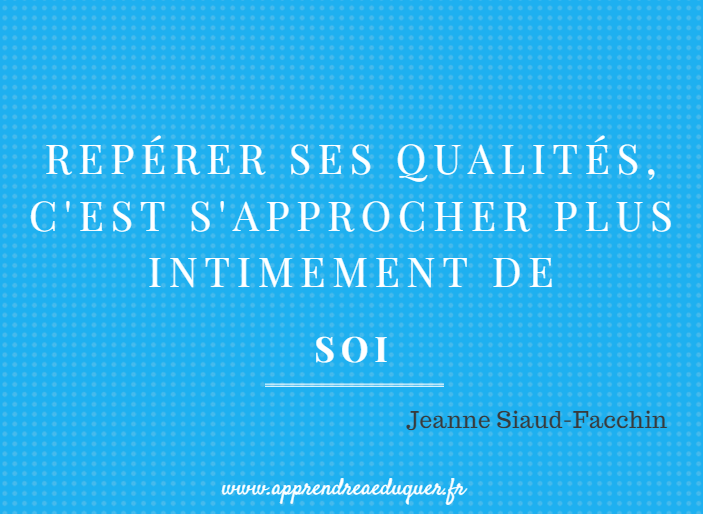
Read through a list of adjectives aloud and ask the child to note each one they recognise in themselves. You can offer a broad list with plenty of synonyms: adroit, kind, affectionate, bright, friendly, a good classmate, calming, calm, diligent, understanding, resourceful, conciliatory, endearing, brave, attentive to others, creative, authentic, efficient, handy, energetic, devoted, cheerful, determined, fair, trustworthy, easy-going, diplomatic, loyal, discreet, wonderful, available, strong, gentle, frank, upright, happy, funny, generous, skilful, nice, honest, just, humble, imaginative, clear-sighted, forgiving, amusing, principled, modest, intelligent, natural, inventive, reasonable, optimistic, thoughtful, orderly, sensitive, organised, helpful, open-minded, sincere, peaceful, sociable, patient, smiling, persevering, even-tempered, polite, tenacious, punctual, tolerant, composed, quiet, curious, adventurous, assertive and enthusiastic.
Let the child write their chosen words on a coloured sheet with a pretty title such as "My qualities", using nice felt pens, flowers, hearts and swirls. Aesthetics matter here because they reinforce the pleasant, positive feel of the activity. Children who enjoy creative play often settle into this kind of task more easily, in the same way that hands-on toys support focused attention, as seen with pretend play toys and fidget toys.
Add what the list missed
At the end, ask whether the child recognises qualities that were not mentioned and would like to add. Their own words often matter most.
| Step | What to do | Why it helps |
|---|---|---|
| Prepare | Choose quiet time, coloured paper and pens | Makes the activity feel pleasant |
| Read | Go through a list of adjectives aloud | Helps the child recognise strengths |
| Add | Ask for qualities not on the list | Values the child's own words |
| Tell | Invite a story linked to each quality | Anchors the word in real feeling |
| Decorate | Add drawings, images and cut-outs | Reinforces the positive effect |
| Keep | Store it in a pocket, diary or pencil case | Makes it easy to consult |
Anchoring the experience with stories and feelings
Invite the child to tell you anecdotes linked to the qualities they noted. Recalling a real moment when they were generous or brave attaches the word to a pleasant emotion, which helps the experience stick. This is the same principle behind so much early learning: repetition paired with feeling, as with the everyday routines in newborn adaptation or the steady practice described in my son's brain.
Then let the child personalise the list however they like, with drawings, images, cut-outs, little stories or extra words. Encourage them to keep it close whenever they know they will need a boost of confidence. One pupil kept her list in her pencil case before a maths test she was dreading; it could just as easily go in a pocket, be stuck in a diary or kept on a bedside table. The point is to have it within reach and to want to look at it.
Qualities are not black and white
Children often see things in black or white, so it helps to explain that we can consider ourselves creative while sometimes running out of ideas, patient while losing patience in certain situations, or funny even when a joke falls flat. One child told her mother she was clumsy after a glass was knocked over at lunch. The reply was simple: anyone can drop something without being a clumsy person. We can be clumsy in a moment without being labelled "clumsy".
These qualities are not fixed either. We change every day, and a child can strengthen or move towards a quality by acting differently. If a child wants to become more patient or more organised, encourage that direction gently. A parent's own example matters too, whether that means staying calm during a tough morning, as with daycare accidents, or modelling patience while helping with homework, echoing the steady presence described in time with children.
No ranking of qualities
There is no hierarchy among qualities. Being gentle is worth as much as being determined, and a child should never feel that one strength outranks another.

Keeping the habit alive over time
A list made once is a good start, but confidence grows through small repeated moments. Come back to the sheet now and then, ask whether anything new should be added, and notice aloud when you see a quality in action. Everyday family routines, from shared meals to the way you handle a rushed departure, are all chances to reinforce this, much like the practical tips in apps for parents that help busy families stay organised.
You can also connect the exercise to the child's interests. A child who loves building may recognise patience and creativity in themselves while working with construction toys, and one who loves movement may spot courage and perseverance, as with the skills explored in children's bicycles. The words become real when they are tied to something the child already enjoys.

My hands-on take
I have used this exercise with a pupil who was dreading a maths test. We sat down together, I read the adjectives aloud, and she noted the ones she recognised. She then took a coloured sheet, gave it a lovely title decorated with flowers and hearts, and wrote her qualities in bright felt pens. She kept the sheet in her pencil case on the day of the test, and she told me afterwards that simply knowing it was there helped her feel calmer.
What struck me most was how much the decoration mattered. The care she put into the page seemed to make the words more believable to her. Since then, I have suggested the same approach to other families, always with the reminder that qualities are not fixed and that no strength outranks another. It is a small activity, but it gives children something they can carry with them.
Frequently asked questions
At what age can this exercise work?
It adapts to most ages, but it suits children who can read or understand simple adjectives best. With younger children, read the words aloud and let them choose, or simply name qualities you notice in them during the day.
What if my child struggles to recognise any qualities?
Start with concrete examples from their week, such as a moment when they helped someone or kept trying. Naming what you observed gives them a starting point they can then claim as their own.
Should I correct a child who claims a quality they rarely show?
No. Let them keep the quality they identify with, and gently explain that we can all have off days. The aim is encouragement, not an evaluation of accuracy.
How often should we revisit the list?
There is no set schedule. Returning to it before a stressful event, or adding a new quality every few weeks, keeps it useful without turning it into a chore.
Product Reviews
 Best Toys for Dogs With High Prey Drive |
Best Outdoor Toys for 3-4 Year Olds |
Best Outdoor Toys for 6 Year Olds |
Best Harness for Poodle |
Best LEGO Sets for Adults |
Best Travel Toys for 4 Year Olds on Airplane |
Best Toy Stores in Washington DC |
Best Potty Training Toys |
Best Toys for Tripod Dogs |
Maillot equipe de france







