


Emma ne veut pas dépasser is a picture book built around a very specific childhood fear: the dread of coloring outside the lines. Emma is a careful little girl who loves to draw neatly, so the day her crayon slips past the edge, she is heartbroken.
What follows is anything but a disaster. That single slip launches her into the sky, where she meets extraordinary characters who each explain that their own uniqueness came from going beyond the normal. The story gently reframes mistakes as the start of an adventure.

Quick takeaways
- The story turns one small mistake, coloring outside the line, into the start of a magical adventure.
- Every character Emma meets is original precisely because they dared to go beyond the norm.
- The book plays on several meanings of "going beyond": outlines, fear, time and rules.
- It reassures perfectionist children that risk can be fertile rather than fatal.
- Large double-page illustrations and minimal text make it ideal for slow, shared reading.
- Recommended from around four or five years old.
A story about curiosity, self-surpassing and creativity
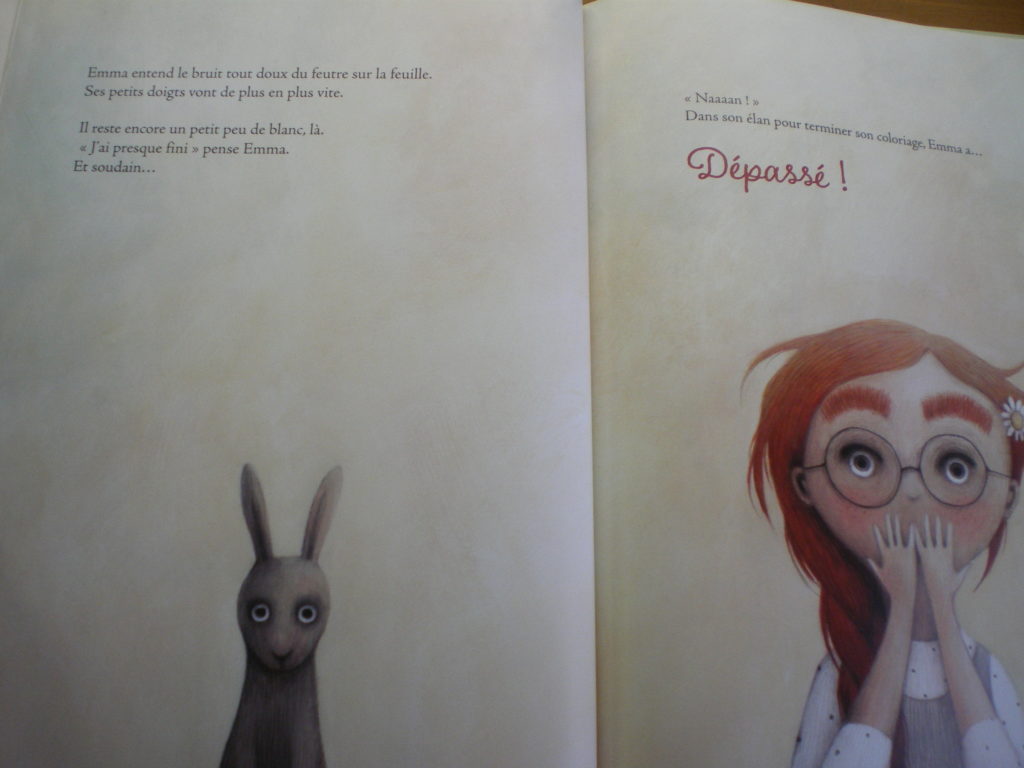
Emma is conscientious and terrified of coloring outside her drawing. A small voice in her head repeats over and over: "Don't go over the line!" Then the inevitable happens and she does exactly that. That moment is the starting point of a remarkable journey, as she lifts off into a magical world of golden clouds, a square-beaked bird, the moon in broad daylight and an old propeller plane.
Each encounter surprises her, and she asks every character about what makes them original. They all answer the same way: they went beyond. When she asks whether they draw, each dreamlike figure explains that their singularity comes from trying something new, pushing past the limits of normality and following their own desires.

Playing with the many meanings of "going beyond"
The author leans on the multiple senses of the word "dépasser": going past the outline of a drawing, going beyond fear, going beyond time, going beyond the rules. Readers understand, along with young Emma, that going beyond really is frightening because it means taking a risk, and that this risk can turn out to be fertile ground, the beginning of an exciting new adventure.
This layered wordplay is what makes the book worth rereading with a child. It opens a natural conversation about the small rules we cling to and the bigger ones we are allowed to question, much like the way easy things can trip up even confident adults. You can pause on each page and ask your child which kind of "beyond" that character represents, just as we weigh small precautions like children's sunglasses or caring for little backs when deciding what limits truly matter.
| Kind of going beyond | Character or moment | What the child learns |
|---|---|---|
| Going past the outline | Emma's crayon slips | A mistake can open a door |
| Going beyond the ordinary | Square-beaked bird, golden clouds | Being different is a strength |
| Going beyond time | The moon in broad daylight | Rules can be questioned |
| Going beyond fear and age | The old parachutist | Dreams are worth the risk |
| Going beyond together | Emma and the old man jump | Courage creates connection |
The old man who jumped, and the fear that finally left
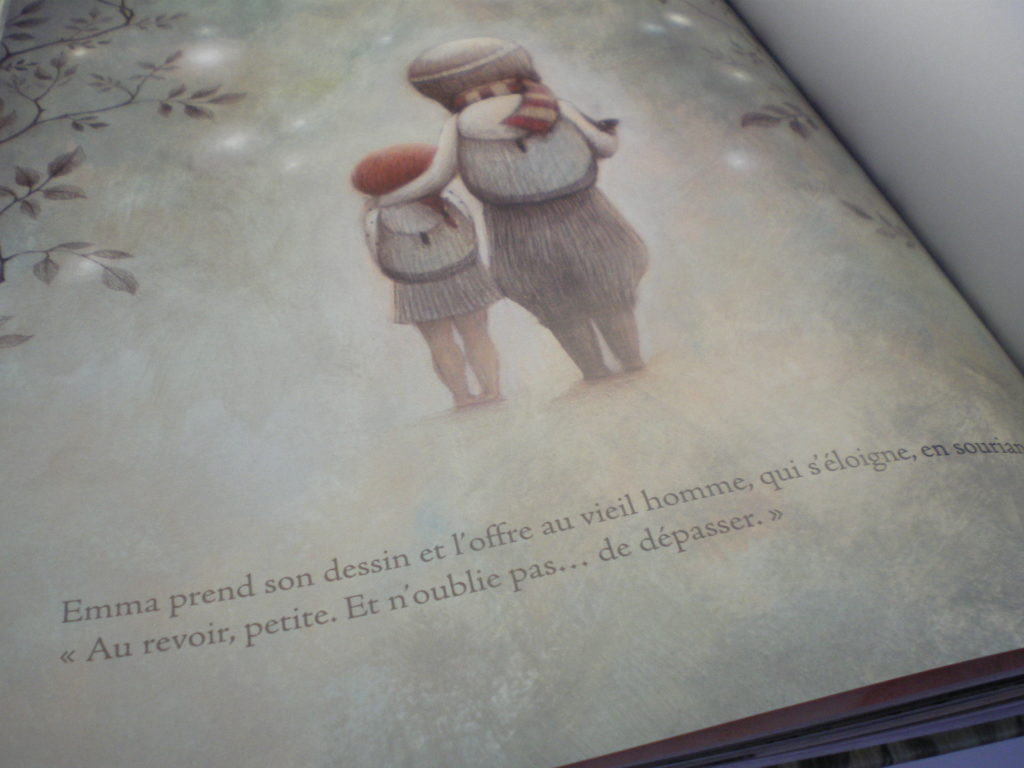
Emma's last encounter is with an old man who has gone beyond his fear and his age to live his dream: jumping with a parachute. The two companions leap together and land back at Emma's house. There, the old man confides that she did well to go beyond, because otherwise they would never have met.
By the end, Emma's fear of coloring outside the lines has gone, and perhaps her young readers' fear has too. It is a quiet, satisfying resolution that rewards the child who has been anxious alongside her. For families working through other everyday worries, the same patient encouragement shows up in guides like fear of water or swimming with ASD, where small brave steps matter more than perfect technique. The same spirit of playful courage runs through Christmas nougat recipes and our LEGO character quiz.
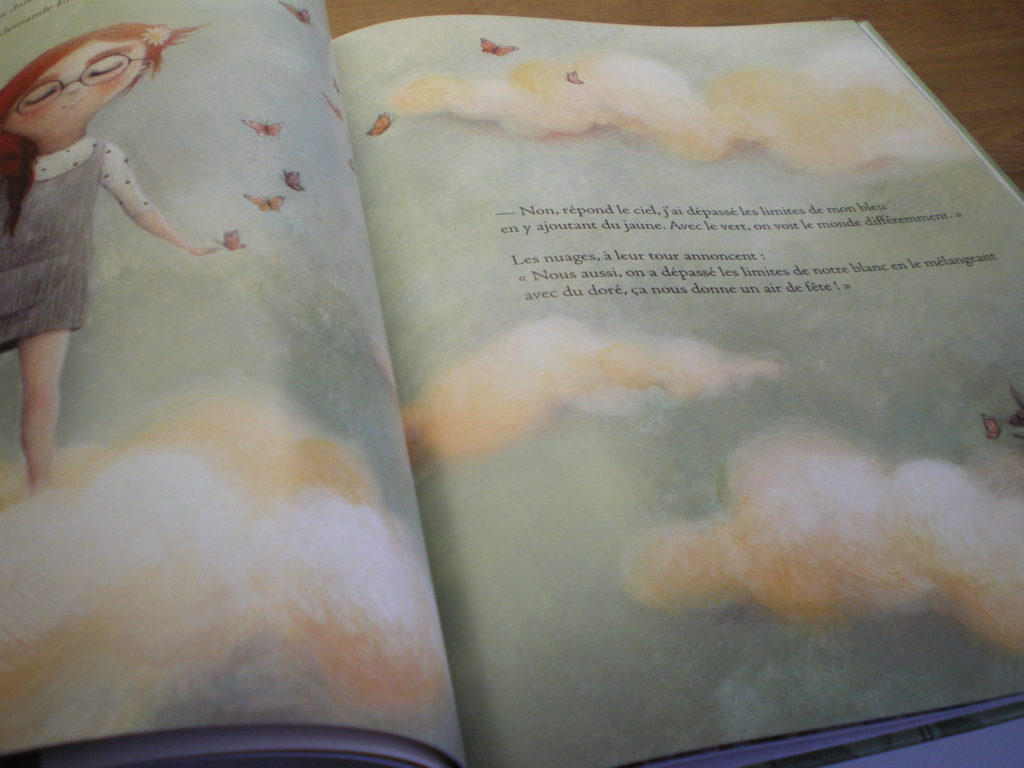
A large-format album that invites dreaming and slowness
The layout of this large picture book is an invitation to dream and to slow down. Every illustration stretches across a double page, and the minimalist text fits perfectly into this poetic universe. You come away from the reading dazzled and ready to grab a sheet of paper and some crayons with the deliberate intention of going over the line.
That slow pacing is a real gift for busy families. Instead of rushing to the end, you can linger on a single spread and let the images do their work, the way a good movies for children lesson lands because it is given time to breathe. It is also a lovely bridge to hands-on play afterward, whether that means drawing freely or setting up learning toys for 3 year on the same table.
Who this book suits, and how to read it together
The book is recommended from age four or five, which fits its short text and rich imagery. It works especially well for the child who erases constantly, restarts a drawing or refuses to try because the result might not be neat. Reading it together gives you shared language: you can gently ask "is this a going-beyond moment?" when perfectionism creeps in.
Pair it with open-ended materials that have no wrong answer, such as big sheets of paper, chalk or washable markers. If your child prefers building to drawing, the same message about experimenting travels well to construction play and STEM toys for 5 year. The point is never the finished product but the willingness to test something new and see what happens.

My hands-on take
I read this one with a child who used to erase a drawing three or four times before finishing it. The first time we reached the page where Emma's crayon finally slips, I expected a frown, but instead there was a long pause and then a quiet "so it's okay?" We started using the phrase "going beyond" as a small family joke whenever someone tried something messy on purpose.
What worked for us was not explaining the moral but simply leaving paper and crayons out afterward and saying nothing. The book had already done the talking. If you have a child who freezes at the first imperfect line, this is a gentle, unhurried way in.
Frequently asked questions
What age is Emma ne veut pas dépasser for?
It is recommended from around four or five years old. The text is short and the double-page illustrations carry much of the story, so it suits preschoolers and early readers alike.
Is this book only for children who are perfectionists?
No, though it speaks directly to them. Any child who hesitates to try something new, or who fears making a mess, will find the message useful and reassuring.
What is the main message of the book?
That going beyond the lines, and beyond fear, is scary because it is a risk, but that this risk can be fertile and lead to wonderful encounters.
How can parents use the book at home?
Read it slowly, pause on each spread and talk about which kind of "going beyond" the character represents. Then offer open-ended drawing or building time with no wrong answer.
Product Reviews
 Best Toys for Dogs With High Prey Drive |
Best Outdoor Toys for 3-4 Year Olds |
Best Outdoor Toys for 6 Year Olds |
Best Harness for Poodle |
Best LEGO Sets for Adults |
Best Travel Toys for 4 Year Olds on Airplane |
Best Toy Stores in Washington DC |
Best Potty Training Toys |
Best Toys for Tripod Dogs |
Maillot equipe de france







