


Drawing mandalas outdoors with children turns a quiet, focused activity into fresh-air play. Mandalas are circular, repeating patterns that teachers often use because they gently train the hand and the mind at the same time.
The benefits are simple but real: fine motor control of the hand, concentration, inspiration, and artistic decision-making, especially through choosing and arranging colors. You do not need special talent, just chalk and a patch of ground.

Quick takeaways
- Mandalas build fine motor control, concentration and color choices
- Chalk mandalas move the activity outdoors and make it physical
- Stencils with animal, flower, fairy tale or garden motifs simplify shapes
- Flat paving works better than grass for chalk
- Group sessions encourage sharing and patience
- Photograph finished designs before they wash away
Why Mandalas Work So Well for Children
Mandalas are widely used in education because this type of drawing quietly develops several skills at once. The repeating shapes encourage the hand to move with care, which supports fine motor control. Because the pattern pulls the eye toward the center, children naturally slow down and concentrate.
There is also room for imagination and choice. Picking colors and deciding how to arrange them is a real artistic decision, and children feel proud of the result. If you want to extend the creative side further, these music activities pair nicely with pattern work and help children connect rhythm to visual repetition.
From Paper to Ground
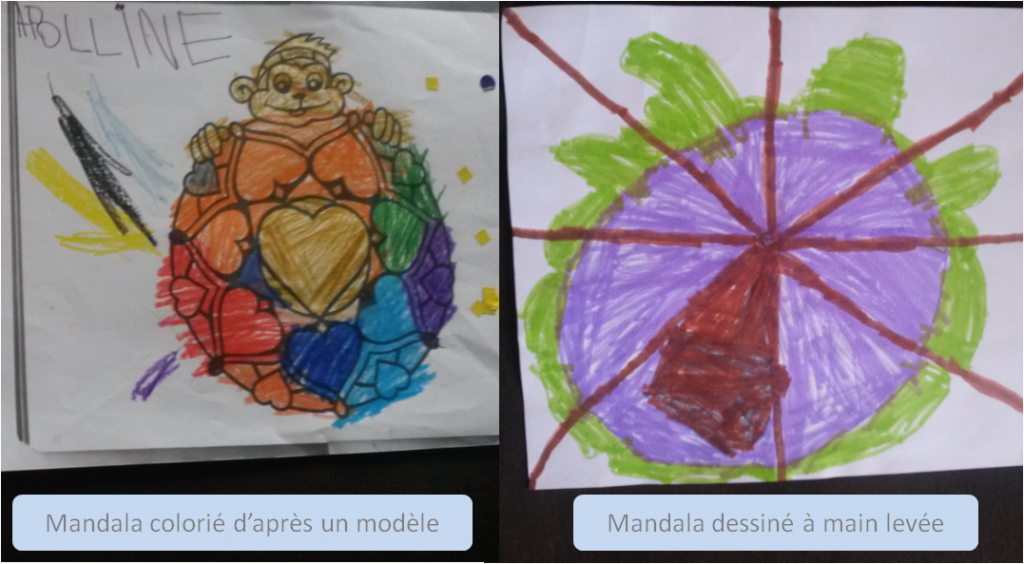
The classic version is coloring a printed model or drawing a mandala freehand. Other variations include a mandala made from natural materials in land art style, or one built from construction blocks. Each version keeps the same core benefits while changing the material.
Drawing Mandalas Outside With Chalk
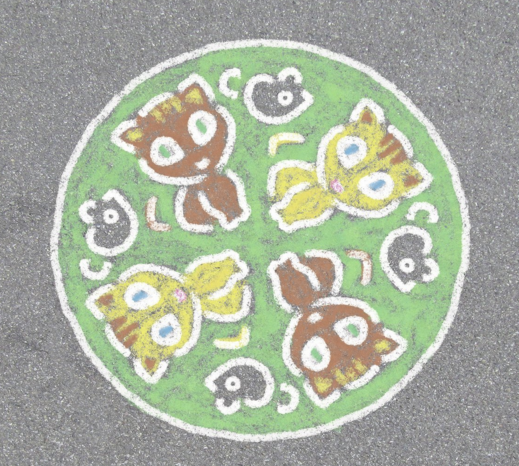
One especially appealing variation is drawing mandalas outdoors with chalk. Instead of paper and pencil, children work on pavement, patio or playground ground, which makes the activity bigger, bolder and physical. The chalk washes away, so there is no fear of ruining anything.
To make the shapes easier, mandala stencils are available. They let children trace clean, repeating motifs before filling them in with color. Several motif themes exist, including animals, flowers and butterflies, fairy tales, and garden scenes, so there is something for most tastes. Stencils are sold in toy shops, supermarkets and online stores.
Outdoor chalk sessions also work well as a calm break between more energetic play. If you are planning a longer afternoon outside, a Disney birthday theme or a simple garden party gives the mandalas a natural place in the day.

| Variation | Materials | Best for |
|---|---|---|
| Printed model | Paper, pencils, crayons | Quiet indoor focus |
| Freehand drawing | Paper and pen | Older children |
| Land art mandala | Leaves, stones, petals | Nature walks |
| Block mandala | Construction blocks | Indoor builders |
| Chalk mandala | Chalk and stencils | Outdoor afternoons |
Choosing Stencils and Setting Up
When picking stencils, look at the size of the openings and the thickness of the lines. Younger children do better with larger, simpler motifs, while older ones enjoy detailed flowers and butterflies. A mix of themes keeps the activity interesting over several sessions.
Set up on a flat, smooth surface such as paving or concrete, since chalk grips better there than on grass. Provide a few colors and a cloth for wiping hands. If you are gathering supplies for a group, browsing a toy stores selection or a toys under a set budget can help you stock up sensibly.
Keeping It Comfortable
Children often kneel or crouch while drawing, so a cushion or a piece of cardboard to kneel on makes a difference. On cooler days, remember that bulky layers can bunch up; there is useful guidance on keeping a child warm in a car seat without a coat, and the same layering logic applies to outdoor play.

What Children Learn Along the Way
Beyond the obvious fun, chalk mandalas build patience. A large pattern takes time, and children learn to return to it, add a section, and step back to check the whole. That habit of reviewing work is a quiet lesson in self-correction.
Group sessions add a social layer. Children negotiate space, share colors and admire each other's patterns, which supports cooperation without any competition. It is also a good moment to notice effort rather than outcome, in line with the idea of not labeling children and praising the process.
For children who enjoy structured building, a mandala made from blocks offers the same satisfaction indoors. If your builder is a LEGO fan, these LEGO Star Wars tricks show how following a pattern can be its own reward.

Adapting the Activity to Different Ages and Days
With toddlers, keep it short and simple: one large circle, a few colors, and lots of freedom. Older children can plan a full design first, then execute it in stages over an afternoon. Teenagers often enjoy the challenge of symmetry and precision.
Weather matters. Chalk works best on dry ground, and a light breeze makes outdoor drawing pleasant. If rain interrupts the plan, move the pattern indoors with paper or blocks and save the pavement for another day. You can also keep a small box of teething toys handy if a baby is joining the family outside.
Finally, photograph the finished mandalas before they fade. A quick photo turns a temporary chalk drawing into a keepsake and gives children a reason to feel proud of their work.

My hands-on take
I first tried chalk mandalas on our patio on a quiet Sunday, mostly because I wanted something calmer than running games. What surprised me was how long the children stayed with it. They started with one big circle, argued mildly about who got the yellow chalk, and then settled into a rhythm that lasted most of the afternoon.
Since then, I keep a small bucket of chalk and a couple of stencils by the back door. I have learned to choose a shaded patch, to bring something to kneel on, and to take a photo before the sprinklers come on. The drawings never last, but the habit of slowing down and finishing something does seem to stick.
Frequently asked questions
What age can children start drawing chalk mandalas?
Toddlers can join with one large circle and a few colors, while older children manage detailed stencils. Adjust the size and complexity to the child rather than the age.
Do we need stencils to make mandalas outside?
No. Stencils simply make repeating shapes easier to trace. Freehand circles and patterns work just as well and give children more freedom.
Where can we buy mandala stencils?
They are sold in toy shops, supermarkets and online stores. Look for larger openings for younger children and finer motifs for older ones.
What surface is best for chalk mandalas?
Flat, smooth surfaces like paving or concrete hold chalk best. Grass is uneven and does not show the pattern clearly.
Product Reviews
 Best Toys for Dogs With High Prey Drive |
Best Outdoor Toys for 3-4 Year Olds |
Best Outdoor Toys for 6 Year Olds |
Best Harness for Poodle |
Best LEGO Sets for Adults |
Best Travel Toys for 4 Year Olds on Airplane |
Best Toy Stores in Washington DC |
Best Potty Training Toys |
Best Toys for Tripod Dogs |
Maillot equipe de france







