


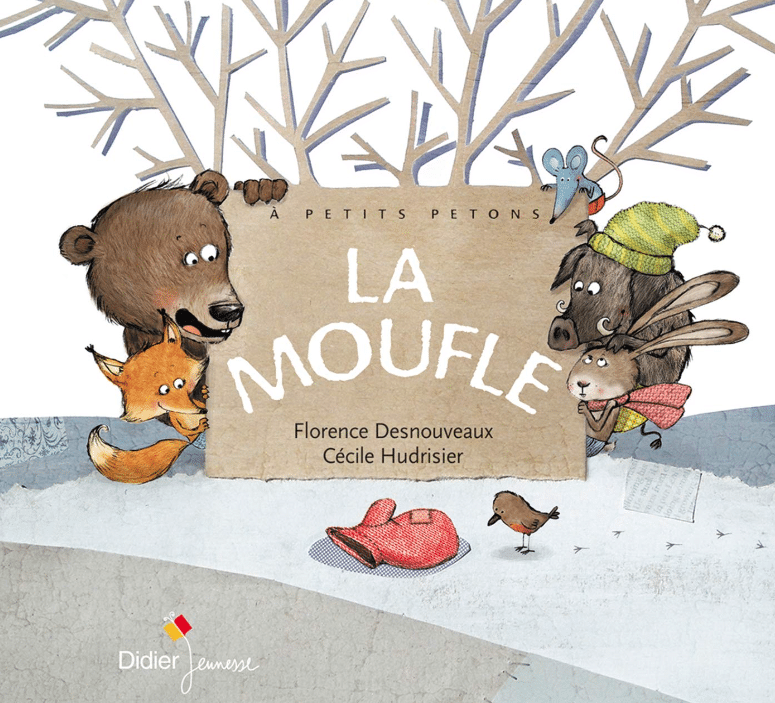
The Mitten is a lovely folk tale of Russian origin, a story that blends humour and rhythm and can be discovered from around age 3. It is an ideal book for stepping eagerly into the world of tales from a very early age.
It tells of a red mitten dropped by the wind on a snowy path. A mouse happens to pass by: "What luck! A woollen house! Is anyone there?" One by one, animals arrive and squeeze inside, until the little shelter can hold no more.

Quick takeaways
- A Russian folk tale with rhymes, onomatopoeia and plenty of rhythm
- Best suited to children from around age 2 or 3
- A cumulative tale: ever-bigger animals squeeze in until the mitten bursts
- No explicit moral, but a gentle invitation to think about generosity
- Great for reading aloud with different voices for each animal
- Works beautifully told from memory, without the book
Why The Mitten Works So Well as a Read-Aloud
The text is singing and full of rhymes and onomatopoeia, which makes it a genuine pleasure to read aloud. You can modulate your voice for each animal that takes refuge inside the mitten, giving the mouse a small squeak and the bear a deep rumble. That vocal play keeps even very young listeners hooked, much as a good parenting mirror keeps a child engaged through tone and expression, and the same expressive reading can hold attention just as firmly as the story of Chachat an eight month old baby.
The layout is truly successful, the illustrations are very pretty and the text carries plenty of momentum. Children also adore the little details: the sound of footsteps in the snow, the noises that grow louder as the animals grow bigger, and the bird that closes the story with a rhyme.
A Story Built on Repetition
Because the pattern repeats, children quickly anticipate what comes next and love joining in. It is the same pleasure they find in simple foam block toys, where each piece adds to the last.
A Cumulative Tale with Growing Animals
This story takes the form of a "randonnée", a cumulative or enumerative tale in which ever-bigger animals squeeze into the same shelter until it finally bursts. The growing size of the animals is even made visible on the page, with letters printed larger as the creatures get bigger. That visual cue helps children feel the tension building.
The tale belongs to the Russian oral tradition, and this version mixes humour with sensitivity. There is no moral waiting at the end; instead, the story invites an implicit, unconscious kind of reflection. Children may find themselves wondering about the limits of generosity, without anyone spelling it out.
That open-ended quality is what makes folk tales so durable. Just as a family board game rewards patience and turn-taking, this story rewards attentive listening, much like the cosy Christmas pajamas that set the mood for a calm read-aloud. It also reminds us to avoid the unhelpful comments that can spoil such shared moments.

| Age | What children notice | How to read it |
|---|---|---|
| 2-3 years | Sounds, rhymes, the red mitten | Slow, sing-song voice |
| 3-4 years | Repeating pattern, growing animals | Pause and let them guess |
| 4-5 years | The burst at the end, the bird's rhyme | Invite them to join in |
| Any age | Humour and warmth | Tell it from memory sometimes |
Reading It Aloud, Again and Again
This is a classic to read from age 2 or 3, and it is short enough to survive repeated requests. Try slowing down on the snowy footsteps and speeding up as the animals pile in. Pausing before each new arrival builds anticipation and invites children to guess who comes next.
You can also tell it without the book, from memory, in the oral storytelling tradition. Sitting in a circle and simply speaking the tale gives it a different, warmer life. For families who enjoy ritual, a small Christmas tree drawing session after the story can extend the mood.
Pairing It with Other Books
If your child loves this one, keep a few winter tales nearby so the pleasure carries over. A baby shower gift of a first story collection is also a thoughtful way to start a library early.

Who Will Enjoy This Book
This version is well suited to toddlers and preschoolers, and to any adult who enjoys performing a story rather than simply reading it. The rhythm does much of the work for you. Parents who like choosing books carefully may also enjoy browsing ideas for STEM toys for five year once children move on to more interactive play.
It also makes a gentle introduction to the wider world of folk tales, which children can revisit for years. If you are building a small home library, a toy store in New York or a local bookshop will often stock classic picture books like this one.
Above all, it is a story about welcome and welcome running out, told with warmth and a wink.

My hands-on take
I first told this story to a group of three-year-olds without the book in front of me, and I was struck by how quiet the room went. The rhymes did most of the work; I only had to lean into the mouse's squeak and the bear's rumble. When the mitten finally burst, several children burst out laughing too.
Since then I have read it aloud many times, and my advice is simple: do not rush it. Slow down on the snowy footsteps, let the pause hang before each new animal arrives, and let the children fill the silence with their guesses. If you can, learn it well enough to tell it once without the pages. That version is the one children tend to ask for again.
Frequently asked questions
What age is The Mitten suitable for?
It is generally recommended from around age 2 or 3. The short text, strong rhythm and repeating pattern suit very young listeners, while older children enjoy guessing what happens next.
Is there a moral to the story?
No, there is no explicit moral. The tale invites an implicit reflection, and children may quietly wonder about the limits of generosity without it ever being stated.
Can I tell it without the book?
Yes. Like many folk tales, it works very well told orally from memory. Sitting together and simply speaking the story gives it a warm, intimate quality.
Why do the letters get bigger on the page?
The growing letters mirror the growing animals squeezing into the mitten. It is a visual cue that helps children feel the tension building toward the ending.
Product Reviews
 Best Toys for Dogs With High Prey Drive |
Best Outdoor Toys for 3-4 Year Olds |
Best Outdoor Toys for 6 Year Olds |
Best Harness for Poodle |
Best LEGO Sets for Adults |
Best Travel Toys for 4 Year Olds on Airplane |
Best Toy Stores in Washington DC |
Best Potty Training Toys |
Best Toys for Tripod Dogs |
Maillot equipe de france







