


Scrapbooking for kids is one of those rare activities that keeps a child busy, proud and quietly learning at the same time. It is simple enough to start at the kitchen table, yet open-ended enough that no two pages ever look the same.
You do not need to be a craft expert. A basic kit, a few printed photos and a little patience are enough to turn an afternoon into a small work of art that a child can hold up and say, "I made this."

Quick takeaways
- Scrapbooking gives children a visible, tangible result they can be proud of.
- Choosing photos, layouts and messages builds real creative decision-making.
- Cutting, gluing, stamping and sticker placement all train fine motor skills.
- A clear goal, such as a gift or a wall display, boosts motivation.
- Beginner books and children's kits make starting easy at around age six or seven.
- A tidy tray, safe tools and specific praise keep the activity enjoyable.
Why Scrapbooking Works So Well With Children
Scrapbooking sits somewhere between art class and storytelling. A child chooses a theme, picks the photos that matter, decides what to show and how to arrange it, and then works with their hands to make it real. The result is concrete: a page everyone can see and admire.
That visible result matters. Working on something tangible gives children a genuine sense of pride, because the finished piece is clearly the fruit of their own ideas and effort. It is not a worksheet that gets thrown away, but an object with a purpose.
If you are thinking about how much freedom to give during the process, the same question comes up in childhood education more broadly: guide, but do not take over. The child should stay the author of the page.
The Skills Children Build Without Noticing
Ask a child what they are doing and they will say "making a picture." In reality, they are practising a whole set of creative decisions: which theme, which photos, which accessories, which layout, which words to add with letters or stickers.
Fine motor skills in disguise
Scrapbooking is also a real workout for the hands. Children juggle different materials such as paper, fabric, buttons and glitter, trace stencil outlines to cut out, trim photos and decorative sheets with scissors, and glue each part down while keeping the intended effect, whether a wave, a puzzle piece or a heart.
They also learn to use an ink stamp without smudging, and to place stickers precisely to spell a name, a date or a short message. For younger children, a few fine motor toys alongside the craft box can help build the same grip and control. Messy play works the same muscles, so try homemade finger paint games, and STEM toys can extend the hands-on learning.

| Feature | Full kit | Basic kit | What to add |
|---|---|---|---|
| Albums | Two square spiral albums | One album | Extra pages |
| Decorative paper | Included | Included | Scrap paper, cards |
| Stickers and gummies | Included | Included | Letter stickers |
| Tools (scissors, stencil, glue) | Included | Not included | Child-safe scissors, glue |
| Best for | Families starting from scratch | Homes already stocked with tools | Mixed ages |
Working Toward a Project Gives It Meaning
The joy grows when there is a goal. A page can be offered to someone, displayed on the bedroom wall, or slipped into a dedicated album. The desire to make something appears with the objective, especially when a child is encouraged along the way and receives an enthusiastic welcome for the finished work.
Gifts for grandparents are a natural fit, and so are seasonal occasions. A handmade page also works beautifully as a calm indoor activity, in the same spirit as these indoor games for days when going outside is not an option.
Keep the encouragement specific. Instead of "it's beautiful," try "I love how you placed the photo so the colours match." That kind of comment teaches a child to look at their own choices.
Books to Start and to Find Inspiration
A good beginner book removes the fear of the blank page. One title covers albums, cards and notebooks, and is ideal even for people who are sceptical about scrapbooking: each model states the working time, difficulty level and the tools and accessories needed, with photo-illustrated steps.
A larger volume is aimed at people who already scrapbook and are looking for inspiration. It also includes detachable decorative pages with alphabets, borders, frames and themed ornaments, positioning itself as both a reference and an endless source of ideas.
For children aged roughly six or seven upward, a dedicated children's scrapbook introduces the hobby with many projects made by young scrappers aged four to fourteen. A scrapbooking dictionary is useful too, so beginners and experienced crafters alike can master the English terms, much like learning how many villagers you can manage in a game.

Choosing a Children's Scrapbooking Kit
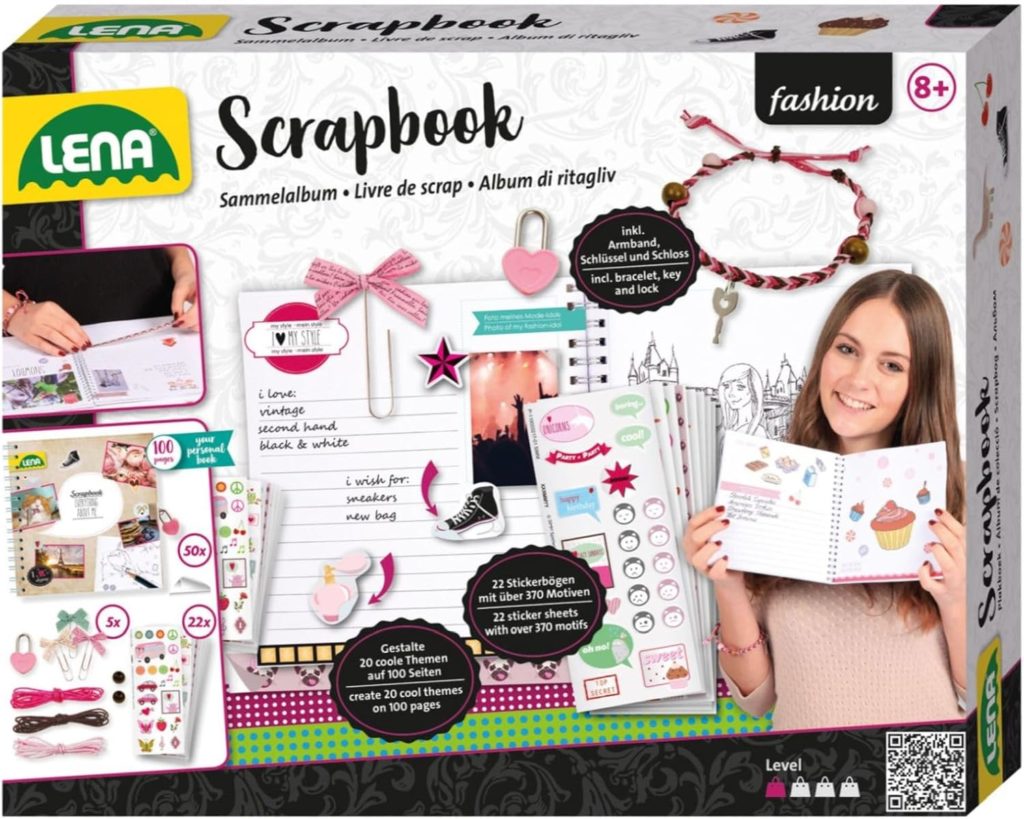
Kits range from complete boxes to lighter, cheaper sets, and the difference usually comes down to tools. A full kit might include two square spiral albums, decorated paper, stickers, mini envelopes, assorted material, zigzag scissors, a stencil, glue and a marker.
A more basic complete kit offers decorative paper, an album, stickers and gummies, but not the tools such as stencils, scissors or glue. If you already own child-safe scissors and glue at home, the lighter option is perfectly workable.
Whichever you pick, treat the kit as a starting point rather than a rulebook. Leftover paper scraps, old greeting cards and fabric offcuts all make excellent additions, much like the open-ended play you get from foam block toys.
Setting Up a Calm, Workable Craft Space
Scrapbooking spreads out, so give it room. A clear table, a shallow tray for small pieces and a box for each child's materials will save a lot of tidying and lost stickers. Keep scissors and glue within reach but stored safely between sessions.
Some children focus best in a quiet corner with few distractions, while others like company. If your child needs a calmer environment to concentrate, these quiet toys ideas translate well to craft time. And if siblings join in, let each one work at their own pace rather than comparing pages. A calm, low-stress setup also supports wellbeing, much like managing blood pressure matters during pregnancy.
Finally, photograph the finished pages before they go into an album or a gift envelope. It is a simple habit that preserves the work and gives your child another moment of recognition. Keep an eye on hidden sugars in any snacks you offer while crafting.

My hands-on take
We started scrapbooking at home not long ago, with a children's kit bought for a rainy afternoon, and it has become one of our favourite things to do together. Sometimes we work as a pair, sometimes side by side on our own pages. I still help with cutting certain complicated shapes, but I let my daughter choose, glue and arrange the elements exactly as she wants.
Our first real project was a set of decorated pages given as gifts for Grandmother's Day: one I made from start to finish, one we made together, and one she made entirely alone for her great-grandmother. The best part, honestly, was the time spent looking through photos, commenting on them and choosing which ones deserved a place on the page. If you are unsure how much freedom to leave, remember that the pride comes from ownership, not from a perfectly straight border.
Frequently asked questions
What age can a child start scrapbooking?
Around six or seven is a comfortable starting point, when scissor control and glue use are more reliable. Younger children can join in with help on cutting and plenty of free choice on placement.
Do I need an expensive kit?
No. A basic kit with paper, an album and stickers works well if you already own child-safe scissors and glue. A fuller kit simply saves you gathering tools separately.
How much should I help?
Help with the tricky parts, such as cutting complicated shapes, and leave the creative choices to the child. They should decide what to glue and where.
What can we make besides album pages?
Greeting cards, small notebooks and gift pages for grandparents or relatives all work well. The format matters less than giving the child a real purpose.
Product Reviews
 Best Toys for Dogs With High Prey Drive |
Best Outdoor Toys for 3-4 Year Olds |
Best Outdoor Toys for 6 Year Olds |
Best Harness for Poodle |
Best LEGO Sets for Adults |
Best Travel Toys for 4 Year Olds on Airplane |
Best Toy Stores in Washington DC |
Best Potty Training Toys |
Best Toys for Tripod Dogs |
Maillot equipe de france







