


Postpartum depression is still one of the least spoken-about parts of early motherhood, and a graphic novel called Dear Scarlet turns it into something you can almost feel on the page. Teresa Wong writes and illustrates her own struggle as a letter to her daughter, which makes the subject far less abstract than a leaflet in a clinic waiting room.
Roughly one to two mothers in ten experience psychological distress after giving birth, and even at the lower end of that range the numbers run into tens of thousands of women every year. This book gives those women a vocabulary, and gives everyone else a window.

Quick takeaways
- Postpartum depression affects roughly one to two mothers in ten and is not the same as the baby blues.
- Warning signs include feeling lost, sleeplessness, appetite changes, secret crying and dark thoughts.
- Many affected mothers care for their baby perfectly while hiding how they feel.
- Recovery usually involves several kinds of help at once, not one single solution.
- Partners, family and friends are part of the support, not bystanders.
- The book gives language to a struggle that is often silent.
What Postpartum Depression Actually Looks Like
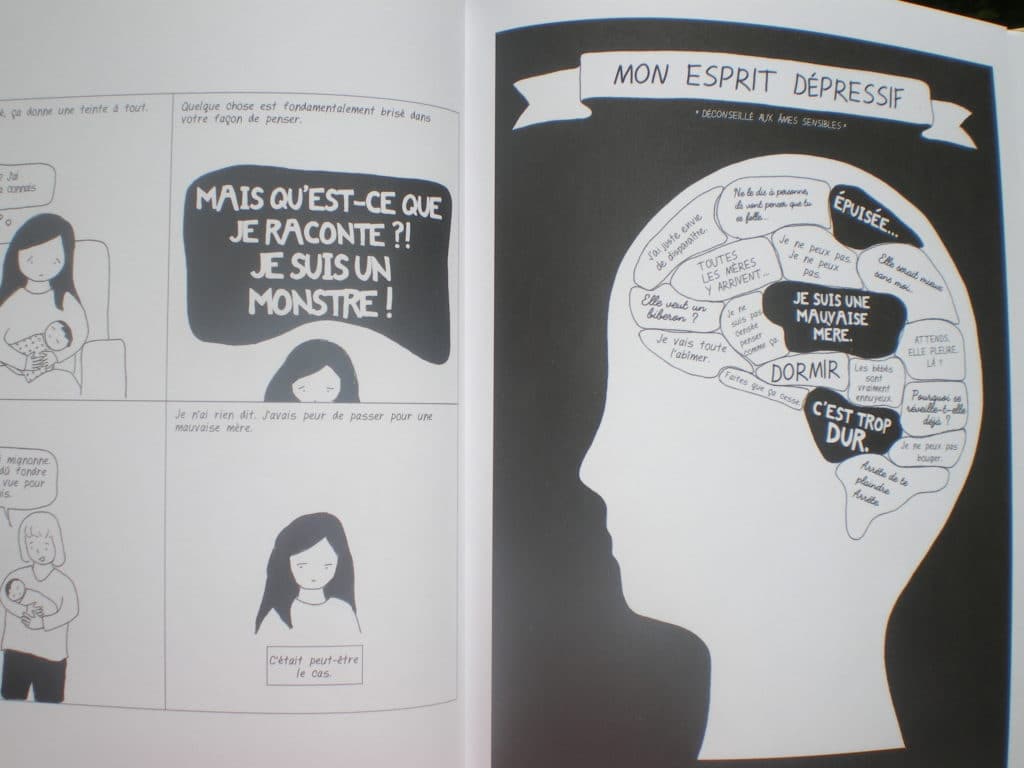
Postpartum depression is not the same thing as the baby blues. The blues arrive two to four days after birth and fade within hours or a few days, while postpartum depression settles in and deepens. Every mother is affected differently, but a cluster of signs tends to repeat: feeling like you are sinking, believing you are going mad, barely sleeping, losing your appetite, crying often and in secret.
Many mothers also describe a gap between what they expected to feel and what actually arrived, a sense of strangeness toward a baby who does not match the one they imagined, and physical symptoms such as chest pain. Recurring dark thoughts are common too, and some women have suicidal ideas or fantasies of abandoning the baby. If any of this sounds familiar, the same principle behind parenting TED Talks applies: naming the problem is the first step.
The mask that hides it
Perhaps the most confusing sign is competence. Mothers with postpartum depression often care for their baby impeccably, feeding and tending to every need, while living in dread that someone will discover how they really feel, even as they long to be understood and helped.
Inside the Book: Birth, Body and Guilt
Wong takes readers through a difficult delivery and the questions that follow it, admitting she felt lost, had no maternal instinct and no idea how to care for a baby. She describes physical pain, her surprise at discovering her post-birth body, and the early difficulties of breastfeeding with the same honesty she brings to maternal guilt.
She also captures the incomprehension of those around her, including caregivers who are not all attuned to how postpartum depression works. The book is careful about the details of birth itself, which is where something like the Kristeller maneuver can matter to readers comparing their own experiences. Intense fatigue and sadness gradually slide into a depressive state, and the mother appears to do everything for her child without any warmth behind it, alongside a fear of causing harm that can reach the wish for the baby to disappear.

| Feature | Baby blues | Postpartum depression |
|---|---|---|
| When it starts | Two to four days after birth | Later, and it persists |
| How long it lasts | Hours to a few days | Weeks or longer without help |
| Typical signs | Tearfulness, mood swings | Despair, insomnia, guilt, fear |
| Bonding with baby | Usually intact | Often feels absent or delayed |
| What helps | Rest and reassurance | Professional care and support network |
Diagnosis, Help and the Slow Climb Back
In the second part, the diagnosis finally arrives, and Wong's husband grasps the scale of what is happening and calls in outside help. She recovers gradually with the support of a postnatal doula, medication and psychotherapy. The book is refreshingly unsentimental about this: help came from several directions at once, not from a single fix.
That combination of practical and emotional support echoes what many parents build at home in other areas, from organizing with two babies to the everyday logistics of feeding and common cloth diapers mistakes. In the third part, Wong describes how supported she felt once she accepted her condition and could speak about it, discovering that many other mothers had been through the same thing. Over time she felt more capable, despite emotional relapses, and the book closes with a love letter to her daughter.
Why This Story Matters Beyond One Family
A postscript describes her two later pregnancies, one followed by another bout of postpartum depression and the last by happiness, pride and a sense of competence. That arc matters because it shows recovery is not a straight line and that a difficult first experience does not predict a difficult third.
The book is a genuine public service: it spreads information about maternal difficulty to a wide audience and helps struggling mothers put words to what they feel. Once the signs are known, asking for help becomes possible, and health professionals who read it may recognize the condition sooner. It is also a reminder that motherhood is collective. Fathers have their part to play in daily and moral support, as do extended family and friends. The same principle runs through resources like familiar mother phrases and toys for independent play, which quietly give a parent a breathing space.
Reading It Alongside the Practical Side of New Parenthood
A book like this is not a substitute for care, but it sits well beside the small practical decisions that fill early parenthood. If you are preparing a nursery or choosing what to buy, guides such as toys for tummy time and non toxic teething toys help you focus on the baby while you focus on yourself.
Reading about another mother's experience can also make a partner's role clearer, whether that means taking over night feeds or simply asking better questions. Some parents find that shared reading opens conversations that neither of them knew how to start, and that the practical and the emotional sides of new parenthood are easier to hold together when both are named out loud.

My hands-on take
I read this book during a stretch when a friend of mine was clearly struggling and none of us knew what to say. What struck me was how recognizable the details were, especially the part about doing everything for the baby while feeling nothing, and the fear of being found out. It gave me a way in that did not sound like an interrogation.
What I took from it practically is simple: ask directly, offer concrete help rather than vague concern, and do not wait for a new mother to volunteer that something is wrong. Reading it also reminded me that a partner's role is not decorative. Sometimes the most useful thing someone can do is notice, name it and pick up the phone.
Frequently asked questions
Is postpartum depression the same as the baby blues?
No. The baby blues appear two to four days after birth and pass within hours or a few days. Postpartum depression lasts longer and usually needs support and treatment.
Can a mother with postpartum depression care for her baby well?
Yes, and many do. Mothers often manage feeding and care impeccably while hiding their real emotions, which is precisely why the condition can go unnoticed.
Does recovery mean a single cure?
Usually not. The author recovered through a combination of a postnatal doula, medication and psychotherapy, along with support from her husband and others.
Can it happen again in a later pregnancy?
It can. The author experienced another episode after one of her later pregnancies, followed by a much happier experience after the next, which shows the pattern is not fixed.
Product Reviews
 Best Toys for Dogs With High Prey Drive |
Best Outdoor Toys for 3-4 Year Olds |
Best Outdoor Toys for 6 Year Olds |
Best Harness for Poodle |
Best LEGO Sets for Adults |
Best Travel Toys for 4 Year Olds on Airplane |
Best Toy Stores in Washington DC |
Best Potty Training Toys |
Best Toys for Tripod Dogs |
Maillot equipe de france







