


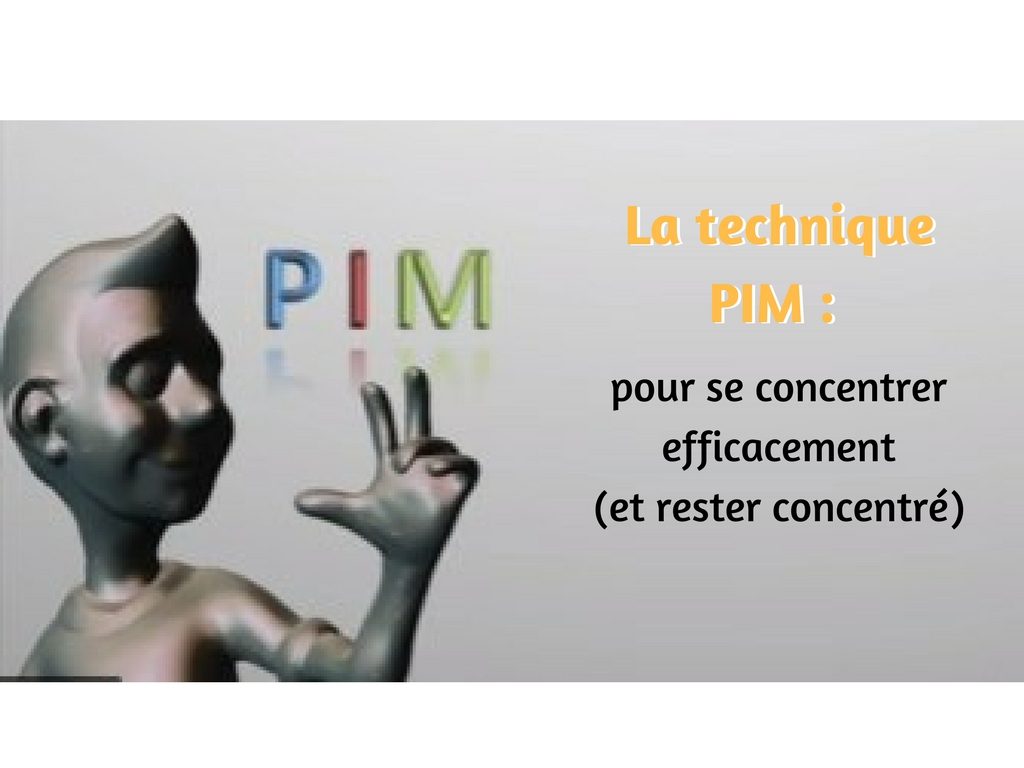
The PIM technique is a simple three-part method designed to help children and teenagers remember how to concentrate well. Created by Jean-Philippe Lachaux, it breaks focus down into three linked ideas: Perception, Intention and Manner of acting.
Every activity we do has its own PIM. Being focused means perceiving what matters most for what we intend to do, then reacting in the right way. Deciding in advance which perception, which intention and which manner of acting to prioritise helps children gain both concentration and effectiveness.

This article explains how the method works, how to teach it using just three fingers, and how to apply it to everyday situations at home and at school.
Quick takeaways
- PIM stands for Perception, Intention and Manner of acting.
- Three simple questions guide a child through any task that needs focus.
- The thumb, index and middle finger anchor the three steps in memory.
- Use PIM before homework, sport, music practice or tidying up.
- Review afterwards by asking which step helped most.
- Practise one routine moment daily until the method becomes automatic.
What the PIM Technique Actually Means
PIM stands for Perception, Intention and Manner of acting. Each letter points to a question children can ask themselves whenever they need to pay attention or think something through. The letters are easy to remember, which is exactly why the method works so well for young learners.
The first question is about perception: what should I look at, listen to or feel first? The second is about intention: what am I trying to achieve, and what comes to mind — images, words, a song, movements, sounds? The third is about manner: how will I react to what I notice so I can reach my goal? Together, these three questions form a complete PIM for any activity.
With a PIM for each task, children and teenagers always have a ready answer to the question of how to concentrate. Parents who are exploring conscious parenting will recognise the value of giving a child a repeatable internal script rather than constant reminders from outside.
Three Questions to Ask in Any Situation
Calling up a PIM can be as simple as running through three questions in situations that require attention and reflection. The questions are short enough to ask silently before starting homework, a sport or a conversation.
The perception question
What should I look at, listen to or feel as a priority? This question narrows attention to the signal that matters and helps a child tune out background noise, whether that is a sibling playing or a screen glowing nearby. Families dealing with screen time battles can use this question to agree on what deserves attention right now.
The intention question
What am I trying to succeed at? What comes to mind, and in what form — pictures, a little film, words, a song, movements, sounds? Naming the goal in a concrete mental image makes it easier to hold onto.
The manner question
How will I react to these perceptions to achieve my intention? What exactly will I do, and how? This turns a vague wish to focus into a specific action, such as reading the question twice before writing an answer. Parents can also use these steps to talk calmly about natural abortion symptoms and what needs attention.
| Step | Finger | Question to ask |
|---|---|---|
| Perception | Thumb | What should I look at or listen to first? |
| Intention | Index | What am I trying to achieve, and how do I picture it? |
| Manner | Middle | What exactly will I do, and how? |
| Review | All three | Which step helped me most today? |
| Next time | All three | What will I change in my PIM tomorrow? |
Concentration at Your Fingertips
To make the method easier to recall, you can attach the acronym and its questions to three fingers. The thumb stands for perception, the index finger for intention and the middle finger for manner of acting. Children can physically touch each finger as they run through the questions, which anchors the sequence in memory.
These PIMs help children stay well focused in complex situations by reminding them what they need to monitor (perception, thumb), what it is for (intention, index) and how to control it (manner, middle finger). In short, they serve as a quick reminder of what to do in order to concentrate.
A teaching video from a national health research institute puts this acronym into images to help learners concentrate effectively and stay concentrated, using the metaphor of a funambulist brain balancing on a wire. It is a useful visual for children who respond better to pictures than to words, and it pairs well with hands-on learning such as foam block toys that quietly train attention through play.
Using PIM at Home and at School
The technique is flexible enough for homework, music practice, sports or even tidying a room. Before an activity, ask your child to name their PIM out loud; after it, ask which part helped most. This short review builds the habit far faster than a single explanation.
For younger children, keep the wording playful and brief. A child who is learning to read can use PIM to decide which letter sounds to watch for, while an older student might use it to plan a revision session. If attention difficulties persist, it is worth discussing them with a professional — our guide on speech therapist signs explains when an assessment may be helpful. For playful inspiration, see meals of children's characters.
Teenagers preparing for exams benefit from writing their PIM at the top of a page. The written reminder keeps the intention visible when motivation dips, and it gives parents a neutral way to check in without nagging. Families comparing support options can also read what the PP offers families.

Making the Method Stick Over Time
Like any habit, PIM works best when it is practised little and often. Choose one routine moment each day — the start of homework, for instance — and use the three questions there until it becomes automatic. Once it feels natural, extend it to a second activity.
Adults can model the technique too. Saying aloud “I need to notice this, I want to finish that, so I will do it this way” shows children that focus is a skill anyone can practise. Parents juggling a busy household may find the same three questions useful when planning their own day, much as they might when reading up on perfect age decisions, planning a Disney party at home, or other family choices.
Keep expectations realistic. Concentration is a muscle that develops gradually, and the goal is not perfect focus but a reliable way back to it whenever attention drifts.

My hands-on take
I started using PIM with my own child during homework time, and the finger trick made the biggest difference. Asking him to touch his thumb and say what he needed to notice turned a vague “pay attention” into something concrete he could actually do.
What surprised me was how quickly he began using it without prompting. After a couple of weeks, he was running through the three questions himself before starting a puzzle. It is not magic, and there are still distracted evenings, but having a shared script means I can redirect him with a single question instead of a lecture.
Frequently asked questions
What does PIM stand for?
PIM stands for Perception, Intention and Manner of acting. It is a three-question method that helps children remember how to concentrate on any activity.
What age is the PIM technique suitable for?
It is designed for children and teenagers, and the questions can be simplified for younger learners. Adults can use the same three questions when they need to refocus.
How do I teach PIM to my child?
Attach each letter to a finger — thumb for perception, index for intention, middle for manner — and run through the questions together before an activity. Repeat it at the same moment each day until it becomes a habit.
Does PIM replace professional help for attention difficulties?
No. PIM is a practical focusing habit, not a diagnosis or treatment. If attention problems persist or affect daily life, speak to a qualified professional.
Product Reviews
 Best Toys for Dogs With High Prey Drive |
Best Outdoor Toys for 3-4 Year Olds |
Best Outdoor Toys for 6 Year Olds |
Best Harness for Poodle |
Best LEGO Sets for Adults |
Best Travel Toys for 4 Year Olds on Airplane |
Best Toy Stores in Washington DC |
Best Potty Training Toys |
Best Toys for Tripod Dogs |
Maillot equipe de france







