


One afternoon, after the little one has spent the morning at preschool, you find yourself playing with him on the floor. Suddenly, she asks you to leave so that you can leave space for “Paola”, an invisible friend who now accompanies her in her room, and who lives in the forest. Indeed, it is an imaginary friend, and it is something absolutely normal, although it is true that at first it can scare us a little.
It is known that children's imagination begins to develop around 2-3 years of age, which marks the beginning of pretend play. Thus, it is estimated that between 60 to 65 percent of children have one or two imaginary friends. While it is true that imaginary friends are as common as they are normal, the reasons why they arise vary, as does the time they remain in your child's imagination.

Why do children have imaginary friends? What are the causes?
Especially because they are tremendously fun. We must not forget that children are naturally imaginative. Exercising their imagination is good for both their mental and emotional health. And children who have imaginary friends truly come to enjoy them, because they always have someone to “play” with when they are bored, or when they just feel lonely.
Sometimes, imaginary friends can also fill a void that other playmates don't have. For example, a child with few friends can create one. Thus, a child who never chooses what to play with when other friends are present can always choose what to play with his imaginary friend. In childhood, having an imaginary friend becomes a unique way to create the perfect friend.
However, it is normal for mom and dad to worry and wonder to what extent it is completely normal. But you should rest assured: you have nothing to worry about when, suddenly, you discover the arrival of an imaginary playmate. And, unlike popular belief, it does not necessarily mean that the child who has imaginary friends longs for the presence of a brother or sister, compensating for their absence.
This is a myth, since it has even been discovered that two-thirds of all children, regardless of whether they have siblings or not, have imaginary friends.
For the child, are imaginary friends truly real?
Indeed, although imaginary friends are not obviously real, most children know that their pretend friends are not. What's more, in young children, fantasy - or imaginary - friends become a sign of imagination development.
For this reason, there is no need to worry if, for example, you make the mistake of sitting right above where your child's imaginary friend was apparently sitting...
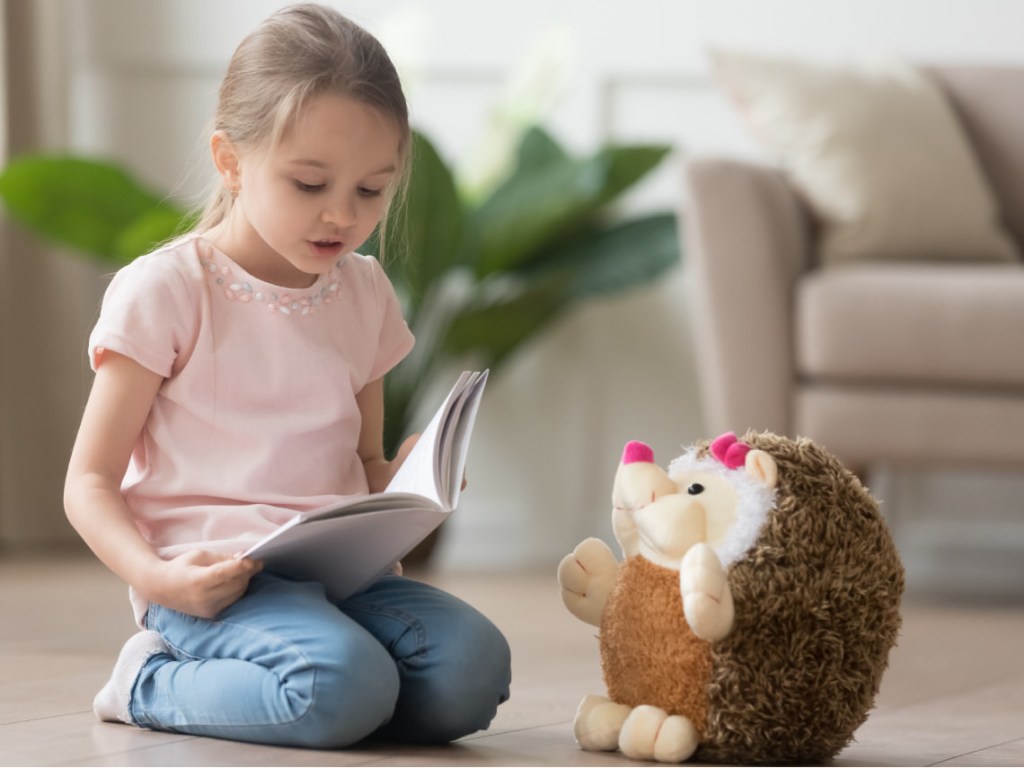
But just because it is normal does not mean that we should not pay attention to some basic elements. That is, to what extent the child can play together with his imaginary friend. And what does he do during the game. For example, if suddenly it is the imaginary friend who orders lunch, or breaks things when no one is looking, it is essential to discover some basic rules.
In most cases, we can let our child decide how much he can participate in his fantasy. In this sense, it is very important to respect him and let him take the initiative. For example, if the imaginary friend often travels in the family car, do not ask him if he will do so at that moment, but wait for him to say so.
Once the child has given the go-ahead, it is okay to talk to or about the imaginary friend, although it is important that the child remains in control of his or her own fantasy. Basically because interfering too much could end up causing power struggles, anger or some friction.
When could it become a problem?
If we suddenly discover that the imaginary friend's “demands” begin to get out of place and out of control, it is essential to say no. Although giving your little one a treat can become a good way to bond and show love and respect, it is not advisable to do anything that could cause more stress for us or other family members.
That is, we must not allow the child's imaginary friend to become a form of massive control over the family. For example, putting out an extra plate and glass with imaginary food is fine, but serving a full lunch can send the wrong message.
As many experts believe, imaginary friends only become problematic when the child blames them for their bad behavior. If this happens, it is essential to teach the child that he alone is responsible for whatever he, or his imaginary friend, does.
Another warning sign could be that the child prefers his imaginary friend instead of his real ones. Although this is actually rare, it can be a sign that something else is going on. It is known that children who have imaginary friends generally tend to be much more sociable than other children. But if, suddenly, we notice that the child rejects opportunities to interact with others, preferring to play with his fantasy friend, it is possible to ask how the child is experiencing his own social world.
In any case, in most cases, imaginary friends tend to disappear on their own, especially as children become more interested in playing with other children.
The Best Building Block Sets for Creative Kids and Adult Collectors
Building block toys continue to dominate the world of creative play, STEM learning, and collectible model building. Whether you enjoy detailed racing replicas, advanced engineering kits, or imaginative fantasy worlds, modern brick sets offer something for every age group. Enthusiasts looking for premium collections often start with the best-selling building block sets, where the most popular models showcase impressive craftsmanship and display value, as explained on Balenciagirl
Explore Racing Cars, Supercars, and Vehicle Models
Car enthusiasts can discover stunning replicas inside the Miniso F1 collection, the high-speed supercars and racing cars collection, and detailed classic car building sets. Fans of realistic mechanics will also appreciate advanced technic models, premium technic building sets, and educational mechanical engineering sets.
Collectors who enjoy motorcycles and industrial vehicles can explore the motorcycle and bike sets alongside massive truck and construction vehicle sets. For interactive play, remote-controlled fans can browse both the remote control collection and the exciting remote control building sets.
Architecture, Ships, and Space Collections
Architectural enthusiasts often enjoy the elegant skyline designs from the modern skyscraper series and culturally inspired Chinese architecture sets. Builders who prefer Grand Goldman Shop home decor or compact creations can discover detailed micro block models perfect for desks and display shelves.
Nautical collectors can build historic vessels from the boats and ships collection, legendary pirate ship sets, and highly detailed Titanic model kits. Aviation fans can assemble realistic aircraft from the aircraft and jet collection, while science fiction lovers may prefer futuristic space station building sets.
Fantasy Worlds, Pop Culture, and Adult Building Sets
Creative builders searching for immersive display models should explore premium building sets for adults. Fantasy fans can recreate medieval adventures using the castle collection, while anime and entertainment lovers can enjoy themed cartoon and pop culture sets.
Urban enthusiasts can also discover stylish city-inspired models inside the Japanese street collection and premium licensed car building sets. Students and curious minds can further develop STEM skills with interactive science educational building sets.
Helpful Guides and Building Block Resources
Collectors frequently search for expert guides before purchasing new sets. Popular resources include advice on when Rivendell may retire, tutorials explaining how to change characters in Marvel Superheroes, and insights into how much the first LEGO set is worth.
Gamers and collectors can also learn whether LEGO Star Wars Skywalker Saga supports crossplay, discover how many villagers you can have in Fortnite, and understand how much insider points are worth.
Parents can also find family-friendly recommendations such as the best outdoor toys for 3 to 4 year olds, the best outdoor toys for 6 year olds, and pet-related guides covering the best toys for dogs with high prey drive and the best harnesses for poodles.
From advanced engineering models to collectible ships and fantasy castles, modern building block sets combine entertainment, creativity, and education into one rewarding hobby enjoyed by both children and adults worldwide.
Product Reviews
 Best Toys for Dogs With High Prey Drive |
Best Outdoor Toys for 3-4 Year Olds |
Best Outdoor Toys for 6 Year Olds |
Best Harness for Poodle |
Best LEGO Sets for Adults |
Best Travel Toys for 4 Year Olds on Airplane |
Best Toy Stores in Washington DC |
Best Potty Training Toys |
Best Toys for Tripod Dogs |
Maillot equipe de france
Best Toys for Dogs With High Prey Drive |
Best Outdoor Toys for 3-4 Year Olds |
Best Outdoor Toys for 6 Year Olds |
Best Harness for Poodle |
Best LEGO Sets for Adults |
Best Travel Toys for 4 Year Olds on Airplane |
Best Toy Stores in Washington DC |
Best Potty Training Toys |
Best Toys for Tripod Dogs |
Maillot equipe de france







