


Psychological violence is invisible, and that is precisely what makes it so hard to name. A psychotherapist speaking on a radio programme about kind parenting described how victims feel wrapped in fog, losing their bearings and their ability to feel, speak and act.
Many people who lived through this in childhood believe they are losing their mind, and they constantly fear that no one will listen to them, because the person harming them has disqualified them for months or years. The author of the violence often feeds that confusion on purpose, creating a dense fog in which the victim no longer knows what she feels, what she should say or what she should do.

This article looks at what psychological violence actually is, why it is so difficult to recognise, and what a child truly needs in order to grow up with a solid sense of self.
Quick takeaways
- Psychological violence is invisible, repetitive and intended to wound and dominate.
- The person causing it rarely changes, even when confronted with the victim's suffering.
- Victims often feel foggy, lose their bearings and doubt their own perceptions.
- Not all psychological violence comes from a manipulative personality type.
- Kind adults act as resilience tutors, building self-esteem and valuing beliefs.
- Healing means reconnecting with your own sensations, emotions and tastes.
What psychological violence really is
Psychological violence is defined by repetition. Whatever happens, the response carries violence: guilt-tripping, insults, humiliation, belittling, censoring emotions, constant contradiction to invalidate someone's tastes. The intention is to wound, to make the other person feel small and to seize power.
The person who behaves this way does not change, even when the victim explains her emotions, describes her suffering and asks for something different. And because the violence leaves no visible mark, it is extremely difficult to prove. This is why so many adults only recognise it years later, often while reading about the two year revolution and realising that what they were told was normal discipline was something else entirely.
Not always a "narcissistic pervert"
It is worth remembering that not all psychological violence comes from a manipulative personality. Someone who is deeply jealous and gradually locks his partner in, controlling her constantly out of fear of losing her, is being psychologically violent without fitting that label. The same is true of a person with emotional dependency who demands constant reassurance and protection, depriving the other of freedom of movement.
Why victims struggle to see themselves as victims
Many people are astonished to hear that what they endure is psychological violence. Some refuse the word altogether, because accepting it would mean they had suffered and, worse, accepted it until now. Others feel relieved, since they are neither mad nor ill, and confused at the same time, because it means the other person is the dysfunctional one, which is hard to accept when that person is a parent.
Some victims even protect and excuse the person mistreating them. This is where gentle, factual information matters, much like the clear explanations you would want before kindergarten scholarship application or any other step that requires understanding the rules of the system you are dealing with.
The focus should not only be on the behaviour of the person causing harm, but above all on the victim. She becomes much less herself, withdraws, and may develop physical symptoms: a tight solar plexus, back pain, migraines, tense muscles. Often neither she nor those around her notice.

| What a child needs | What it looks like | What it feels like to the child |
|---|---|---|
| Consideration | Being spoken to and seen | "I exist as a person" |
| Affection | Time, attention, tenderness | "I am welcome here" |
| Protection | Calm, predictable responses | "I am safe" |
| Recognition of feelings | Emotions named, not censored | "What I feel matters" |
| Freedom to be different | Tastes and preferences allowed | "I am allowed to be myself" |
What a kind parent is supposed to provide
Benevolent adults allow children to build a healthy, solid psychological capital. They act as resilience tutors who stimulate the child's development, help him acquire self-esteem and anchor valuing beliefs. Children need to be fed on every level: biological needs such as food, water and air, and emotional needs such as care, attention, time and affection.
A child needs to be considered from earliest infancy, including in the womb. Young children need adults to speak to them, to see them, to take pleasure in spending time with them. If a human being cannot say "as a child, I received affection and protection, someone treated me as a human being", he is marked by an uncontrollable fear of being treated as an object throughout his life, and forming a reliable, authentic emotional bond becomes difficult.
We all need looks that touch us rather than heads that turn away. The everyday moments matter here, whether that is breastfeeding and pain or simply sitting on the floor together, the way you would choose foam block toys for play that invites presence rather than performance.
Redefining what it means to love and to care
Healing from invisible psychological violence means gradually learning to be yourself, reconnecting with your own sensations, your personal emotions, your tastes and your intrinsic motivations. It means understanding what it really means to love someone and to care for them, rather than confusing care with control.
This reconnection often happens through small, concrete choices, like picking outdoor toys that let a child move freely, or noticing how a simple shared moment, such as crib escape attempts at bedtime, can be handled with calm instead of threat. It also means protecting yourself, the way a kind parent protects a child, and accepting that another kind of normality is possible and accessible.
Small steps that help
Name what happened without minimising it. Notice the physical signals in your body. Give yourself permission to have preferences. Seek support from someone who takes your words seriously, and remember that you are not obliged to prove anything to the person who hurt you.
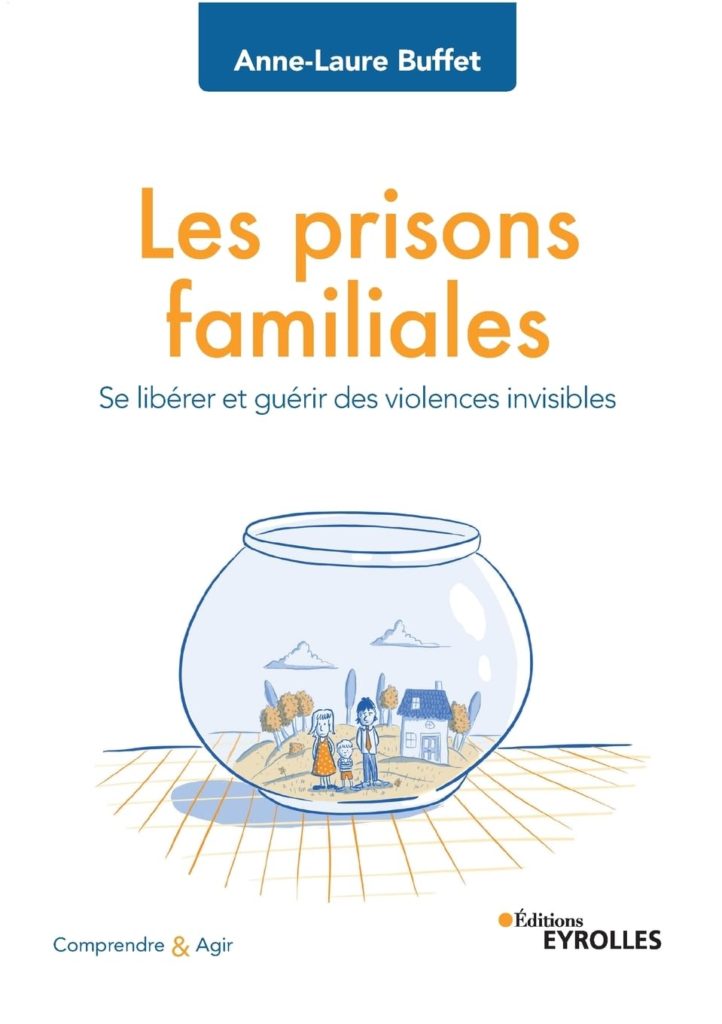
Building a different normal for the next generation
Adults who were hurt in childhood often become extremely attentive parents, precisely because they know what absence of consideration feels like. That attentiveness is a strength, but it needs boundaries so it does not turn into anxiety or over-control.
Choosing what enters your home matters too. Think about the stories you read, the films you watch, the way you talk about respect, much as you would when choosing movies about animals to teach kindness, or when picking books by Benji Davies for calm, warm shared reading.
You do not have to reproduce what you received. You can offer looks that touch, time that is freely given, and words that consider the child as a full person. That is how a new normality is passed on, one ordinary day at a time.

My hands-on take
For a long time I thought the problem was me. I was the one who was too sensitive, who remembered things wrong, who took comments the wrong way. It was only when I started paying attention to my body that something shifted: the tightness in my chest before certain phone calls, the way I braced myself at family gatherings, the exhaustion afterwards that no amount of sleep fixed.
What helped most was not a dramatic confrontation but small, quiet experiments. I began noticing what I actually liked, without checking whether it was acceptable. I practised saying one honest sentence where I used to say nothing. I found people who took my words seriously instead of explaining them away. None of this erased the past, but it gave me something I had never had: a sense that my own perception counts. If you recognise yourself here, start small and be patient with yourself.
Frequently asked questions
How can I tell whether what I experienced was psychological violence?
Look for repetition rather than a single incident. If a response consistently carried guilt, humiliation, belittling or censorship of your emotions, and if asking for change never altered it, that pattern is the key signal.
Why is it so hard to prove?
Because psychological violence leaves no visible mark. It works through words, tone and repetition, which is exactly why victims so often doubt themselves and fear not being believed.
Does the person causing it have to be a manipulative personality?
No. Jealousy, emotional dependency or a need for constant reassurance can also produce controlling, psychologically violent behaviour without that particular profile.
Can I heal as an adult?
Yes. Healing is a gradual process of reconnecting with your own sensations, emotions and tastes, and of learning to protect yourself the way a kind parent would protect a child.
Product Reviews
 Best Toys for Dogs With High Prey Drive |
Best Outdoor Toys for 3-4 Year Olds |
Best Outdoor Toys for 6 Year Olds |
Best Harness for Poodle |
Best LEGO Sets for Adults |
Best Travel Toys for 4 Year Olds on Airplane |
Best Toy Stores in Washington DC |
Best Potty Training Toys |
Best Toys for Tripod Dogs |
Maillot equipe de france







